

Ready & Packaged Foods
All →Vegetables & Legumes
All →Desserts & Confectionery
All →Meat & Protein
All →Grains & Bakery
All →Beverages
All →Milk & Dairy
All →

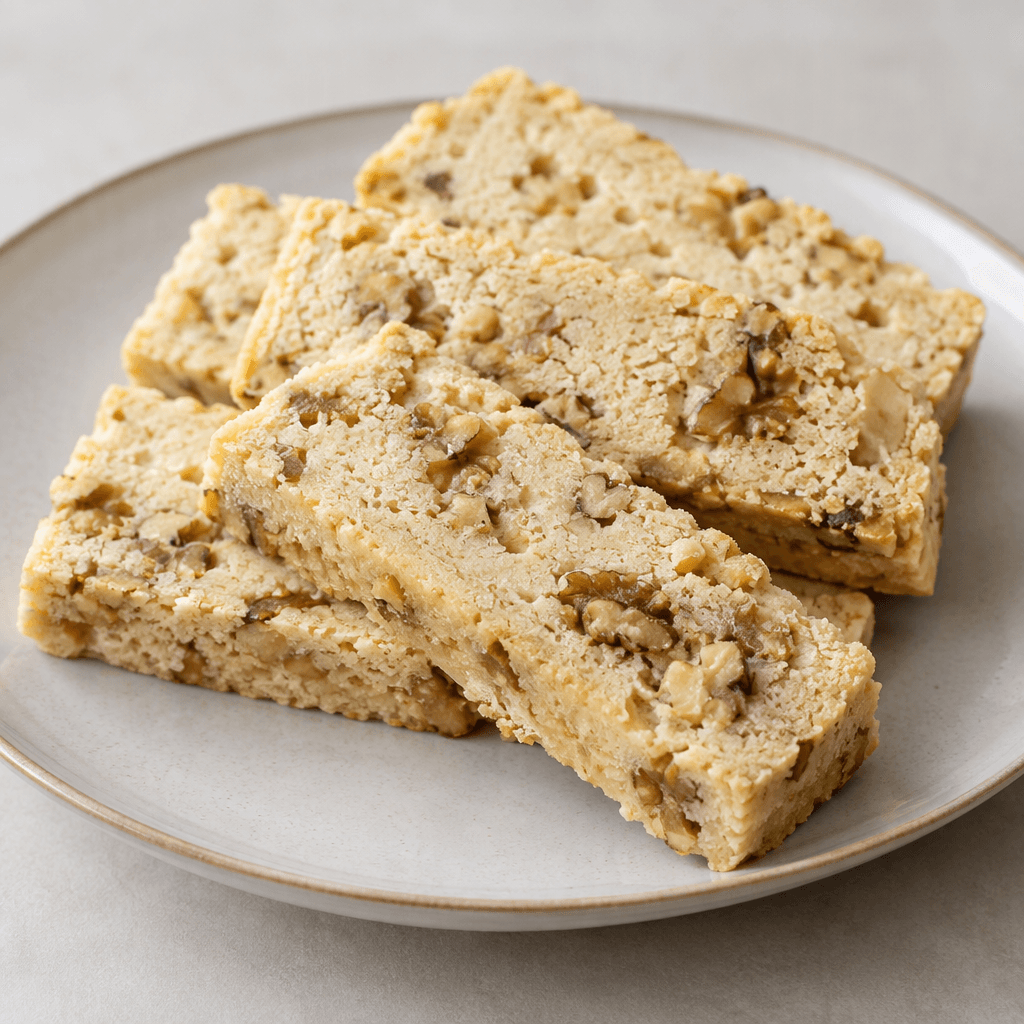
Summer halva Calories
Sweet, sesame-based, traditional summer halva
In season: Summer
CALORIES
GI
POTASSIUM
FIBER
Quick answer
1 piece (medium) of Summer halva (40 g) has 192 calories. That works out to 480 calories per 100 g. It contains 19.2 g of carbs, 4.2 g of protein, 10.8 g of fat and 1.4 g of fiber. Its 0.3 mg of Copper covers 31% of the Daily Value. Its glycemic index is 65 (medium), so it raises blood sugar at a moderate pace.
What is Summer halva?
Summer halva is a Turkish sesame sweet, typically made with tahini and sugar, with walnuts or other nuts added in some versions. It is shaped into slabs that can be sliced or broken into pieces. Despite its name, it is not necessarily eaten only in summer, and recipes vary between producers and regions.
Its toasted sesame flavour and pronounced sweetness come with a crumbly texture, while walnut pieces add crunch. In Turkey it is often served in small portions with tea or coffee, and it also makes a simple dessert after a meal. It is an energy-dense sweet with fat from sesame and sugar; 100 g provides 480 calories. A thin slice alongside unsweetened tea is an easy way to enjoy it as a modest treat.
Summer halva Nutrition Facts
Selected: 100 g
480
KCAL / 100G
Carbs
48g
· 17% DV
Protein
10.5g
· 21% DV
Fat
27g
· 35% DV
Fiber
3.5g
· 13% DV
DV is the share of the daily value covered, on a 2,000 kcal reference diet.
Calories come from: Carbs 40% · Protein 9% · Fat 51%
Summer halva Vitamins & Minerals
Vitamins
Biotin
7µg · 23% DV
Vitamin E
2.2mg · 15% DV
Vitamin K
13µg · 11% DV
B1
0.12mg · 10% DV
Minerals
Copper
1mg · 111% DV
Manganese
1mg · 43% DV
Selenium
17µg · 31% DV
Iron
5mg · 28% DV
How Nutritious Is Summer halva?
Nutrient density
Medium
How many vitamins, minerals and how much fiber this food carries per calorie. A high score means a lot of nutrition for few calories.
Satiety score
Low
An EatBetter score computed from fiber, protein and calorie density. A high score means staying full longer on the same calories.
Both scores are calculated per 100 g and do not change with the selected portion. The satiety score is EatBetter's own calculation, not a clinical measure.
Summer halva Glycemic Index
GLYCEMIC INDEX
GLYCEMIC LOAD
Accounts for portion size — a more realistic measure than GI alone.
How to Burn Off Summer halva
To burn the 480 calories in 100 g:
🚶
Walking (5 km/h)
🏃
Running (8 km/h)
🚴
Cycling
🏊
Swimming
Times are calculated with the MET equation for a 70 kg adult. Actual burn varies with your weight, age and pace.
Is Summer halva Processed?
NOVA 3
Processed
1. Unprocessed
2. Minimally Processed
3. Processed
4. Ultra-Processed
NOVA classifies foods into 4 groups by industrial processing. NOVA 1 (unprocessed) is the healthiest.
Does Summer halva Contain Allergens?
Contains these allergens:
Which Diets Is Summer halva Good For?
Vegan
— Not suitable
Vegetarian
✓ Suitable
Gluten-Free
— Not suitable
Dairy-Free
— Not suitable
Mediterranean
✓ Suitable
Paleo
— Not suitable
Whole30
— Not suitable
DASH
— Not suitable
Keto
— Not suitable
Low FODMAP
— Not suitable
Summer halva Fat Profile
SATURATED
3.8g
MONOUNSATURATED
10.2g
POLYUNSATURATED
7.1g
Omega 6:3 ratio 34.7:1
Above the ideal 4:1 (34.7:1).
Compare Summer halva
Foods Similar to Summer halva
Frequently Asked Questions About Summer halva
What is summer halva?
Summer halva is a Turkish sesame-based sweet, commonly made with tahini, sugar, flour and sometimes walnuts. It is typically dense and crumbly, so it is served in slices rather than having the softer, stringier texture associated with some other halvas.
How is summer halva different from tahini halva?
Summer halva is usually drier and more crumbly than the familiar fibrous, sliceable tahini halva. Both may contain tahini, but their recipes and textures differ; summer halva often includes flour and may contain walnuts.
Why is it called summer halva?
The name does not mean summer halva must only be eaten in summer. It is sold and enjoyed year-round in Turkey, and there is no single widely established explanation for how the name originated.
How do you store summer halva?
Store summer halva in a sealed package or airtight container in a cool, dry place away from sunlight. Keep moisture out, since it can change the crumbly texture; close the packaging securely after each serving.
Does summer halva need to be refrigerated?
No, summer halva generally does not need refrigeration. A cool, dry cupboard is more suitable, because moisture and food odors in a refrigerator can affect its texture and flavor.
Can you freeze summer halva?
Yes, summer halva can be frozen in a tightly sealed, freezer-safe container. Thaw it while still covered so condensation forms on the container rather than the sweet, which could make its crumbly texture damp.
Does summer halva contain walnuts?
Sometimes; walnuts are a common addition to summer halva, but they are not essential to every recipe. The pieces shown in one version do not guarantee that all summer halva contains walnuts.
How do you make summer halva at home?
You can make summer halva by combining tahini with a cooked sugar mixture and toasted flour, then adding walnuts if desired. Press the mixture into a mold and let it cool; following a tested recipe helps achieve the characteristic crumbly set.
What is summer halva served with?
Summer halva is often served in small slices with tea or coffee. Its rich, crumbly texture makes it suitable as a sweet bite on its own, rather than needing a sauce or elaborate accompaniment.
Can people with diabetes eat summer halva?
People with diabetes should account for summer halva as a sugar-containing dessert, since it can raise blood glucose. Whether it fits an individual meal plan depends on their care needs; ask a doctor or dietitian for personal advice.
Have another question about Summer halva?
Ask the AI nutrition coach — calories, portions, alternatives and more, answered in seconds in the app.

Scan calories with your camera
Instant AI nutrition analysis

Nutrition data compiled from USDA FoodData Central and scientific sources.