

Ready & Packaged Foods
All →Vegetables & Legumes
All →Desserts & Confectionery
All →Meat & Protein
All →Grains & Bakery
All →Beverages
All →Milk & Dairy
All →

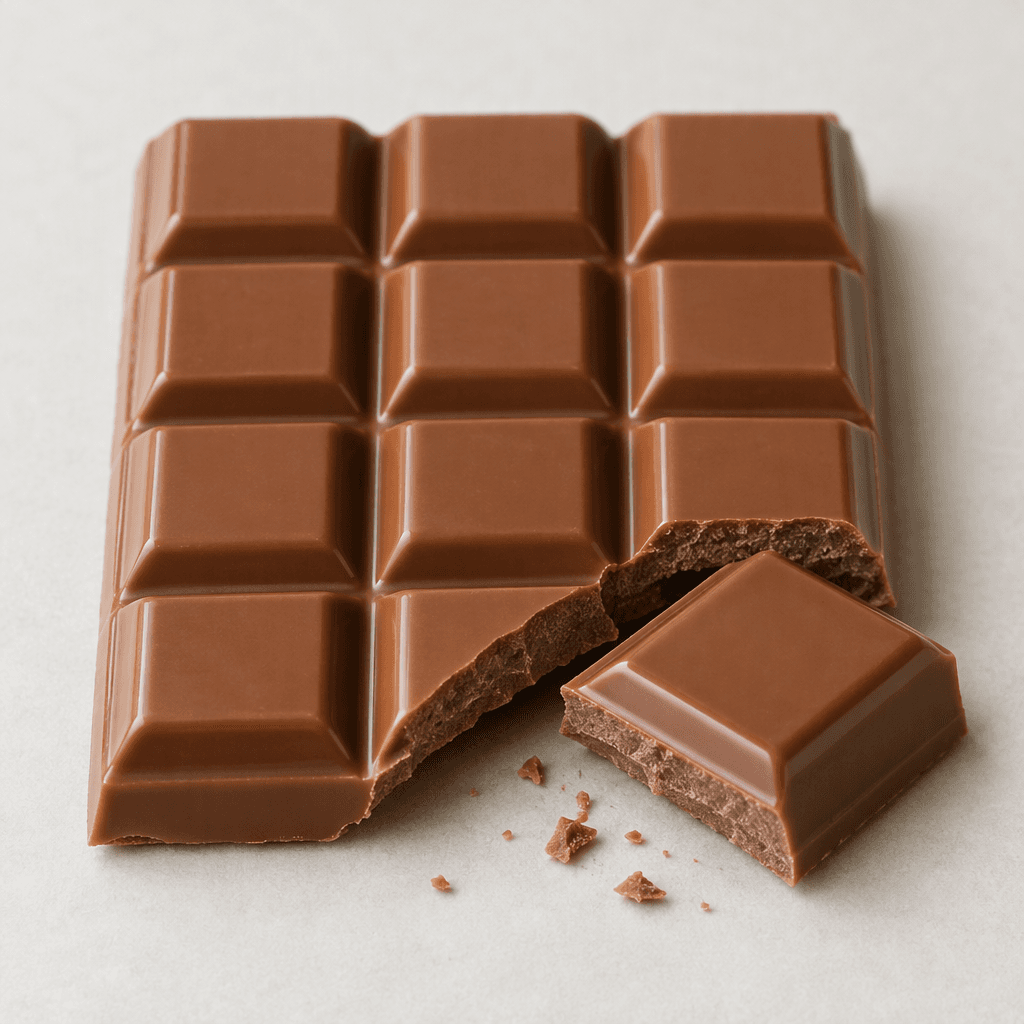
Sugarfree milk chocolate Calories
Sugar-free, milk chocolate, low sugar
In season: Spring · Summer · Autumn · Winter
CALORIES
GI
POTASSIUM
FIBER
Quick answer
2 piece (medium) of Sugarfree milk chocolate (20 g) has 84 calories. That works out to 420 calories per 100 g. It contains 7.6 g of carbs, 1.6 g of protein, 5.6 g of fat and 1.5 g of fiber. Its 0.1 mg of Copper covers 7% of the Daily Value. Its glycemic index is 35 (low), so it raises blood sugar slowly.
What is Sugarfree milk chocolate?
Sugar-free milk chocolate combines cocoa ingredients with milk for the mellow, creamy flavour of milk chocolate, using sweeteners instead of sugar. It usually has a smooth snap and melts readily, making it an option for people who want a chocolate treat with less sugar than a conventional bar. “Sugar-free” does not mean carbohydrate-free, and recipes can vary.
Enjoy a few squares with coffee or tea, or break some over fruit or plain yoghurt for a simple dessert. It is still energy-dense, with much of its energy coming from fat and carbohydrates, while protein is modest. A small portion is often satisfying; if you are comparing products, check the label for the sweetener and serving information.
Sugarfree milk chocolate Nutrition Facts
Selected: 100 g
420
KCAL / 100G
Carbs
38g
· 14% DV
Protein
8.2g
· 16% DV
Fat
28g
· 36% DV
Fiber
7.5g
· 27% DV
DV is the share of the daily value covered, on a 2,000 kcal reference diet.
Calories come from: Carbs 35% · Protein 8% · Fat 57%
Sugarfree milk chocolate Vitamins & Minerals
Vitamins
B2
0.32mg · 25% DV
B12
0.5µg · 21% DV
B5
0.6mg · 12% DV
Vitamin E
1.2mg · 8% DV
Minerals
Phosphorus
210mg · 30% DV
Calcium
210mg · 21% DV
Zinc
2mg · 18% DV
Magnesium
60mg · 14% DV
How Nutritious Is Sugarfree milk chocolate?
Nutrient density
Low
How many vitamins, minerals and how much fiber this food carries per calorie. A high score means a lot of nutrition for few calories.
Satiety score
Medium
An EatBetter score computed from fiber, protein and calorie density. A high score means staying full longer on the same calories.
Both scores are calculated per 100 g and do not change with the selected portion. The satiety score is EatBetter's own calculation, not a clinical measure.
Sugarfree milk chocolate Glycemic Index
GLYCEMIC INDEX
GLYCEMIC LOAD
Accounts for portion size — a more realistic measure than GI alone.
How to Burn Off Sugarfree milk chocolate
To burn the 420 calories in 100 g:
🚶
Walking (5 km/h)
🏃
Running (8 km/h)
🚴
Cycling
🏊
Swimming
Times are calculated with the MET equation for a 70 kg adult. Actual burn varies with your weight, age and pace.
Is Sugarfree milk chocolate Processed?
NOVA 3
Processed
1. Unprocessed
2. Minimally Processed
3. Processed
4. Ultra-Processed
NOVA classifies foods into 4 groups by industrial processing. NOVA 1 (unprocessed) is the healthiest.
Does Sugarfree milk chocolate Contain Allergens?
Contains these allergens:
Which Diets Is Sugarfree milk chocolate Good For?
Vegan
— Not suitable
Vegetarian
✓ Suitable
Gluten-Free
— Not suitable
Dairy-Free
— Not suitable
Mediterranean
— Not suitable
Paleo
— Not suitable
Whole30
— Not suitable
DASH
— Not suitable
Keto
— Not suitable
Low FODMAP
— Not suitable
Sugarfree milk chocolate Fat Profile
SATURATED
17.2g
MONOUNSATURATED
7.8g
POLYUNSATURATED
1.1g
Omega 6:3 ratio 11.7:1
Above the ideal 4:1 (11.7:1).
Compare Sugarfree milk chocolate
Foods Similar to Sugarfree milk chocolate
Frequently Asked Questions About Sugarfree milk chocolate
Can people with diabetes eat sugar-free milk chocolate?
Yes, but sugar-free milk chocolate can still affect blood glucose. Milk-derived carbohydrates and the sweetener used both matter, so check how it fits your diabetes meal plan and keep the portion modest. A clinician or dietitian can advise on your individual needs.
What sweeteners are used in sugar-free milk chocolate?
Sugar-free milk chocolate may use maltitol, erythritol, stevia, or other sweeteners. The formula varies by product, and sugar alcohols such as maltitol can affect digestion differently from non-nutritive sweeteners.
Can sugar-free milk chocolate cause diarrhea?
Yes, eating a large amount can cause diarrhea, gas, or bloating. Sugar alcohols such as maltitol are a common reason, particularly for people who are sensitive to them; try a small amount if you have not eaten it before.
Does sugar-free milk chocolate contain lactose or milk sugar?
Yes, it can contain lactose because it is made with milk ingredients. “Sugar-free” generally means no added sugar or no sugar under the product’s labeling rules, not that all naturally occurring sugars have been removed.
Does sugar-free milk chocolate taste like regular milk chocolate?
Not always. Sugar substitutes can leave a cooling sensation, a different sweetness, or a slight aftertaste, while milk and cocoa still give it a familiar chocolate character. The result varies with the sweetener and recipe.
Can you bake with sugar-free milk chocolate?
Yes, you can add sugar-free milk chocolate to cookies, cakes, and other baked goods. It may not provide the same sweetness, moisture, or texture as regular chocolate, so recipes may need adjustment; test a small batch first.
Can sugar-free milk chocolate be melted?
Yes, sugar-free milk chocolate can be melted. Use gentle heat, such as a double boiler or short microwave intervals, and stir often; some sweeteners can behave differently from sugar when heated.
Is sugar-free milk chocolate keto-friendly?
Not necessarily. Sugar-free milk chocolate may still contain carbohydrates from milk and other ingredients, and some sweeteners can affect blood glucose or digestion. Check the carbohydrate content and ingredients against your own keto limits.
Can dogs eat sugar-free milk chocolate?
No, dogs should not eat sugar-free milk chocolate. Chocolate contains theobromine, which is toxic to dogs, and some sugar-free products may contain xylitol, another serious hazard. Contact a veterinarian promptly if your dog eats any.
Does sugar-free milk chocolate need to be refrigerated after opening?
No, it usually does not need refrigeration. Keep sugar-free milk chocolate sealed in a cool, dry place away from sunlight and strong odors; refrigerate it only in hot conditions, inside an airtight container to limit moisture and odor absorption.
Have another question about Sugarfree milk chocolate?
Ask the AI nutrition coach — calories, portions, alternatives and more, answered in seconds in the app.

Scan calories with your camera
Instant AI nutrition analysis

Nutrition data compiled from USDA FoodData Central and scientific sources.