

Ready & Packaged Foods
All →Vegetables & Legumes
All →Desserts & Confectionery
All →Meat & Protein
All →Grains & Bakery
All →Beverages
All →Milk & Dairy
All →

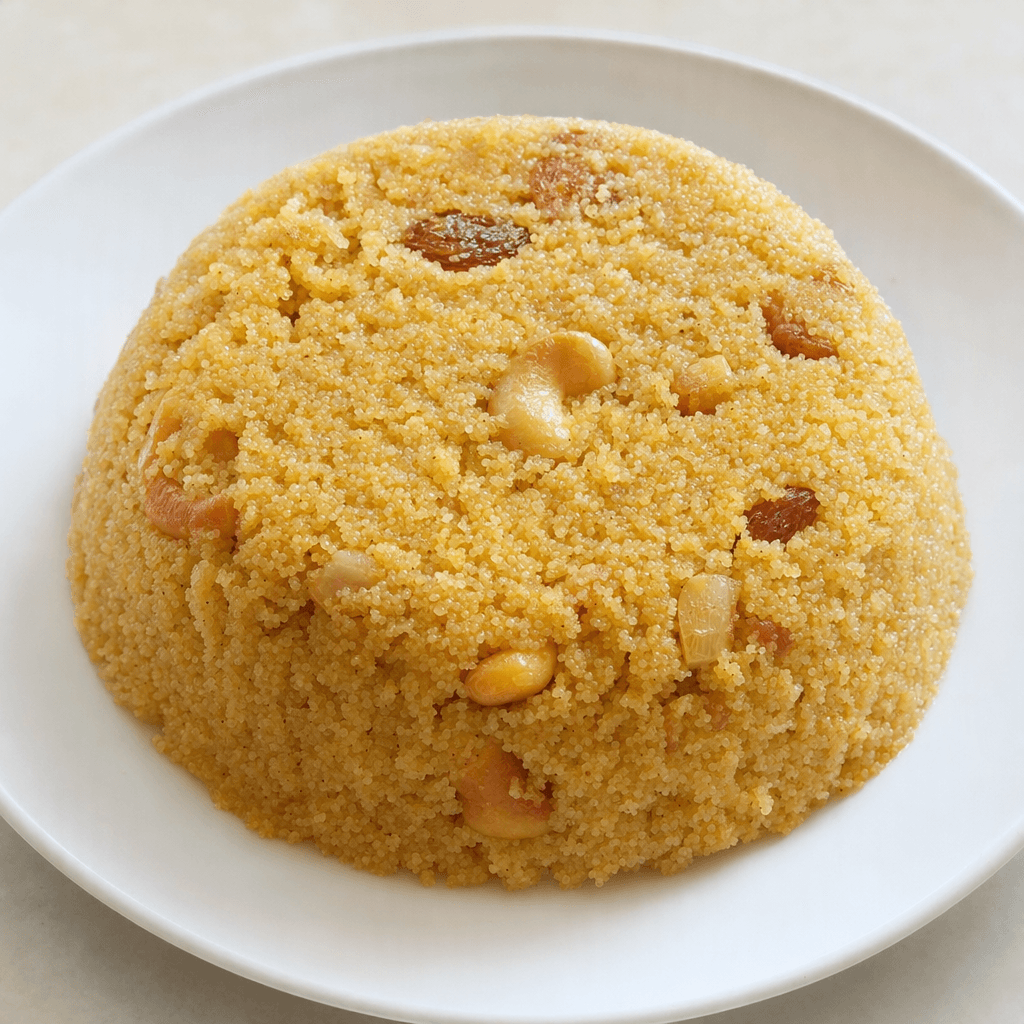
Sugar-free semolina helva Calories
Sugar-free dessert, semolina-based, energy-dense
CALORIES · 100 G
GI
POTASSIUM · 100 G
FIBER · 100 G
Quick answer
1 serving (medium) of Sugar-free semolina helva (120 g) has 342 calories. That works out to 285 calories per 100 g. It contains 38.2 g of carbs, 6.2 g of protein, 18.7 g of fat and 2.5 g of fiber. Its 13.2 µg of Selenium covers 24% of the Daily Value. Its glycemic index is 52 (medium), so it raises blood sugar at a moderate pace.
Sugar-free semolina helva Nutrition Facts
Selected: 1 serving (medium) · 120 g
342
KCAL / 120G
Carbs
38.2g
· 14% DV
Protein
6.2g
· 12% DV
Fat
18.7g
· 24% DV
Fiber
2.5g
· 9% DV
DV is the share of the daily value covered, on a 2,000 kcal reference diet.
Calories come from: Carbs 44% · Protein 7% · Fat 49%
Sugar-free semolina helva nutrition facts table · 1 serving (medium) (120 g)
| Nutrient | Amount | % DV |
|---|---|---|
| Calories | 342 kcal | |
| Total fat | 18.7 g | 24% |
| Saturated fat | 7.32 g | 37% |
| Trans fat | 0.12 g | |
| Sodium | 46 mg | 2% |
| Total carbohydrate | 38.2 g | 14% |
| Fiber | 2.5 g | 9% |
| Protein | 6.2 g | 12% |
Calories: Calories measure energy. Average daily need is 2,000 kcal. Excess calories are stored as fat, too few cause weight loss.
Carbs: Your body's primary energy source. The brain runs exclusively on carbs. Daily need: 275g.
Protein: Essential for muscle repair and cell growth. Daily need: 50g. Keeps you full and boosts metabolism.
Fat: Needed for hormone production and vitamin absorption. Daily need: 78g. Limit saturated fats, choose unsaturated.
Fiber: Critical for digestive health and satiety. Daily need: 28g. Stabilizes blood sugar, lowers cholesterol.

Log this food in EatBetter
100,000+ people use it
- Get your daily calorie target
- Snap your meal, log it in seconds
- See every vitamin and mineral

📸 Scan the code to get the app free.

How Many Calories in 1 Serving of Sugar-free semolina helva?
| Serving | Amount | Calories |
|---|---|---|
| 1 serving (medium) | 120 g | 342 kcal |
| 1 tablespoon (grated) | 18 g | 51 kcal |
| 2 tablespoon (double) | 36 g | 103 kcal |
| 1 piece (small) | 90 g | 257 kcal |
| 100 g | 100 g | 285 kcal |
| 1 cup (small) | 140 g | 399 kcal |
| 1 piece (large) | 150 g | 428 kcal |
| 1 serving (large) | 180 g | 513 kcal |
| 1 cup (medium) | 200 g | 570 kcal |
Calculated from 285 calories per 100 g.
Frequently Asked Questions About Sugar-free semolina helva
How do you make sugar-free semolina helva?
Sugar-free semolina helva is made by slowly toasting semolina in butter or oil, then stirring in hot milk or water until it softens. Add a suitable non-sugar sweetener to taste, and pour the hot liquid in gradually to prevent splattering.
What can you use to sweeten sugar-free semolina helva?
Erythritol or stevia can sweeten sugar-free semolina helva without adding table sugar. Dates, honey, and maple syrup add sweetness too, but they contain sugars, so a version made with them is not strictly sugar-free.
Is sugar-free semolina helva really sugar-free?
It can be, if the recipe uses no sugar, honey, syrup, or sweet fruit and the sweetener contains no sugar. Recipes using dates or fruit may have no added table sugar, but they still contain naturally occurring sugars.
Can you make sugar-free semolina helva with milk?
Yes, you can make sugar-free semolina helva with milk. It gives the dessert a creamier taste and texture than water; add it hot and gradually to the toasted semolina, since the mixture can bubble and splatter.
Why is my sugar-free semolina helva dry or grainy?
Sugar-free semolina helva is often dry or grainy when it has too little liquid or has been cooked for too long. Stir in a little warm milk or water, cover it briefly, and let the semolina absorb the moisture.
How should you store leftover sugar-free semolina helva?
Store leftover sugar-free semolina helva in a covered container in the refrigerator and eat it within about three days. Let it cool promptly before refrigerating, and discard it if you notice mold, an off smell, or an unusual appearance.
Can you freeze sugar-free semolina helva?
Yes, sugar-free semolina helva can be frozen in an airtight container. Its texture may become slightly less smooth after thawing, so defrost it in the refrigerator and reheat it gently with a splash of milk or water.
Which nuts go well in sugar-free semolina helva?
Pine nuts, pistachios, and walnuts all go well in sugar-free semolina helva. Toast pine nuts with the semolina, or stir chopped pistachios or walnuts in near the end so they keep some texture.
Can people with diabetes eat sugar-free semolina helva?
Sugar-free semolina helva has no added sugar only if the recipe avoids sweet ingredients, but semolina still supplies carbohydrates that can affect blood glucose. Portion size and medication matter, so ask your clinician or dietitian how it fits your plan.
How is Turkish sugar-free semolina helva different from tahini halva?
Sugar-free semolina helva is cooked from toasted semolina with fat and liquid, while tahini halva is typically made from sesame paste and a sugar-based confection. They have different ingredients and textures, so they are not interchangeable desserts.
Sugar-free semolina helva Vitamins & Minerals
Vitamins
B1
0.14mg · 12% DV
B3
1.92mg · 12% DV
Vitamin E
1.32mg · 9% DV
Biotin
2.4µg · 8% DV
Minerals
Selenium
13µg · 24% DV
Manganese
0.5mg · 22% DV
Phosphorus
94mg · 13% DV
Copper
0.11mg · 12% DV
Potassium ⭐
115mg · 3% DV
Sodium
46mg · 2% DV
Sugar-free semolina helva Glycemic Index
GLYCEMIC INDEX
GLYCEMIC LOAD
Accounts for portion size — a more realistic measure than GI alone.
How to Burn Off Sugar-free semolina helva
To burn the 342 calories in 1 serving (medium) (120 g):
🚶
Walking (5 km/h)
🏃
Running (8 km/h)
🚴
Cycling
🏊
Swimming
Times are calculated with the MET equation for a 70 kg adult. Actual burn varies with your weight, age and pace.
What is Sugar-free semolina helva?
Sugar-free semolina helva is a Turkish take on irmik helvası, a sweet made by gently toasting semolina in fat, then cooking it with liquid until tender. In this version, sugar is left out; recipes may use another sweetener, so the flavour and degree of sweetness can vary. The finished helva is fragrant and soft, with a texture that may be fluffy or more compact.
In Turkey it is often served warm after a meal, with tea, or for guests and special occasions. Semolina and fat make it an energy-dense, carbohydrate-rich dessert: it provides 285 calories per 100 g. A modest portion works well after a meal, and unsweetened tea makes a simple pairing without adding more sweetness.
How Nutritious Is Sugar-free semolina helva?
Nutrient density
Low
How many vitamins, minerals and how much fiber this food carries per calorie. A high score means a lot of nutrition for few calories.
Satiety score
Low
An EatBetter score computed from fiber, protein and calorie density. A high score means staying full longer on the same calories.
Both scores are calculated per 100 g and do not change with the selected portion. The satiety score is EatBetter's own calculation, not a clinical measure.
Is Sugar-free semolina helva Processed?
NOVA 3
Processed
1. Unprocessed
2. Minimally Processed
3. Processed
4. Ultra-Processed
NOVA classifies foods into 4 groups by industrial processing. NOVA 1 (unprocessed) is the healthiest.
Does Sugar-free semolina helva Contain Allergens?
Contains these allergens:
Which Diets Is Sugar-free semolina helva Good For?
Vegan
— Not suitable
Vegetarian
✓ Suitable
Gluten-Free
— Not suitable
Dairy-Free
— Not suitable
Mediterranean
— Not suitable
Paleo
— Not suitable
Whole30
— Not suitable
DASH
— Not suitable
Keto
— Not suitable
Low FODMAP
— Not suitable
Sugar-free semolina helva Fat Profile
SATURATED
7.32g
MONOUNSATURATED
6.48g
POLYUNSATURATED
3g
Omega 6:3 ratio 28.8:1
Above the ideal 4:1 (28.8:1).
Compare Sugar-free semolina helva
Foods Similar to Sugar-free semolina helva
Have another question about Sugar-free semolina helva?
Ask the AI nutrition coach — calories, portions, alternatives and more, answered in seconds in the app.

Scan calories with your camera
Instant AI nutrition analysis

Nutrition data compiled from USDA FoodData Central and scientific sources.