

Ready & Packaged Foods
All →Vegetables & Legumes
All →Desserts & Confectionery
All →Meat & Protein
All →Grains & Bakery
All →Beverages
All →Milk & Dairy
All →

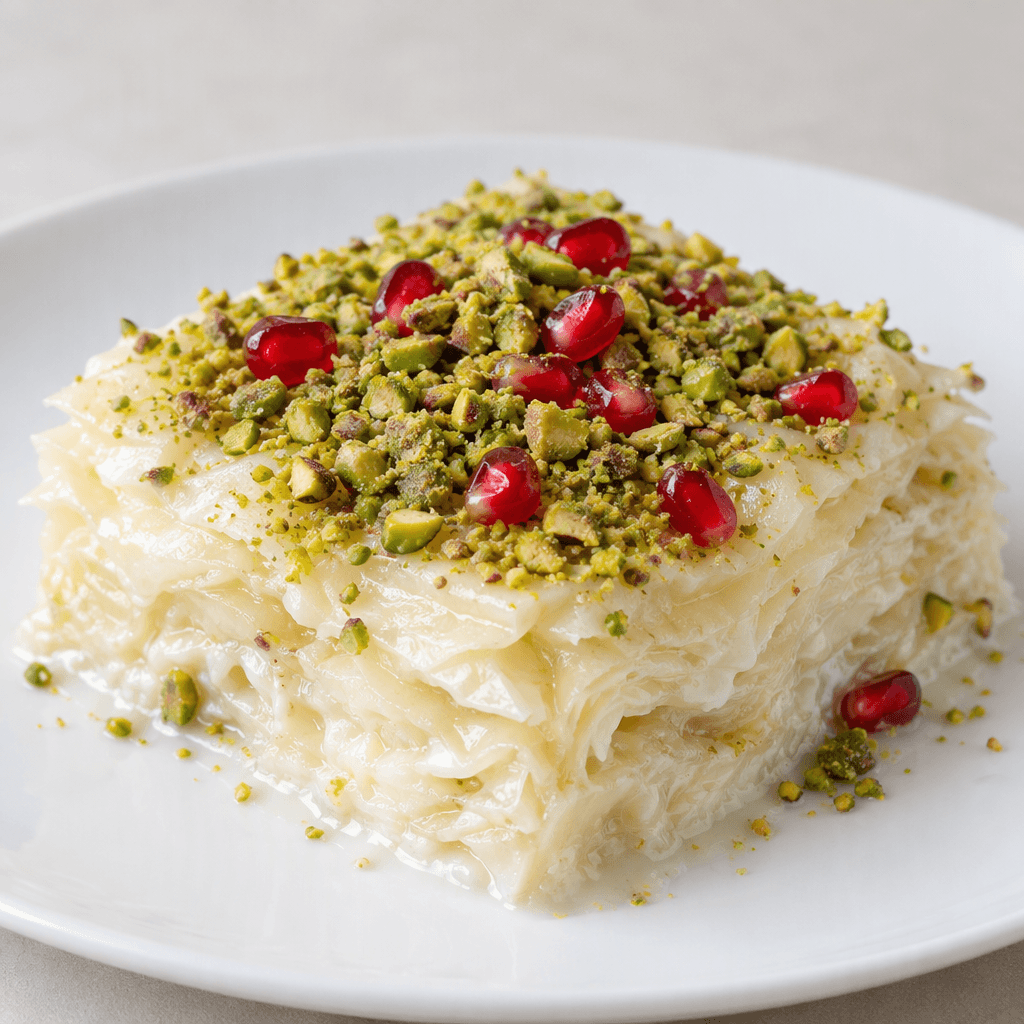
Sugar-Free Güllaç Calories
Sugar-free, light milk dessert, traditional Ramadan dessert
In season: Spring
CALORIES · 100 G
GI
POTASSIUM · 100 G
FIBER · 100 G
Quick answer
100 g of Sugar-Free Güllaç has 85 calories. It contains 13.2 g of carbs, 3.1 g of protein, 2.1 g of fat and 0.3 g of fiber. Its 0.3 µg of B12 covers 13% of the Daily Value. Its glycemic index is 45 (low), so it raises blood sugar slowly.
Sugar-Free Güllaç Nutrition Facts
Selected: 100 g
85
KCAL / 100G
Carbs
13.2g
· 5% DV
Protein
3.1g
· 6% DV
Fat
2.1g
· 3% DV
Fiber
0.3g
· 1% DV
DV is the share of the daily value covered, on a 2,000 kcal reference diet.
Calories come from: Carbs 63% · Protein 15% · Fat 22%
Sugar-Free Güllaç nutrition facts table · 100 g
| Nutrient | Amount | % DV |
|---|---|---|
| Calories | 85 kcal | |
| Total fat | 2.1 g | 3% |
| Saturated fat | 1.2 g | 6% |
| Trans fat | 0 g | |
| Sodium | 38 mg | 2% |
| Total carbohydrate | 13.2 g | 5% |
| Fiber | 0.3 g | 1% |
| Protein | 3.1 g | 6% |
Calories: Calories measure energy. Average daily need is 2,000 kcal. Excess calories are stored as fat, too few cause weight loss.
Carbs: Your body's primary energy source. The brain runs exclusively on carbs. Daily need: 275g.
Protein: Essential for muscle repair and cell growth. Daily need: 50g. Keeps you full and boosts metabolism.
Fat: Needed for hormone production and vitamin absorption. Daily need: 78g. Limit saturated fats, choose unsaturated.
Fiber: Critical for digestive health and satiety. Daily need: 28g. Stabilizes blood sugar, lowers cholesterol.

Log this food in EatBetter
100,000+ people use it
- Get your daily calorie target
- Snap your meal, log it in seconds
- See every vitamin and mineral

📸 Scan the code to get the app free.

How Many Calories in 1 Slice of Sugar-Free Güllaç?
| Serving | Amount | Calories |
|---|---|---|
| 1 slice (medium) | 100 g | 85 kcal |
| 1 slice (extra small) | 40 g | 34 kcal |
| 1 slice (small) | 60 g | 51 kcal |
| 1 piece (medium) | 80 g | 68 kcal |
| 100 g | 100 g | 85 kcal |
| 1 serving (medium) | 120 g | 102 kcal |
| 1 slice (large) | 150 g | 128 kcal |
| 2 slice (double) | 200 g | 170 kcal |
| 1 slice (extra large) | 200 g | 170 kcal |
Calculated from 85 calories per 100 g.
Frequently Asked Questions About Sugar-Free Güllaç
What is sugar-free güllaç?
Sugar-free güllaç is a Turkish milk dessert made by softening thin güllaç sheets in milk, usually in layers. It is especially associated with Ramadan and is served chilled; recipes may use a sweetener or simply omit added sugar.
What are the sheets in sugar-free güllaç made from?
Güllaç sheets are thin, delicate sheets made mainly from starch and water. They soften quickly when layered with milk, which gives sugar-free güllaç its distinctive tender texture.
How do you sweeten sugar-free güllaç without sugar?
Sugar-free güllaç can be left without added sweetener or made with a suitable non-sugar sweetener. The milk contributes its own mild sweetness, so taste the milk mixture before assembling and follow the sweetener’s directions.
Is sugar-free güllaç suitable for people with diabetes?
Sugar-free güllaç can still affect blood glucose because the sheets contain carbohydrates and milk contains lactose. The recipe and portion matter, so people with diabetes should fit it into their meal plan and ask their clinician or dietitian if needed.
Is sugar-free güllaç served hot or cold?
Sugar-free güllaç is served cold, after the milk has softened the sheets and the dessert has chilled. Chilling also helps the layers hold together when it is cut and served.
Can you make sugar-free güllaç the day before serving?
Yes, sugar-free güllaç can be assembled ahead and chilled until serving. Make it the day before rather than far in advance, since the sheets continue absorbing milk and can become overly soft.
Does sugar-free güllaç contain rose water?
Sugar-free güllaç may contain rose water, but it is optional and not included in every recipe. Add only a small amount to the milk mixture if you want its floral aroma to come through without overpowering the dessert.
What is traditionally put between the layers of sugar-free güllaç?
Chopped walnuts are a common filling between the layers of sugar-free güllaç. Some cooks use pistachios or hazelnuts instead, while pomegranate seeds are more often added on top for color and freshness.
Why does sugar-free güllaç turn mushy?
Sugar-free güllaç turns mushy when the sheets absorb too much milk, often because the milk is poured on too heavily or the dessert sits too long. Add the warm milk gradually and chill it once the layers are softened.
Can you freeze sugar-free güllaç?
Freezing sugar-free güllaç is not recommended for the best texture. The milk may separate as it thaws, leaving the delicate sheets watery; refrigerate it instead and serve it chilled.
Sugar-Free Güllaç Vitamins & Minerals
Vitamins
B12
0.3µg · 13% DV
B2
0.13mg · 10% DV
Biotin
2µg · 7% DV
B5
0.3mg · 6% DV
Minerals
Phosphorus
80mg · 11% DV
Calcium
110mg · 11% DV
Iodine
8µg · 5% DV
Zinc
0.4mg · 4% DV
Potassium ⭐
120mg · 4% DV
Sodium
38mg · 2% DV
Sugar-Free Güllaç Glycemic Index
GLYCEMIC INDEX
GLYCEMIC LOAD
Accounts for portion size — a more realistic measure than GI alone.
How to Burn Off Sugar-Free Güllaç
To burn the 85 calories in 100 g:
🚶
Walking (5 km/h)
🏃
Running (8 km/h)
🚴
Cycling
🏊
Swimming
Times are calculated with the MET equation for a 70 kg adult. Actual burn varies with your weight, age and pace.
What is Sugar-Free Güllaç?
Sugar-free güllaç is a Turkish milk dessert made by layering delicate güllaç sheets and letting them soften in milk, without added sugar. It is especially associated with Ramadan. The sheets become tender and silky as they absorb the milk, giving the dessert a mild, creamy taste.
In Turkey, güllaç is usually served chilled after iftar, often topped with walnuts and pomegranate seeds. Elsewhere, it makes a gentle alternative to richer, syrup-soaked desserts, though the sheets still contribute carbohydrates. At 85 calories per 100 g, it is relatively light; a modest portion with a little fruit makes a simple finish to a meal.
How Nutritious Is Sugar-Free Güllaç?
Nutrient density
Medium
How many vitamins, minerals and how much fiber this food carries per calorie. A high score means a lot of nutrition for few calories.
Satiety score
Medium
An EatBetter score computed from fiber, protein and calorie density. A high score means staying full longer on the same calories.
Both scores are calculated per 100 g and do not change with the selected portion. The satiety score is EatBetter's own calculation, not a clinical measure.
Is Sugar-Free Güllaç Processed?
NOVA 3
Processed
1. Unprocessed
2. Minimally Processed
3. Processed
4. Ultra-Processed
NOVA classifies foods into 4 groups by industrial processing. NOVA 1 (unprocessed) is the healthiest.
Does Sugar-Free Güllaç Contain Allergens?
Contains these allergens:
Which Diets Is Sugar-Free Güllaç Good For?
Vegan
— Not suitable
Vegetarian
✓ Suitable
Gluten-Free
— Not suitable
Dairy-Free
— Not suitable
Mediterranean
✓ Suitable
Paleo
— Not suitable
Whole30
— Not suitable
DASH
— Not suitable
Keto
— Not suitable
Low FODMAP
— Not suitable
Sugar-Free Güllaç Fat Profile
SATURATED
1.2g
MONOUNSATURATED
0.5g
POLYUNSATURATED
0.1g
Omega 6:3 ratio 5:1
Above the ideal 4:1 (5:1).
Compare Sugar-Free Güllaç
Foods Similar to Sugar-Free Güllaç
Have another question about Sugar-Free Güllaç?
Ask the AI nutrition coach — calories, portions, alternatives and more, answered in seconds in the app.

Scan calories with your camera
Instant AI nutrition analysis

Nutrition data compiled from USDA FoodData Central and scientific sources.