

Ready & Packaged Foods
All →Vegetables & Legumes
All →Desserts & Confectionery
All →Meat & Protein
All →Grains & Bakery
All →Beverages
All →Milk & Dairy
All →

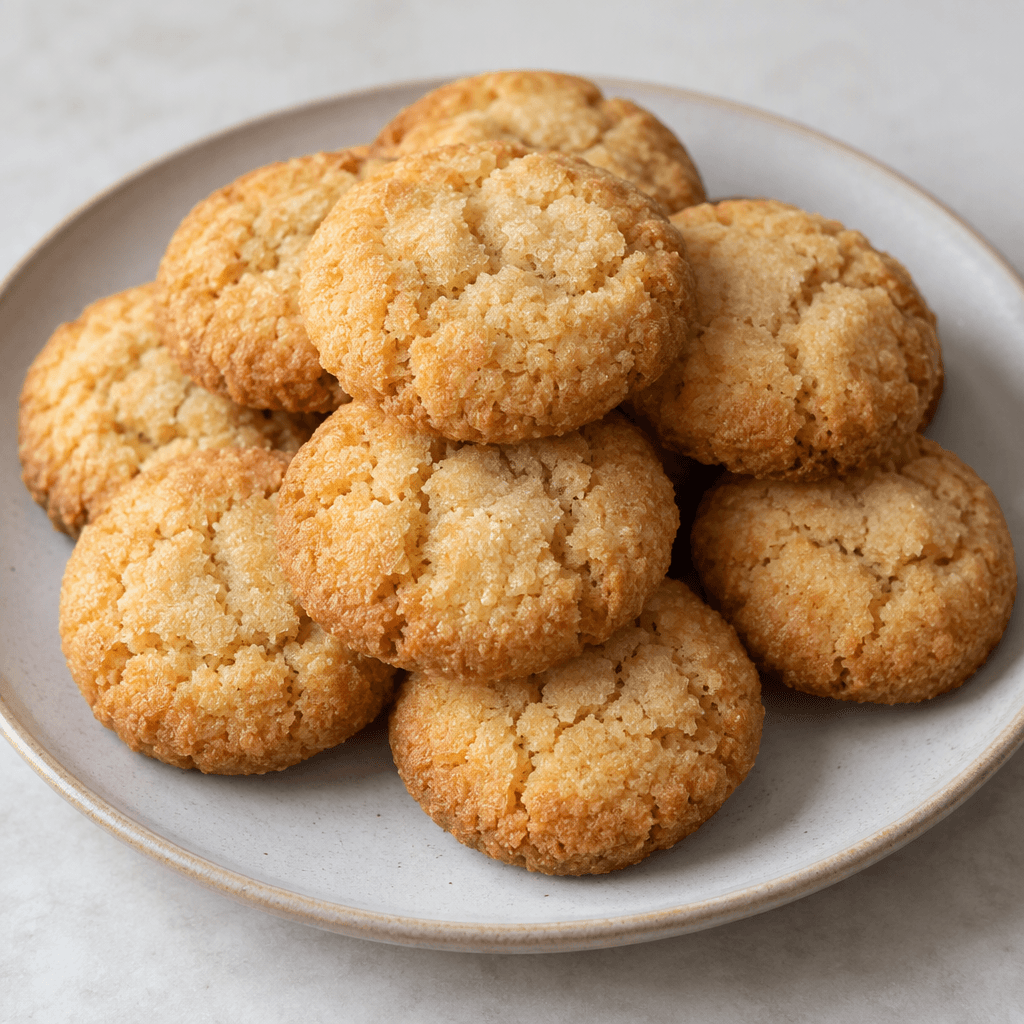
Sugar-free diet cookie Calories
Sugar-free, low-calorie, fiber-rich snack
In season: Spring · Summer · Autumn · Winter
CALORIES
GI
POTASSIUM
FIBER
Quick answer
1 piece (medium) of Sugar-free diet cookie (25 g) has 88 calories. That works out to 350 calories per 100 g. It contains 13.8 g of carbs, 2 g of protein, 2.5 g of fat and 2 g of fiber. Its 0.1 mg of Manganese covers 5% of the Daily Value. Its glycemic index is 45 (medium), so it raises blood sugar at a moderate pace.
What is Sugar-free diet cookie?
A sugar-free diet cookie is a sweet biscuit made without added sugar, usually using a non-sugar sweetener instead. Recipes vary, but may include flour, fat and egg; you can find both homemade versions and packaged options, with texture and sweetness differing by recipe.
It may be crisp or tender, and is commonly enjoyed as a small snack with tea or coffee. In many places, it also works as a lunchbox treat or an alternative to a conventional cookie. Sugar-free does not mean carbohydrate-free: it contains 55 g of carbohydrates per 100 g. Its fibre content can make it a more filling snack; pair one with plain yogurt or fruit, or keep the portion modest alongside a hot drink.
Sugar-free diet cookie Nutrition Facts
Selected: 100 g
350
KCAL / 100G
Carbs
55g
· 20% DV
Protein
8g
· 16% DV
Fat
10g
· 13% DV
Fiber
8g
· 29% DV
DV is the share of the daily value covered, on a 2,000 kcal reference diet.
Calories come from: Carbs 64% · Protein 9% · Fat 27%
Sugar-free diet cookie Vitamins & Minerals
Vitamins
B2
0.15mg · 12% DV
B1
0.12mg · 10% DV
B3
1.2mg · 8% DV
B5
0.4mg · 8% DV
Minerals
Manganese
1mg · 43% DV
Phosphorus
85mg · 12% DV
Iron
2mg · 11% DV
Zinc
1mg · 9% DV
How Nutritious Is Sugar-free diet cookie?
Nutrient density
Low
How many vitamins, minerals and how much fiber this food carries per calorie. A high score means a lot of nutrition for few calories.
Satiety score
Medium
An EatBetter score computed from fiber, protein and calorie density. A high score means staying full longer on the same calories.
Both scores are calculated per 100 g and do not change with the selected portion. The satiety score is EatBetter's own calculation, not a clinical measure.
Sugar-free diet cookie Glycemic Index
GLYCEMIC INDEX
GLYCEMIC LOAD
Accounts for portion size — a more realistic measure than GI alone.
How to Burn Off Sugar-free diet cookie
To burn the 350 calories in 100 g:
🚶
Walking (5 km/h)
🏃
Running (8 km/h)
🚴
Cycling
🏊
Swimming
Times are calculated with the MET equation for a 70 kg adult. Actual burn varies with your weight, age and pace.
Is Sugar-free diet cookie Processed?
NOVA 3
Processed
1. Unprocessed
2. Minimally Processed
3. Processed
4. Ultra-Processed
NOVA classifies foods into 4 groups by industrial processing. NOVA 1 (unprocessed) is the healthiest.
Does Sugar-free diet cookie Contain Allergens?
Contains these allergens:
Which Diets Is Sugar-free diet cookie Good For?
Vegan
— Not suitable
Vegetarian
✓ Suitable
Gluten-Free
— Not suitable
Dairy-Free
— Not suitable
Mediterranean
— Not suitable
Paleo
— Not suitable
Whole30
— Not suitable
DASH
— Not suitable
Keto
— Not suitable
Low FODMAP
— Not suitable
Sugar-free diet cookie Fat Profile
SATURATED
2.2g
MONOUNSATURATED
3.5g
POLYUNSATURATED
2.5g
Omega 6:3 ratio 8:1
Above the ideal 4:1 (8:1).
Compare Sugar-free diet cookie
Foods Similar to Sugar-free diet cookie
Frequently Asked Questions About Sugar-free diet cookie
Does a sugar-free diet cookie raise blood sugar?
Yes, a sugar-free diet cookie can raise blood sugar. “Sugar-free” does not mean carbohydrate-free: flour and other starches are digested into glucose. The sweetener used and what you eat with the cookie can also affect your response.
What sweetener is used in a sugar-free diet cookie?
A sugar-free diet cookie may use stevia, erythritol, sucralose, or another low- or no-calorie sweetener; recipes vary. Sweeteners behave differently in baking, so replacing one with another in a recipe can change the cookie’s texture, browning, and sweetness.
Is a sugar-free diet cookie good for weight loss?
A sugar-free diet cookie does not cause weight loss by itself. Removing sugar does not automatically make a cookie low in energy, since flour and fat may still be part of the recipe. Set aside a serving rather than eating directly from the package.
How do you make a sugar-free diet cookie at home?
You can make a sugar-free diet cookie with flour, egg, fat, and a baking-suitable sweetener. Add the sweetener according to the recipe, since different types vary in sweetness and bulk. Sugar-free dough may brown and spread differently, so follow the recipe’s visual cues as well as its timing.
Why does a sugar-free diet cookie taste bitter or have an aftertaste?
A sugar-free diet cookie can taste bitter or leave an aftertaste because some sweeteners have a lingering flavor, especially when used in excess. Pairing the sweetener with vanilla, cinnamon, or cocoa can help balance it; the result also depends on the sweetener blend.
Why is my sugar-free diet cookie crumbly or hard?
A sugar-free diet cookie may turn crumbly or hard if the dough has too much flour, is overmixed, or is baked too long. Sugar affects moisture and structure, so sugar-free recipes need balanced proportions. Remove the cookies when their edges are set, then let them cool on the tray.
How should you store sugar-free diet cookies?
Store sugar-free diet cookies in an airtight container once they have cooled completely. Keep them in a cool, dry place to prevent moisture from changing their texture. For packaged cookies, follow the storage directions after opening, since the sweetener and other ingredients can affect freshness.
Can you freeze sugar-free diet cookies?
Yes, sugar-free diet cookies can usually be frozen. Let them cool fully, place them in a sealed freezer-safe container with parchment between layers, and thaw them at room temperature. The texture may be slightly different after thawing, particularly if the cookies were soft to begin with.
Are sugar-free diet cookies suitable for people with diabetes?
Sugar-free diet cookies may fit into some meal plans, but they can still raise blood sugar because of their flour and other carbohydrates. Check the serving size and total carbohydrate information on the product, and ask your clinician or dietitian how to fit them into your individual plan.
Can you use regular sugar in a sugar-free diet cookie recipe?
Yes, you can use regular sugar in a sugar-free diet cookie recipe, but the result will no longer be sugar-free. Sugar also affects spread, moisture, and browning, so a direct swap may change the cookie’s texture as well as its sweetness.
Have another question about Sugar-free diet cookie?
Ask the AI nutrition coach — calories, portions, alternatives and more, answered in seconds in the app.

Scan calories with your camera
Instant AI nutrition analysis

Nutrition data compiled from USDA FoodData Central and scientific sources.