

Ready & Packaged Foods
All →Vegetables & Legumes
All →Desserts & Confectionery
All →Meat & Protein
All →Grains & Bakery
All →Beverages
All →Milk & Dairy
All →

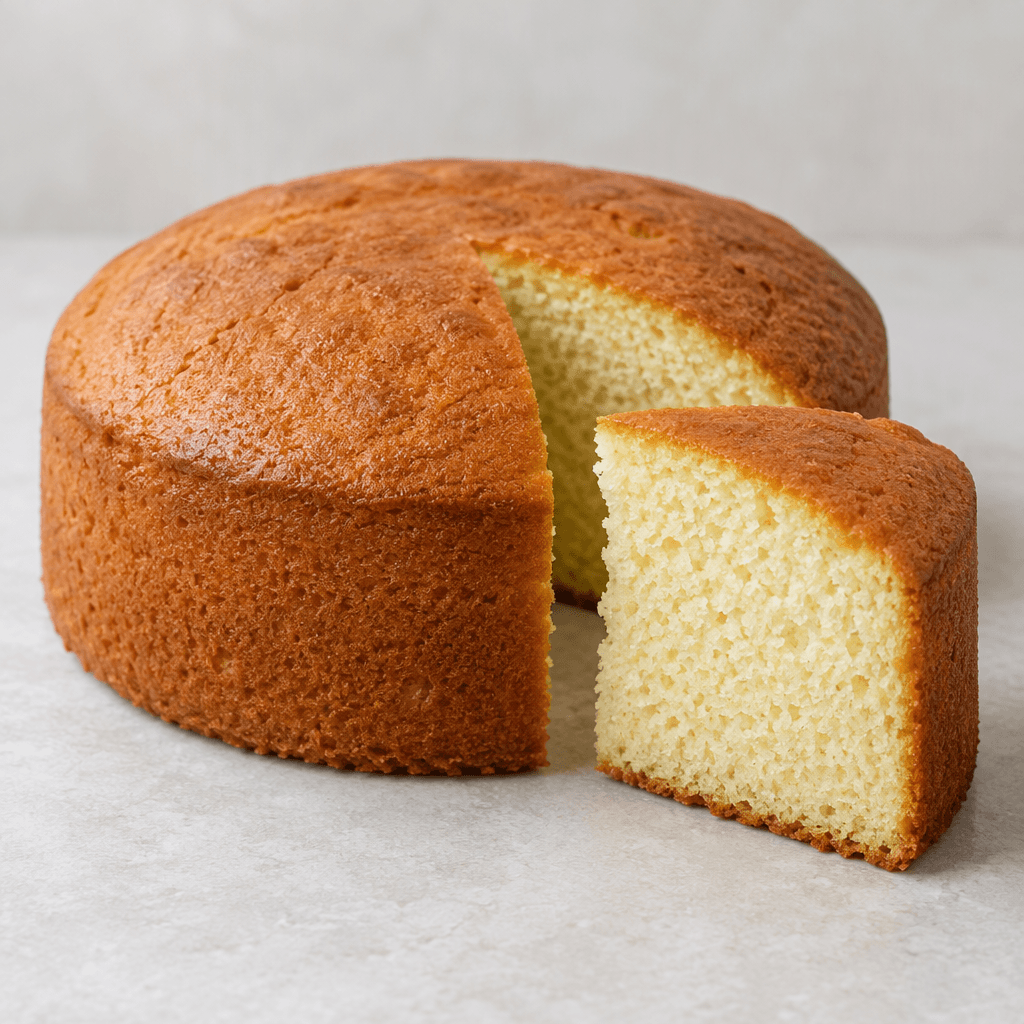
Unsweetened cake Calories
Sugar-free baked cake
CALORIES
GI
POTASSIUM
FIBER
Quick answer
1 slice (medium) of Unsweetened cake (60 g) has 186 calories. That works out to 310 calories per 100 g. It contains 24.7 g of carbs, 3.8 g of protein, 8.5 g of fat and 1.3 g of fiber. Its 7.2 µg of Selenium covers 13% of the Daily Value. Its glycemic index is 52 (medium), so it raises blood sugar at a moderate pace.
What is Unsweetened cake?
Unsweetened cake is a baked cake made without sugar being added to the recipe. Its ingredients and sweetness vary: some versions rely on the natural sweetness of ingredients, while others may taste quite plain. “Unsweetened” does not necessarily mean sugar-free, since ingredients can contain naturally occurring sugars.
Serve a slice with tea or coffee for breakfast or an afternoon snack, as people do in many places; it also works as a simple dessert. The crumb may be soft and tender, with its richness depending on the recipe. It is a source of carbohydrates and fat, with 310 calories per 100 g. For a lighter-feeling serving, keep the slice modest and pair it with fresh fruit rather than a rich topping.
Unsweetened cake Nutrition Facts
Selected: 100 g
310
KCAL / 100G
Carbs
41.2g
· 15% DV
Protein
6.4g
· 13% DV
Fat
14.1g
· 18% DV
Fiber
2.1g
· 8% DV
DV is the share of the daily value covered, on a 2,000 kcal reference diet.
Calories come from: Carbs 52% · Protein 8% · Fat 40%
Unsweetened cake Vitamins & Minerals
Vitamins
Biotin
6µg · 20% DV
B2
0.19mg · 15% DV
Vitamin A
78µg · 9% DV
B1
0.11mg · 9% DV
Minerals
Selenium
12µg · 22% DV
Sodium
290mg · 13% DV
Phosphorus
92mg · 13% DV
Zinc
1mg · 9% DV
How Nutritious Is Unsweetened cake?
Nutrient density
Low
How many vitamins, minerals and how much fiber this food carries per calorie. A high score means a lot of nutrition for few calories.
Satiety score
Low
An EatBetter score computed from fiber, protein and calorie density. A high score means staying full longer on the same calories.
Both scores are calculated per 100 g and do not change with the selected portion. The satiety score is EatBetter's own calculation, not a clinical measure.
Unsweetened cake Glycemic Index
GLYCEMIC INDEX
GLYCEMIC LOAD
Accounts for portion size — a more realistic measure than GI alone.
How to Burn Off Unsweetened cake
To burn the 310 calories in 100 g:
🚶
Walking (5 km/h)
🏃
Running (8 km/h)
🚴
Cycling
🏊
Swimming
Times are calculated with the MET equation for a 70 kg adult. Actual burn varies with your weight, age and pace.
Is Unsweetened cake Processed?
NOVA 3
Processed
1. Unprocessed
2. Minimally Processed
3. Processed
4. Ultra-Processed
NOVA classifies foods into 4 groups by industrial processing. NOVA 1 (unprocessed) is the healthiest.
Does Unsweetened cake Contain Allergens?
Contains these allergens:
Which Diets Is Unsweetened cake Good For?
Vegan
— Not suitable
Vegetarian
✓ Suitable
Gluten-Free
— Not suitable
Dairy-Free
— Not suitable
Mediterranean
— Not suitable
Paleo
— Not suitable
Whole30
— Not suitable
DASH
— Not suitable
Keto
— Not suitable
Low FODMAP
— Not suitable
Unsweetened cake Fat Profile
SATURATED
3.6g
MONOUNSATURATED
5.1g
POLYUNSATURATED
2.6g
Omega 6:3 ratio 48:1
Above the ideal 4:1 (48:1).
Compare Unsweetened cake
Foods Similar to Unsweetened cake
Frequently Asked Questions About Unsweetened cake
Is unsweetened cake actually sugar-free?
No. Unsweetened cake usually means no sugar was added as an ingredient, not that the finished cake contains no sugars. Fruit, milk, or other ingredients can contribute naturally occurring sugars, so the recipe or ingredient list matters.
Can unsweetened cake work as a birthday cake?
Yes. Unsweetened cake can be used for a birthday cake; add flavour with vanilla, citrus zest, or cocoa, then decorate with fresh fruit or a frosting that suits the recipe. Keep in mind that sweet frosting can add sugar even when the cake itself has none.
What can I put on unsweetened cake to make it taste sweeter?
Fresh berries, sliced ripe fruit, or a spoonful of fruit purée can add sweetness to unsweetened cake without changing the cake itself. If you use syrup, honey, or sweetened frosting, the finished serving will no longer be free of added sweeteners.
Why does unsweetened cake taste bland?
Unsweetened cake can taste bland when sugar has been removed without replacing its flavour and browning effects. Vanilla, cinnamon, citrus zest, or cocoa can make the flavour more satisfying; a tested recipe also helps preserve the cake’s texture.
Why is my unsweetened cake dry?
Unsweetened cake may turn dry if the batter lacks moisture or the cake is baked too long. Fruit purée or yogurt can add moisture, while checking the cake near the end of baking helps prevent it from overbaking.
How long does unsweetened cake keep?
Plain unsweetened cake generally keeps for a few days when covered and stored in a cool, dry place. Refrigerate it if it contains fresh fruit or perishable frosting, and keep it sealed so the cut surface does not dry out.
Can you freeze unsweetened cake?
Yes. Let unsweetened cake cool completely, wrap individual slices tightly, and freeze them in an airtight container. Thaw a slice while still wrapped to help it retain moisture; cakes with delicate frosting may change texture after freezing.
Can you make unsweetened cake without eggs?
Yes, but the egg replacement needs to suit the particular unsweetened cake recipe. Applesauce, mashed banana, or a commercial egg replacer can bind a batter, although each may change its flavour, rise, and texture.
Which flour is best for unsweetened cake?
All-purpose flour is a reliable choice for many unsweetened cake recipes because it gives a familiar, tender crumb. Whole-wheat flour can make the cake denser and more strongly flavoured, so use a recipe designed for it rather than swapping all the flour without adjustment.
Can people with diabetes eat unsweetened cake?
Some people with diabetes can include unsweetened cake, but the name does not mean it is free of carbohydrates or guaranteed not to affect blood glucose. Flour and fruit still count; portion size and the person’s meal plan matter, so follow the guidance of their clinician or dietitian.
Have another question about Unsweetened cake?
Ask the AI nutrition coach — calories, portions, alternatives and more, answered in seconds in the app.

Scan calories with your camera
Instant AI nutrition analysis

Nutrition data compiled from USDA FoodData Central and scientific sources.