

Ready & Packaged Foods
All →Vegetables & Legumes
All →Desserts & Confectionery
All →Meat & Protein
All →Grains & Bakery
All →Beverages
All →Milk & Dairy
All →

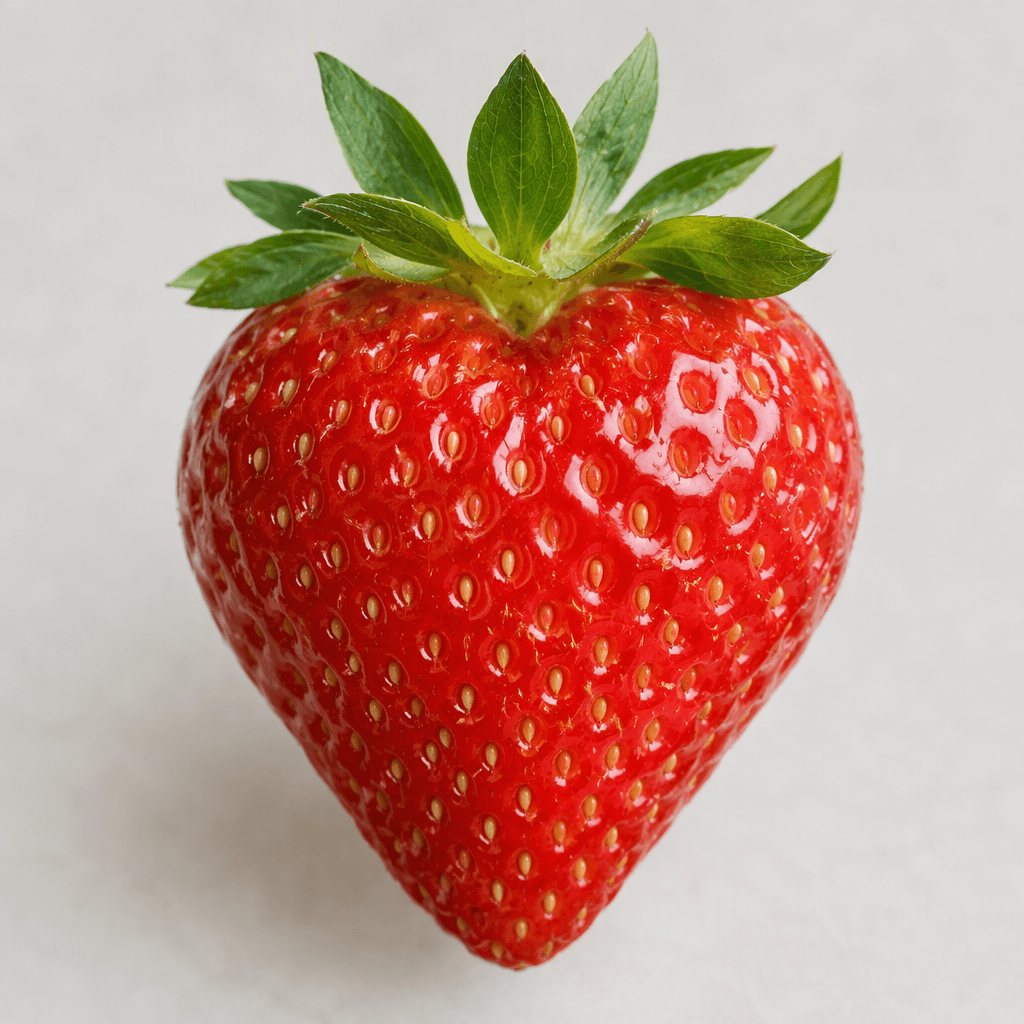
Strawberries Calories
Rich in vitamin C, fiber, antioxidants
In season: Spring · Summer
CALORIES
GI
POTASSIUM
FIBER
Quick answer
1 cup (medium) of Strawberries (150 g) has 48 calories. That works out to 32 calories per 100 g. It contains 11.6 g of carbs, 1 g of protein, 0.5 g of fat and 3 g of fiber. Its 88.5 mg of Vitamin C covers 98% of the Daily Value. Its glycemic index is 41 (low), so it raises blood sugar slowly.
What is Strawberries?
Strawberries are soft, juicy fruits with tiny seeds dotted across their bright red skin. The familiar garden strawberry was developed in Europe from plants brought from the Americas, and is now grown in many parts of the world. Its flavour ranges from sweet to gently tart, depending on the variety and ripeness.
Enjoy strawberries on their own or with yoghurt, cereal and porridge; they also work well in salads, baking and desserts. They are mostly water, with fibre and vitamin C, making them a light, refreshing choice for a snack. Pair them with yoghurt or nuts for something more filling, or use ripe fruit to bring sweetness to desserts with less added sugar.
Strawberries Nutrition Facts
Selected: 100 g
32
KCAL / 100G
Carbs
7.7g
· 3% DV
Protein
0.7g
· 1% DV
Fat
0.3g
· 0% DV
Fiber
2g
· 7% DV
DV is the share of the daily value covered, on a 2,000 kcal reference diet.
Calories come from: Carbs 85% · Protein 8% · Fat 7%

Log this food in EatBetter
100,000+ people use it
- Get your daily calorie target
- Snap your meal, log it in seconds
- See every vitamin and mineral

📸 Scan the code to get the app free.

Strawberries Vitamins & Minerals
Vitamins
Vitamin C
59mg · 66% DV
Folate
24µg · 6% DV
Biotin
1.5µg · 5% DV
B6
0.05mg · 3% DV
Minerals
Potassium ⭐
153mg · 5% DV
Phosphorus
24mg · 3% DV
Manganese
0mg · 0% DV
Copper
0mg · 0% DV
How Nutritious Is Strawberries?
Nutrient density
High
How many vitamins, minerals and how much fiber this food carries per calorie. A high score means a lot of nutrition for few calories.
Satiety score
Medium
An EatBetter score computed from fiber, protein and calorie density. A high score means staying full longer on the same calories.
Both scores are calculated per 100 g and do not change with the selected portion. The satiety score is EatBetter's own calculation, not a clinical measure.
Strawberries Glycemic Index
GLYCEMIC INDEX
GLYCEMIC LOAD
Accounts for portion size — a more realistic measure than GI alone.
How to Burn Off Strawberries
To burn the 32 calories in 100 g:
🚶
Walking (5 km/h)
🏃
Running (8 km/h)
🚴
Cycling
🏊
Swimming
Times are calculated with the MET equation for a 70 kg adult. Actual burn varies with your weight, age and pace.
Is Strawberries Processed?
NOVA 1
Unprocessed
1. Unprocessed
2. Minimally Processed
3. Processed
4. Ultra-Processed
NOVA classifies foods into 4 groups by industrial processing. NOVA 1 (unprocessed) is the healthiest.
Does Strawberries Contain Allergens?
No known major allergens
Which Diets Is Strawberries Good For?
Vegan
✓ Suitable
Vegetarian
✓ Suitable
Gluten-Free
✓ Suitable
Dairy-Free
— Not suitable
Mediterranean
✓ Suitable
Paleo
✓ Suitable
Whole30
— Not suitable
DASH
— Not suitable
Keto
— Not suitable
Low FODMAP
— Not suitable
Strawberries Fat Profile
SATURATED
0.02g
MONOUNSATURATED
0.04g
POLYUNSATURATED
0.16g
Omega 6:3 ratio 2.5:1
Below the ideal 4:1 — a good omega balance.
Compare Strawberries
Foods Similar to Strawberries
Frequently Asked Questions About Strawberries
How should strawberries be stored?
Store strawberries unwashed in the refrigerator in a breathable container, removing any bruised or moldy berries first. A paper towel can absorb excess moisture. Wash strawberries just before eating, since damp berries tend to spoil sooner.
How do you wash strawberries properly?
Rinse strawberries gently under cool running water just before eating them, then pat them dry. Avoid soaking them for a long time: strawberries absorb water easily, and extra moisture can soften them and shorten their shelf life.
Can you freeze fresh strawberries?
Yes, strawberries freeze well. Rinse and dry them thoroughly, remove the green tops, and freeze them in a single layer before transferring them to a sealed container. They soften after thawing, so they work best in smoothies, sauces, and baking.
Why do strawberries get moldy so quickly?
Strawberries bruise easily and hold moisture, which lets mold spread quickly, especially when berries are crowded or stored wet. Remove damaged berries as soon as you spot them, and discard any moldy berries rather than trying to cut away just the affected spot.
How can you tell when strawberries are ripe?
Ripe strawberries are evenly red, fragrant, and firm without being hard; their leafy caps should look fresh. Green or pale areas can indicate they were picked early, and strawberries do not continue to ripen much after picking.
Are strawberry seeds edible?
Yes, the tiny seeds on strawberry skins are edible and safe to swallow. Each visible speck is associated with a small fruit on the strawberry’s surface; the red, fleshy part is the enlarged base of the flower.
Can you eat the green tops of strawberries?
Yes, strawberry leaves and green tops are edible, though many people remove them for taste or texture. Rinse the berries well before eating the tops, and discard any leaves that are wilted, damaged, or moldy.
Are strawberries safe for babies?
Yes, babies can eat strawberries once they are ready for solid foods. Wash them thoroughly and serve them in an age-appropriate shape and texture; whole strawberries can be a choking hazard for young children.
Can people with diabetes eat strawberries?
Yes, strawberries can fit into a diabetes-friendly eating pattern when eaten as whole fruit in a suitable portion. Unsweetened berries are a better choice than syrup-packed fruit or sweetened strawberry desserts; individual blood-glucose responses can vary.
Why are some strawberries white inside?
A pale or white center can be natural, especially in certain strawberry varieties, or it can mean the berry was picked before fully ripening. If the strawberry smells fresh and has no mold or signs of spoilage, a pale center alone does not mean it is unsafe.
Have another question about Strawberries?
Ask the AI nutrition coach — calories, portions, alternatives and more, answered in seconds in the app.

Scan calories with your camera
Instant AI nutrition analysis

Nutrition data compiled from USDA FoodData Central and scientific sources.