

Ready & Packaged Foods
All →Vegetables & Legumes
All →Desserts & Confectionery
All →Meat & Protein
All →Grains & Bakery
All →Beverages
All →Milk & Dairy
All →

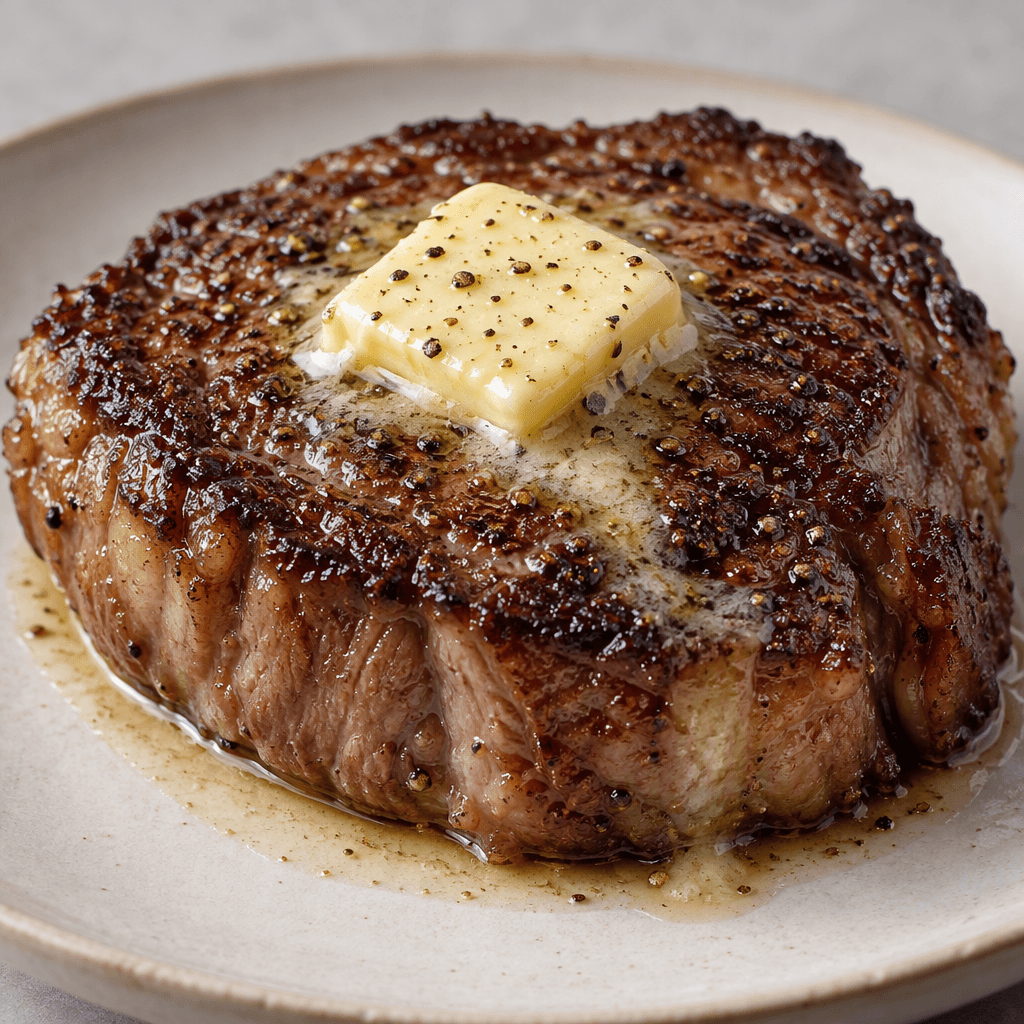
Steak with butter Calories
High protein, rich in iron, extra fat from butter
In season: Spring · Summer · Autumn · Winter
CALORIES · 100 G
GI
POTASSIUM · 100 G
FIBER · 100 G
Quick answer
1 piece (medium) of Steak with butter (180 g) has 468 calories. That works out to 260 calories per 100 g. It contains 0.4 g of carbs, 39.6 g of protein, 34.2 g of fat and 0 g of fiber. Its 4 µg of B12 covers 165% of the Daily Value. Its glycemic index is 0 (low), so it raises blood sugar slowly.
Steak with butter Nutrition Facts
Selected: 1 piece (medium) · 180 g
468
KCAL / 180G
Carbs
0.4g
· 0% DV
Protein
39.6g
· 79% DV
Fat
34.2g
· 44% DV
Fiber
0g
· 0% DV
DV is the share of the daily value covered, on a 2,000 kcal reference diet.
Calories come from: Carbs 0% · Protein 34% · Fat 66%
Steak with butter nutrition facts table · 1 piece (medium) (180 g)
| Nutrient | Amount | % DV |
|---|---|---|
| Calories | 468 kcal | |
| Total fat | 34.2 g | 44% |
| Saturated fat | 17.1 g | 86% |
| Trans fat | 0.27 g | |
| Sodium | 108 mg | 5% |
| Total carbohydrate | 0.4 g | 0% |
| Fiber | 0 g | 0% |
| Protein | 39.6 g | 79% |
Calories: Calories measure energy. Average daily need is 2,000 kcal. Excess calories are stored as fat, too few cause weight loss.
Carbs: Your body's primary energy source. The brain runs exclusively on carbs. Daily need: 275g.
Protein: Essential for muscle repair and cell growth. Daily need: 50g. Keeps you full and boosts metabolism.
Fat: Needed for hormone production and vitamin absorption. Daily need: 78g. Limit saturated fats, choose unsaturated.
Fiber: Critical for digestive health and satiety. Daily need: 28g. Stabilizes blood sugar, lowers cholesterol.

Log this food in EatBetter
100,000+ people use it
- Get your daily calorie target
- Snap your meal, log it in seconds
- See every vitamin and mineral

📸 Scan the code to get the app free.

How Many Calories in 1 Medium Steak with butter?
| Serving | Amount | Calories |
|---|---|---|
| 1 piece (medium) | 180 g | 468 kcal |
| 1 slice (thin) | 80 g | 208 kcal |
| 100 g | 100 g | 260 kcal |
| 1 piece (small) | 120 g | 312 kcal |
| 1 slice (thick) | 140 g | 364 kcal |
| 1 serving (medium) | 200 g | 520 kcal |
| 1 piece (large) | 250 g | 650 kcal |
| 1 serving (large) | 300 g | 780 kcal |
Calculated from 260 calories per 100 g.
Frequently Asked Questions About Steak with butter
How do you cook steak with butter in a pan?
Sear steak with butter in a very hot pan using a little high-heat oil first, then add the butter after turning the steak. Tilt the pan and spoon the foaming butter over the meat; adding butter at the start can make it burn.
When should you add butter to steak with butter?
Add the butter to steak with butter near the end of cooking, once the steak has developed a browned crust. Butter browns quickly over high heat, so baste the steak briefly and move it off the heat if the butter starts to darken or smoke.
Why does steak with butter turn out tough?
Steak with butter usually turns tough when it is overcooked or sliced immediately after cooking. Tenderloin is naturally a tender cut, so cook it briefly over high heat and let it rest before cutting across the grain.
How long do you cook steak with butter for medium-rare?
Steak with butter can reach medium-rare in just a few minutes, but the exact time depends on its thickness and your pan. A meat thermometer is more reliable than timing: aim for about 130–135°F (54–57°C) at the center, then allow for carryover cooking.
What cut of beef is used for steak with butter?
Steak with butter is made with a steak topped or basted with butter; this version uses tenderloin. Tenderloin is prized for its tenderness, while fattier cuts such as ribeye have more marbling and a richer beef flavor.
Can you make steak with butter in the oven?
Yes, you can finish steak with butter in the oven after searing it in a hot, oven-safe pan. Add the butter toward the end rather than leaving it in the oven from the start, and use a thermometer to check the center.
Does butter make steak with butter more tender?
No, butter does not tenderize steak with butter; it adds richness and flavor. Tenderness mainly comes from the cut and how it is cooked. Avoid overcooking the tenderloin, and rest it briefly before slicing to keep it juicy.
What is the difference between steak with butter and compound-butter steak?
Steak with butter is typically served with plain butter melted over the meat, while compound-butter steak uses butter mixed with ingredients such as herbs, garlic, or citrus. Compound butter adds extra seasoning and is usually placed on the hot steak just before serving.
What should you serve with steak with butter?
Serve steak with butter with a crisp salad, roasted vegetables, or potatoes to balance its rich, buttery flavor. A simple pan sauce can work too, but an additional cream or butter sauce may make the meal overly rich.
How long does cooked steak with butter keep in the fridge?
Cooked steak with butter keeps for 3–4 days in a covered container in the refrigerator. Chill leftovers promptly, then reheat only the portion you plan to eat; gentle reheating helps prevent the tenderloin from drying out.
Steak with butter Vitamins & Minerals
Vitamins
B12
3.96µg · 165% DV
B6
0.9mg · 53% DV
B3
8.1mg · 51% DV
B5
1.44mg · 29% DV
Minerals
Zinc
8.1mg · 74% DV
Selenium
32µg · 58% DV
Phosphorus
342mg · 49% DV
Iron
3.96mg · 22% DV
Potassium ⭐
576mg · 17% DV
Sodium
108mg · 5% DV
Steak with butter Glycemic Index
GLYCEMIC INDEX
GLYCEMIC LOAD
Accounts for portion size — a more realistic measure than GI alone.
How to Burn Off Steak with butter
To burn the 468 calories in 1 piece (medium) (180 g):
🚶
Walking (5 km/h)
🏃
Running (8 km/h)
🚴
Cycling
🏊
Swimming
Times are calculated with the MET equation for a 70 kg adult. Actual burn varies with your weight, age and pace.
What is Steak with butter?
Steak with butter is a simple preparation of beef steak—often a tender, lean cut such as fillet—cooked in a pan or on a grill and finished with butter. The butter softens over the browned surface, adding richness and helping make a straightforward cut feel more indulgent; it is a familiar restaurant and home-cooked dish in many places.
Serve it hot, with potatoes, salad, or grilled vegetables, adjusting the cooking to your preference. It is high in protein and very low in carbohydrate, while the butter adds extra fat. For a lighter plate, use a modest pat of butter and pair the steak with plenty of vegetables rather than a rich sauce.
How Nutritious Is Steak with butter?
Nutrient density
High
How many vitamins, minerals and how much fiber this food carries per calorie. A high score means a lot of nutrition for few calories.
Satiety score
Medium
An EatBetter score computed from fiber, protein and calorie density. A high score means staying full longer on the same calories.
Both scores are calculated per 100 g and do not change with the selected portion. The satiety score is EatBetter's own calculation, not a clinical measure.
Is Steak with butter Processed?
NOVA 2
Minimally Processed
1. Unprocessed
2. Minimally Processed
3. Processed
4. Ultra-Processed
NOVA classifies foods into 4 groups by industrial processing. NOVA 1 (unprocessed) is the healthiest.
Does Steak with butter Contain Allergens?
Contains these allergens:
Which Diets Is Steak with butter Good For?
Vegan
— Not suitable
Vegetarian
— Not suitable
Gluten-Free
✓ Suitable
Dairy-Free
— Not suitable
Mediterranean
✓ Suitable
Paleo
✓ Suitable
Whole30
— Not suitable
DASH
— Not suitable
Keto
✓ Suitable
Low FODMAP
— Not suitable
Steak with butter Fat Profile
SATURATED
17.1g
MONOUNSATURATED
13.5g
POLYUNSATURATED
2.16g
Omega 6:3 ratio 1.6:1
Below the ideal 4:1 — a good omega balance.
Compare Steak with butter
Foods Similar to Steak with butter
Have another question about Steak with butter?
Ask the AI nutrition coach — calories, portions, alternatives and more, answered in seconds in the app.

Scan calories with your camera
Instant AI nutrition analysis

Nutrition data compiled from USDA FoodData Central and scientific sources.