

Ready & Packaged Foods
All →Vegetables & Legumes
All →Desserts & Confectionery
All →Meat & Protein
All →Grains & Bakery
All →Beverages
All →Milk & Dairy
All →

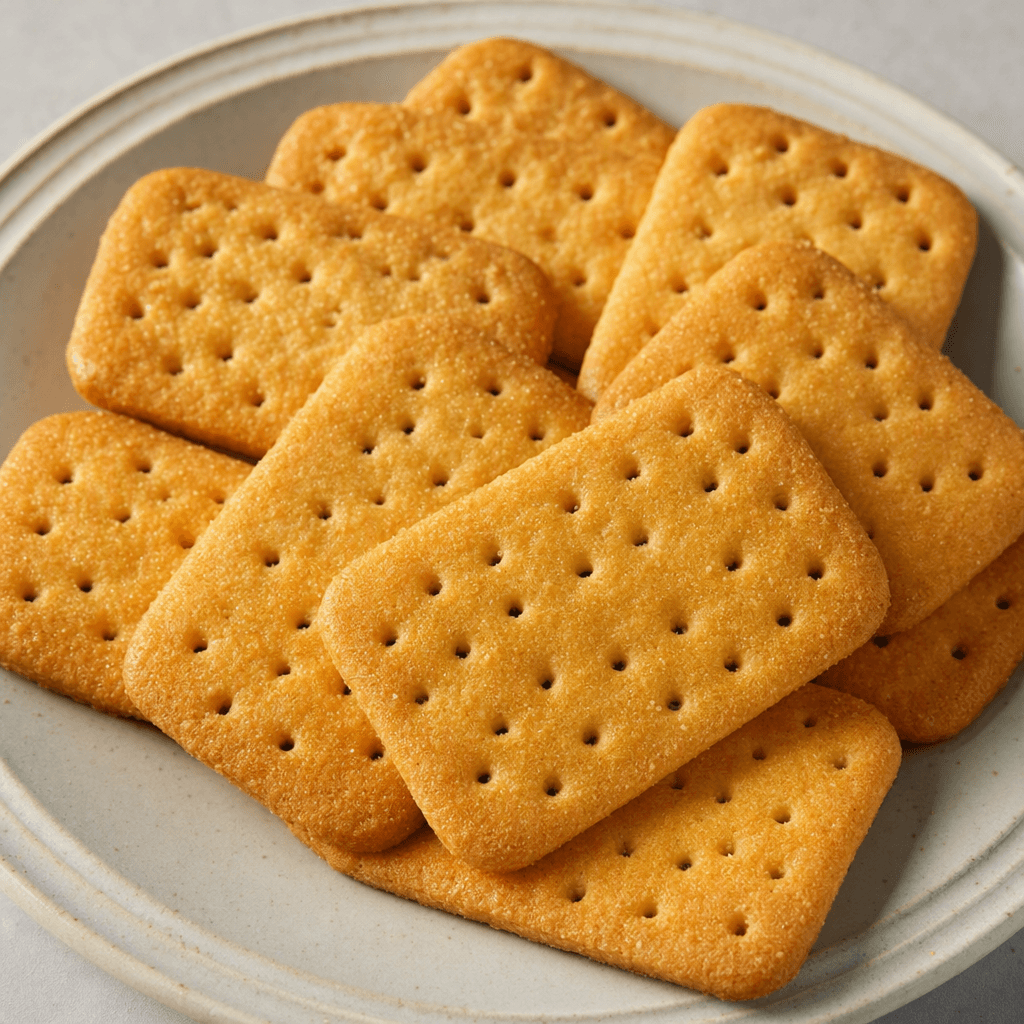
Sport biscuit Calories
Sweet energy biscuit
CALORIES
GI
POTASSIUM
FIBER
Quick answer
4 piece (medium) of Sport biscuit (28 g) has 125 calories. That works out to 445 calories per 100 g. It contains 20 g of carbs, 2 g of protein, 4 g of fat and 0.7 g of fiber. Its 0.1 mg of B1 covers 7% of the Daily Value. Its glycemic index is 68 (medium), so it raises blood sugar at a moderate pace.
What is Sport biscuit?
Sport biscuit is a sweet, packaged biscuit commonly sold in Turkey, usually made with flour, sugar and fat. Its name suggests an athletic snack, but it is also eaten as an everyday convenience food rather than being reserved for people who exercise. The exact recipe varies by product.
It is typically crisp, with a sweet, fairly rich taste, and makes an easy snack with tea or coffee, at school or work, or while travelling. It is carbohydrate-led and energy-dense, so it is better thought of as a quick bite than a particularly filling snack. For a more balanced break, have a small portion with plain yogurt or a piece of fruit, and choose an unsweetened drink.
Sport biscuit Nutrition Facts
Selected: 100 g
445
KCAL / 100G
Carbs
71.5g
· 26% DV
Protein
7.2g
· 14% DV
Fat
14.2g
· 18% DV
Fiber
2.6g
· 9% DV
DV is the share of the daily value covered, on a 2,000 kcal reference diet.
Calories come from: Carbs 65% · Protein 7% · Fat 28%
Sport biscuit Vitamins & Minerals
Vitamins
B1
0.32mg · 27% DV
B2
0.24mg · 18% DV
B3
2.8mg · 18% DV
Biotin
3µg · 10% DV
Minerals
Selenium
12µg · 22% DV
Sodium
420mg · 18% DV
Iron
3mg · 17% DV
Phosphorus
88mg · 13% DV
How Nutritious Is Sport biscuit?
Nutrient density
Low
How many vitamins, minerals and how much fiber this food carries per calorie. A high score means a lot of nutrition for few calories.
Satiety score
Low
An EatBetter score computed from fiber, protein and calorie density. A high score means staying full longer on the same calories.
Both scores are calculated per 100 g and do not change with the selected portion. The satiety score is EatBetter's own calculation, not a clinical measure.
Sport biscuit Glycemic Index
GLYCEMIC INDEX
GLYCEMIC LOAD
Accounts for portion size — a more realistic measure than GI alone.
How to Burn Off Sport biscuit
To burn the 445 calories in 100 g:
🚶
Walking (5 km/h)
🏃
Running (8 km/h)
🚴
Cycling
🏊
Swimming
Times are calculated with the MET equation for a 70 kg adult. Actual burn varies with your weight, age and pace.
Is Sport biscuit Processed?
NOVA 3
Processed
1. Unprocessed
2. Minimally Processed
3. Processed
4. Ultra-Processed
NOVA classifies foods into 4 groups by industrial processing. NOVA 1 (unprocessed) is the healthiest.
Does Sport biscuit Contain Allergens?
Contains these allergens:
Which Diets Is Sport biscuit Good For?
Vegan
— Not suitable
Vegetarian
✓ Suitable
Gluten-Free
— Not suitable
Dairy-Free
— Not suitable
Mediterranean
— Not suitable
Paleo
— Not suitable
Whole30
— Not suitable
DASH
— Not suitable
Keto
— Not suitable
Low FODMAP
— Not suitable
Sport biscuit Fat Profile
SATURATED
5.1g
MONOUNSATURATED
4.2g
POLYUNSATURATED
3g
Omega 6:3 ratio 93.3:1
Above the ideal 4:1 (93.3:1).
Compare Sport biscuit
Foods Similar to Sport biscuit
Frequently Asked Questions About Sport biscuit
What is a sport biscuit, and is it only for athletes?
A sport biscuit is a sweet, usually carbohydrate-rich biscuit marketed as a convenient energy snack. It is not exclusively for athletes; the name describes its intended use around exercise, but anyone can eat it as an occasional snack.
Are sport biscuits healthy?
Sport biscuits can provide convenient energy, but they are not automatically a nutritious or balanced snack. They tend to be more useful around exercise than as a substitute for meals; pairing one with yogurt or milk adds a protein source.
Is a sport biscuit good to eat before a workout?
Yes, a sport biscuit can provide carbohydrates before exercise, which your body can use for energy. Eat it early enough to feel comfortable during your workout, especially if sweet or rich foods upset your stomach.
What ingredients are in a sport biscuit?
Sport biscuits commonly contain flour, sugar and fat, while recipes may also include dairy, eggs or soy. Ingredients differ between brands, so check the package if you have an allergy or need to avoid a particular ingredient.
Can a sport biscuit help with recovery after exercise?
A sport biscuit can replace some carbohydrate after exercise, but it is not a complete recovery snack on its own. Add a protein-rich food such as yogurt, milk or eggs to support muscle repair and make the snack more filling.
Do sport biscuits cause weight gain?
Sport biscuits can contribute to weight gain if they regularly add more energy to your diet than you use. Being marketed for exercise does not make them calorie-free or exempt from portion size.
Are sport biscuits better than energy bars?
Not necessarily; sport biscuits and energy bars differ by brand and recipe, so neither category is always the better choice. Compare their ingredients and choose the format that suits your workout, appetite and dietary needs.
Can people with diabetes eat sport biscuits?
People with diabetes may be able to include a sport biscuit, but its carbohydrates can raise blood glucose. The effect depends on portion size, the rest of the meal and individual treatment, so ask your diabetes care professional what fits your plan.
How should you store sport biscuits after opening the packet?
Store sport biscuits in an airtight container in a cool, dry place after opening. This helps keep moisture out and preserves their texture; follow any storage directions and use-by guidance on the package.
Can you eat a sport biscuit for breakfast?
Yes, you can eat a sport biscuit for breakfast, but it is unlikely to make a balanced meal by itself. Pair it with a protein-rich food such as milk or yogurt and some fruit for a more substantial start to the day.
Have another question about Sport biscuit?
Ask the AI nutrition coach — calories, portions, alternatives and more, answered in seconds in the app.

Scan calories with your camera
Instant AI nutrition analysis

Nutrition data compiled from USDA FoodData Central and scientific sources.