

Ready & Packaged Foods
All →Vegetables & Legumes
All →Desserts & Confectionery
All →Meat & Protein
All →Grains & Bakery
All →Beverages
All →Milk & Dairy
All →

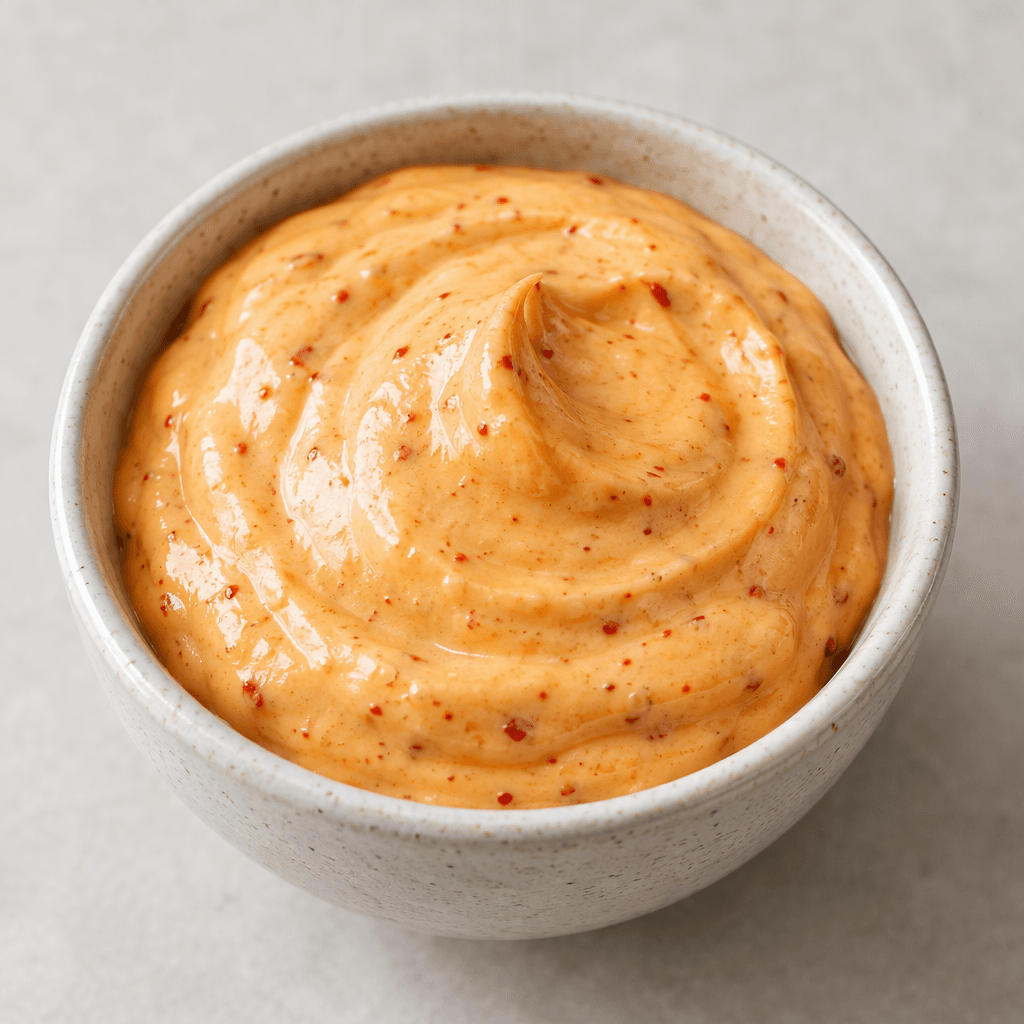
Spicy Mayonnaise Sauce Calories
Creamy, spicy, fatty sauce, popular for sandwiches and fries
In season: Spring · Summer · Autumn · Winter
CALORIES
GI
POTASSIUM
FIBER
Quick answer
1 tablespoon (medium) of Spicy Mayonnaise Sauce (15 g) has 78 calories. That works out to 520 calories per 100 g. It contains 0.8 g of carbs, 0.2 g of protein, 8.1 g of fat and 0.1 g of fiber. Its glycemic index is 15 (low), so it raises blood sugar slowly.
What is Spicy Mayonnaise Sauce?
Spicy mayonnaise sauce is a creamy condiment made by mixing mayonnaise with chilli or another pepper seasoning. Rather than belonging to one particular region, it has become a familiar addition to sandwiches and casual meals in many cuisines.
Its smooth, rich texture balances a gentle tang with a peppery kick. Try it with fries, burgers, wraps, sushi rolls or grilled seafood; a little goes a long way. It is mostly fat and contributes relatively little protein or fibre, so it works best as a flavourful accompaniment rather than the main part of a meal. For a lighter dip, mix a small spoonful with plain yoghurt, or spread it thinly in a sandwich.
Spicy Mayonnaise Sauce Nutrition Facts
Selected: 100 g
520
KCAL / 100G
Carbs
5.5g
· 2% DV
Protein
1.2g
· 2% DV
Fat
54g
· 69% DV
Fiber
0.7g
· 3% DV
DV is the share of the daily value covered, on a 2,000 kcal reference diet.
Calories come from: Carbs 4% · Protein 1% · Fat 95%
Spicy Mayonnaise Sauce Vitamins & Minerals
Vitamins
Vitamin E
4.2mg · 28% DV
Vitamin K
18µg · 15% DV
Biotin
2.5µg · 8% DV
Vitamin A
60µg · 7% DV
Minerals
Sodium
650mg · 28% DV
Selenium
2.5µg · 5% DV
Phosphorus
18mg · 3% DV
Iodine
3µg · 2% DV
How Nutritious Is Spicy Mayonnaise Sauce?
Nutrient density
Low
How many vitamins, minerals and how much fiber this food carries per calorie. A high score means a lot of nutrition for few calories.
Satiety score
Low
An EatBetter score computed from fiber, protein and calorie density. A high score means staying full longer on the same calories.
Both scores are calculated per 100 g and do not change with the selected portion. The satiety score is EatBetter's own calculation, not a clinical measure.
Spicy Mayonnaise Sauce Glycemic Index
GLYCEMIC INDEX
GLYCEMIC LOAD
Accounts for portion size — a more realistic measure than GI alone.
How to Burn Off Spicy Mayonnaise Sauce
To burn the 520 calories in 100 g:
🚶
Walking (5 km/h)
🏃
Running (8 km/h)
🚴
Cycling
🏊
Swimming
Times are calculated with the MET equation for a 70 kg adult. Actual burn varies with your weight, age and pace.
Is Spicy Mayonnaise Sauce Processed?
NOVA 3
Processed
1. Unprocessed
2. Minimally Processed
3. Processed
4. Ultra-Processed
NOVA classifies foods into 4 groups by industrial processing. NOVA 1 (unprocessed) is the healthiest.
Does Spicy Mayonnaise Sauce Contain Allergens?
Contains these allergens:
Which Diets Is Spicy Mayonnaise Sauce Good For?
Vegan
— Not suitable
Vegetarian
— Not suitable
Gluten-Free
— Not suitable
Dairy-Free
— Not suitable
Mediterranean
✓ Suitable
Paleo
— Not suitable
Whole30
— Not suitable
DASH
— Not suitable
Keto
— Not suitable
Low FODMAP
— Not suitable
Spicy Mayonnaise Sauce Fat Profile
SATURATED
7.5g
MONOUNSATURATED
18.5g
POLYUNSATURATED
14.2g
Omega 6:3 ratio 37.7:1
Above the ideal 4:1 (37.7:1).
Compare Spicy Mayonnaise Sauce
Foods Similar to Spicy Mayonnaise Sauce
Frequently Asked Questions About Spicy Mayonnaise Sauce
What is spicy mayonnaise sauce made of?
Spicy mayonnaise sauce is made by mixing mayonnaise with chili or another hot sauce. Some recipes add garlic, lime juice, or vinegar, so the flavor and heat can vary between homemade and store-bought versions.
How do you make spicy mayonnaise sauce?
Mix mayonnaise with a little chili sauce, then taste and add more until it reaches the heat level you want. Stir in lime juice or garlic if desired, but add liquids gradually to keep the sauce smooth.
What does spicy mayonnaise sauce taste like?
Spicy mayonnaise sauce tastes creamy, tangy, and mildly to strongly hot, depending on the chili used. The mayonnaise softens the pepper’s sharp heat, while additions such as garlic or lime can make the flavor more savory or bright.
What do you eat with spicy mayonnaise sauce?
Spicy mayonnaise sauce goes well with fries, burgers, sandwiches, grilled chicken, and roasted vegetables. Use it as a dip or spread a thin layer inside a wrap; its creamy texture pairs especially well with crisp or grilled foods.
Is spicy mayonnaise sauce the same as sriracha mayo?
No. Sriracha mayo is a type of spicy mayonnaise sauce made specifically with sriracha, while other versions use different chili sauces or peppers. The exact heat, sweetness, and tanginess depend on the ingredients.
Can you put spicy mayonnaise sauce on sushi?
Yes, spicy mayonnaise sauce is often used as a topping or filling for sushi rolls, especially rolls with seafood or vegetables. Add it sparingly so its creamy, hot flavor does not overpower the other ingredients.
How long does spicy mayonnaise sauce last in the fridge after opening?
Opened, store-bought spicy mayonnaise sauce should be refrigerated and used according to its package directions. Keep the lid tightly closed and use a clean utensil; homemade sauce should be kept chilled and used promptly.
Can you heat spicy mayonnaise sauce?
It is best not to cook spicy mayonnaise sauce over high heat because the emulsion can separate and turn oily. Add it to hot food just before serving, or use it as a cool dip or topping.
Can you freeze spicy mayonnaise sauce?
Freezing spicy mayonnaise sauce is not recommended because thawing can break the mayonnaise emulsion, leaving the sauce watery or grainy. Refrigerate it instead, and make or buy an amount you can use while fresh.
Why does spicy mayonnaise sauce separate?
Spicy mayonnaise sauce can separate when it is exposed to high heat or when too much liquid is mixed in at once. For a homemade batch, whisk additions in gradually and keep the finished sauce chilled.
Have another question about Spicy Mayonnaise Sauce?
Ask the AI nutrition coach — calories, portions, alternatives and more, answered in seconds in the app.

Scan calories with your camera
Instant AI nutrition analysis

Nutrition data compiled from USDA FoodData Central and scientific sources.