

Ready & Packaged Foods
All →Vegetables & Legumes
All →Desserts & Confectionery
All →Meat & Protein
All →Grains & Bakery
All →Beverages
All →Milk & Dairy
All →

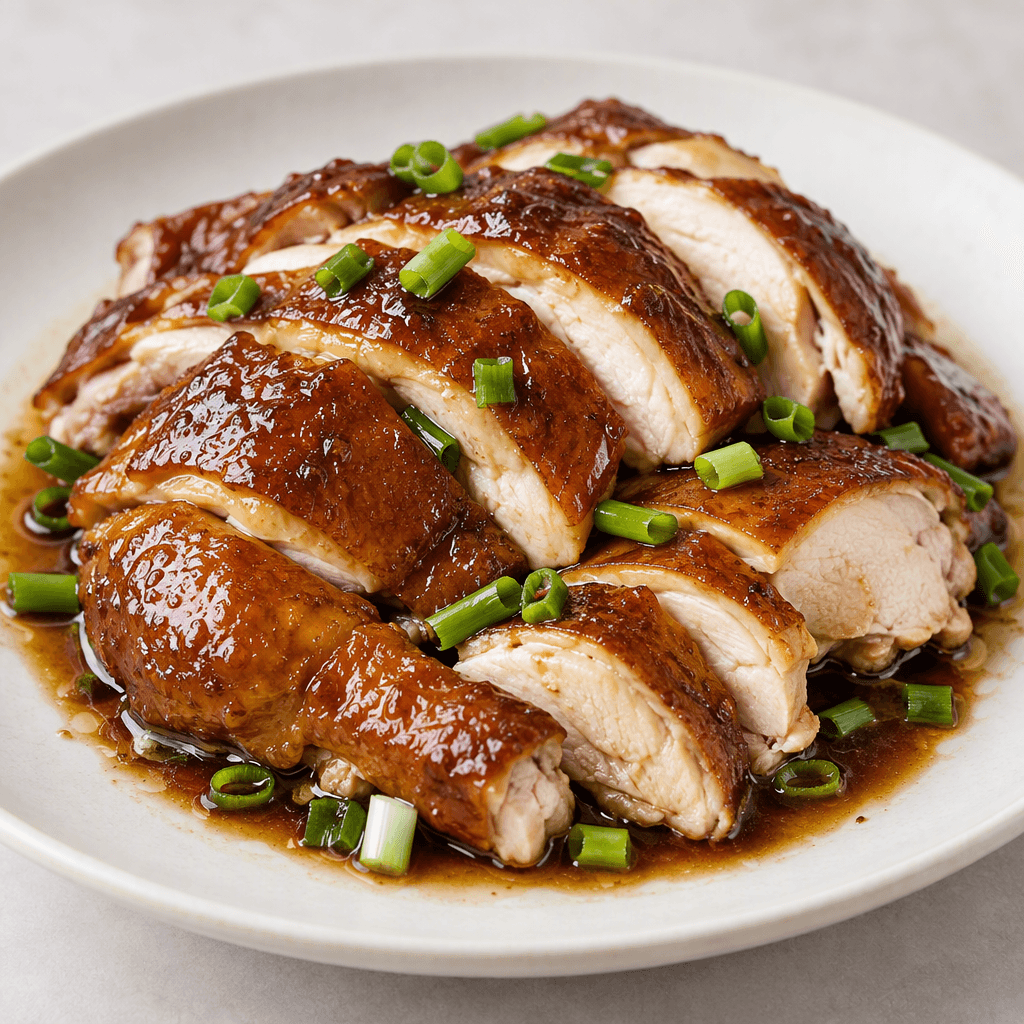
Soy Sauce Chicken Calories
Protein source, umami flavor, Asian cuisine
In season: Spring · Summer · Autumn · Winter
CALORIES
GI
POTASSIUM
FIBER
Quick answer
1 piece (medium) of Soy Sauce Chicken (150 g) has 255 calories. That works out to 170 calories per 100 g. It contains 6.3 g of carbs, 30.8 g of protein, 10.8 g of fat and 0.5 g of fiber. Its 11.7 mg of B3 covers 73% of the Daily Value. Its glycemic index is 35 (low), so it raises blood sugar slowly.
What is Soy Sauce Chicken?
Soy sauce chicken is a Chinese dish of chicken cooked in a soy-based sauce, often with aromatics such as ginger or garlic. Some versions are gently braised until the skin takes on a deep, glossy colour and the meat stays tender; it may be served sliced with a little of its cooking sauce.
Its savoury, umami-rich flavour works well with steamed rice, noodles or greens, whether as a home-cooked dinner or part of a shared meal. It is a protein-forward choice, with 20.5 g of protein per 100 g. For a lighter plate, use the sauce sparingly and pair the chicken with plenty of vegetables.
Soy Sauce Chicken Nutrition Facts
Selected: 100 g
170
KCAL / 100G
Carbs
4.2g
· 2% DV
Protein
20.5g
· 41% DV
Fat
7.2g
· 9% DV
Fiber
0.3g
· 1% DV
DV is the share of the daily value covered, on a 2,000 kcal reference diet.
Calories come from: Carbs 10% · Protein 50% · Fat 40%
Soy Sauce Chicken Vitamins & Minerals
Vitamins
B3
7.8mg · 49% DV
B6
0.43mg · 25% DV
B5
0.9mg · 18% DV
Biotin
4.2µg · 14% DV
Minerals
Sodium
950mg · 41% DV
Phosphorus
165mg · 24% DV
Selenium
11µg · 20% DV
Zinc
1mg · 9% DV
How Nutritious Is Soy Sauce Chicken?
Nutrient density
Medium
How many vitamins, minerals and how much fiber this food carries per calorie. A high score means a lot of nutrition for few calories.
Satiety score
Medium
An EatBetter score computed from fiber, protein and calorie density. A high score means staying full longer on the same calories.
Both scores are calculated per 100 g and do not change with the selected portion. The satiety score is EatBetter's own calculation, not a clinical measure.
Soy Sauce Chicken Glycemic Index
GLYCEMIC INDEX
GLYCEMIC LOAD
Accounts for portion size — a more realistic measure than GI alone.
How to Burn Off Soy Sauce Chicken
To burn the 170 calories in 100 g:
🚶
Walking (5 km/h)
🏃
Running (8 km/h)
🚴
Cycling
🏊
Swimming
Times are calculated with the MET equation for a 70 kg adult. Actual burn varies with your weight, age and pace.
Is Soy Sauce Chicken Processed?
NOVA 3
Processed
1. Unprocessed
2. Minimally Processed
3. Processed
4. Ultra-Processed
NOVA classifies foods into 4 groups by industrial processing. NOVA 1 (unprocessed) is the healthiest.
Does Soy Sauce Chicken Contain Allergens?
Contains these allergens:
Which Diets Is Soy Sauce Chicken Good For?
Vegan
— Not suitable
Vegetarian
— Not suitable
Gluten-Free
— Not suitable
Dairy-Free
— Not suitable
Mediterranean
✓ Suitable
Paleo
— Not suitable
Whole30
— Not suitable
DASH
— Not suitable
Keto
— Not suitable
Low FODMAP
— Not suitable
Soy Sauce Chicken Fat Profile
SATURATED
2.1g
MONOUNSATURATED
2.3g
POLYUNSATURATED
1.1g
Omega 6:3 ratio 5.6:1
Above the ideal 4:1 (5.6:1).
Compare Soy Sauce Chicken
Foods Similar to Soy Sauce Chicken
Frequently Asked Questions About Soy Sauce Chicken
What is soy sauce chicken?
Soy sauce chicken is chicken cooked in a savory soy-based sauce, often with aromatics such as ginger, garlic, and star anise. Cantonese versions are commonly braised or gently simmered, then sliced and served with some of the cooking sauce.
Is soy sauce chicken a Chinese dish?
Yes, soy sauce chicken is especially associated with Cantonese cooking in southern China and Hong Kong. Recipes vary, but many use a soy-based braising liquid flavored with aromatics, rather than simply coating fried chicken in soy sauce.
What is the difference between soy sauce chicken and teriyaki chicken?
Soy sauce chicken is generally braised or simmered in a savory soy-based liquid, while teriyaki chicken is coated or glazed with a sweeter sauce and often grilled or pan-cooked. Their sauces and cooking methods give them distinct flavors and textures.
What cut of chicken is best for soy sauce chicken?
Bone-in, skin-on chicken pieces are a good choice for soy sauce chicken because they stay moist and make the sauce flavorful. Boneless pieces work too, but they cook faster, so watch them closely to avoid drying them out.
How do you get soy sauce chicken skin glossy?
For glossy soy sauce chicken, let the skin cook in the seasoned braising liquid and spoon the sauce over it near the end. A light coating of reduced sauce after cooking adds shine; avoid boiling it down until it becomes overly salty.
Should soy sauce chicken be served hot or cold?
Soy sauce chicken can be served warm or at room temperature. Cantonese-style preparations are often sliced after cooking and served with a little of the cooking liquid, so the dish does not need to be piping hot to taste good.
What should you serve with soy sauce chicken?
Serve soy sauce chicken with steamed rice, noodles, or simple vegetables. These mild sides balance the savory sauce without competing with it, and rice also makes it easy to enjoy the flavorful liquid on the plate.
How long does soy sauce chicken last in the fridge?
Cooked soy sauce chicken keeps for 3–4 days in a covered container in the refrigerator. Refrigerate it promptly after cooking, and reheat only the portion you plan to eat.
Can you make soy sauce chicken in a slow cooker?
Yes, soy sauce chicken can be made in a slow cooker with chicken, soy sauce, and aromatics. Use less added liquid than you would for a stovetop braise because the cooker traps moisture, and check that the chicken is fully cooked before serving.
Can you eat the skin on soy sauce chicken?
Yes, the skin on soy sauce chicken is edible when the chicken is properly cooked. It absorbs the seasoned sauce and gives the dish a richer texture; remove it if you prefer a leaner or less rich serving.
Have another question about Soy Sauce Chicken?
Ask the AI nutrition coach — calories, portions, alternatives and more, answered in seconds in the app.

Scan calories with your camera
Instant AI nutrition analysis

Nutrition data compiled from USDA FoodData Central and scientific sources.