

Ready & Packaged Foods
All →Vegetables & Legumes
All →Desserts & Confectionery
All →Meat & Protein
All →Grains & Bakery
All →Beverages
All →Milk & Dairy
All →

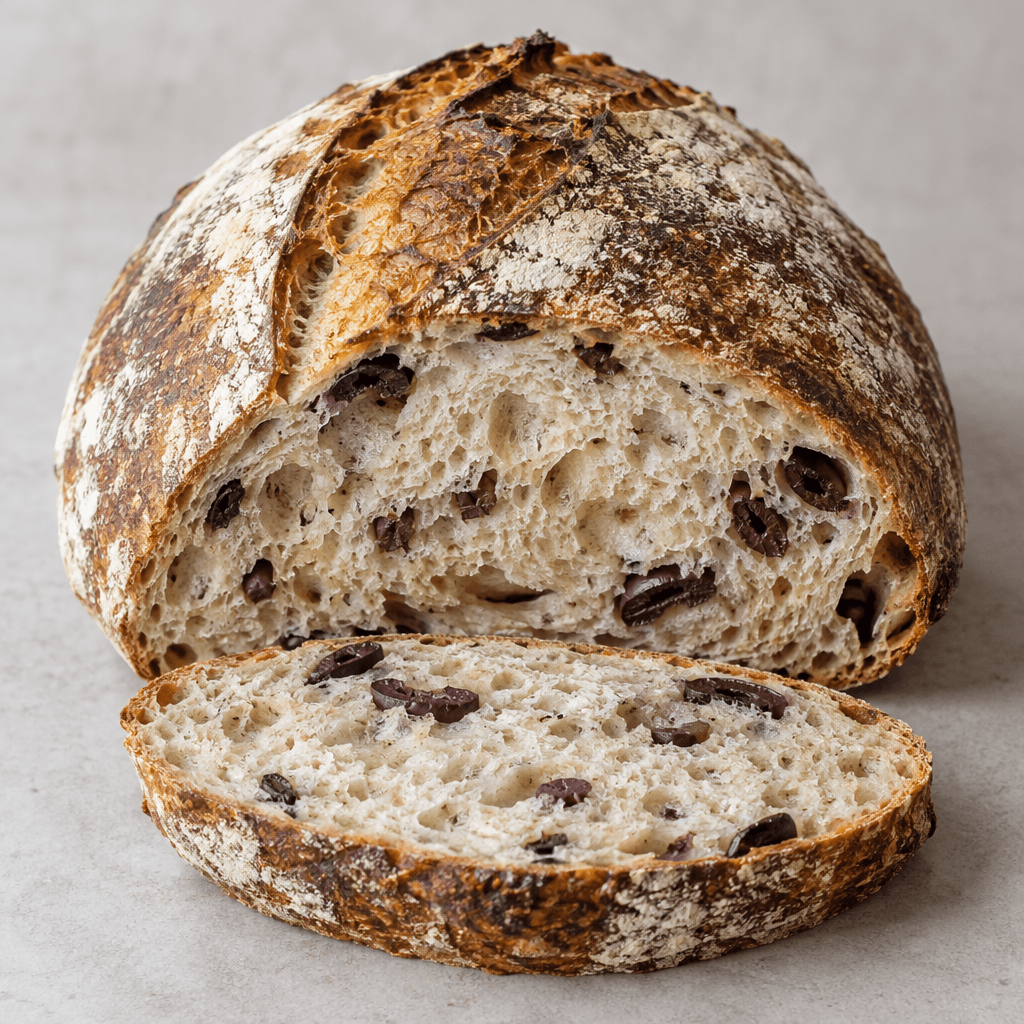
Sourdough Olive Bread Calories
Artisan bread made with sourdough and olives
In season: Spring · Summer · Autumn · Winter
CALORIES
GI
POTASSIUM
FIBER
Quick answer
1 slice (medium) of Sourdough Olive Bread (40 g) has 98 calories. That works out to 245 calories per 100 g. It contains 17.7 g of carbs, 2.8 g of protein, 1.6 g of fat and 1.1 g of fiber. Its 228 mg of Sodium covers 10% of the Daily Value. Its glycemic index is 54 (medium), so it raises blood sugar at a moderate pace.
What is Sourdough Olive Bread?
Sourdough Olive Bread is a naturally leavened loaf made from flour and water, with olives folded into the dough before baking. Its open, chewy crumb contrasts with a crisp, often deeply browned crust; the sourdough brings a gentle tang that balances the olives’ salty, fruity flavour. Olive-studded sourdoughs draw on Mediterranean bread-making traditions, though recipes and loaf shapes vary.
Serve it with cheese, tomatoes or soup, or toast a slice for breakfast; it also works well alongside a salad or mezze-style spread. It is mainly a source of carbohydrates, with some protein and fibre. For a lighter meal, choose a smaller slice and pair it with vegetables and a modest amount of cheese or hummus.
Sourdough Olive Bread Nutrition Facts
Selected: 100 g
245
KCAL / 100G
Carbs
44.2g
· 16% DV
Protein
7.1g
· 14% DV
Fat
4.1g
· 5% DV
Fiber
2.7g
· 10% DV
DV is the share of the daily value covered, on a 2,000 kcal reference diet.
Calories come from: Carbs 73% · Protein 12% · Fat 15%
Sourdough Olive Bread Vitamins & Minerals
Vitamins
B1
0.19mg · 16% DV
B3
2.1mg · 13% DV
Folate
32µg · 8% DV
B2
0.08mg · 6% DV
Minerals
Sodium
570mg · 25% DV
Selenium
11µg · 20% DV
Iron
2mg · 11% DV
Zinc
1mg · 9% DV
How Nutritious Is Sourdough Olive Bread?
Nutrient density
Low
How many vitamins, minerals and how much fiber this food carries per calorie. A high score means a lot of nutrition for few calories.
Satiety score
Medium
An EatBetter score computed from fiber, protein and calorie density. A high score means staying full longer on the same calories.
Both scores are calculated per 100 g and do not change with the selected portion. The satiety score is EatBetter's own calculation, not a clinical measure.
Sourdough Olive Bread Glycemic Index
GLYCEMIC INDEX
GLYCEMIC LOAD
Accounts for portion size — a more realistic measure than GI alone.
How to Burn Off Sourdough Olive Bread
To burn the 245 calories in 100 g:
🚶
Walking (5 km/h)
🏃
Running (8 km/h)
🚴
Cycling
🏊
Swimming
Times are calculated with the MET equation for a 70 kg adult. Actual burn varies with your weight, age and pace.
Is Sourdough Olive Bread Processed?
NOVA 3
Processed
1. Unprocessed
2. Minimally Processed
3. Processed
4. Ultra-Processed
NOVA classifies foods into 4 groups by industrial processing. NOVA 1 (unprocessed) is the healthiest.
Does Sourdough Olive Bread Contain Allergens?
Contains these allergens:
Which Diets Is Sourdough Olive Bread Good For?
Vegan
— Not suitable
Vegetarian
✓ Suitable
Gluten-Free
— Not suitable
Dairy-Free
— Not suitable
Mediterranean
✓ Suitable
Paleo
— Not suitable
Whole30
— Not suitable
DASH
— Not suitable
Keto
— Not suitable
Low FODMAP
— Not suitable
Sourdough Olive Bread Fat Profile
SATURATED
0.7g
MONOUNSATURATED
2.2g
POLYUNSATURATED
1.1g
Omega 6:3 ratio 10.7:1
Above the ideal 4:1 (10.7:1).
Compare Sourdough Olive Bread
Foods Similar to Sourdough Olive Bread
Frequently Asked Questions About Sourdough Olive Bread
How do you make Sourdough Olive Bread?
Sourdough Olive Bread is made by folding chopped, well-drained olives into a dough of active sourdough starter, flour, water, and salt, then fermenting and baking it. Adding the olives after the dough has come together helps keep them intact.
How should you store Sourdough Olive Bread?
Store Sourdough Olive Bread at room temperature in a bread box or cloth bag, with the cut side covered. Refrigeration tends to make bread stale faster. If you see mold, discard the loaf rather than cutting away just the visible patch.
Can you freeze Sourdough Olive Bread?
Yes. Slice Sourdough Olive Bread before freezing and seal the slices in a freezer-safe bag so you can take out only what you need. Reheat slices straight from frozen in a toaster, or let them thaw at room temperature.
What goes well with Sourdough Olive Bread?
Sourdough Olive Bread pairs well with tomato soup, salads, cheese, or eggs. Its olives already bring a salty, savory flavor, so it also works as a simple base for avocado or roasted vegetables without needing much extra seasoning.
Does Sourdough Olive Bread taste sour?
Sourdough Olive Bread can have a mild tang, but the sourness varies with the starter and fermentation time. The olives add a salty, savory flavor that balances the tang, so the finished loaf does not necessarily taste sharply sour.
Why is my Sourdough Olive Bread dense?
Sourdough Olive Bread can turn out dense if the starter is weak, the dough is under-fermented, or too many olives weigh it down. Drain the olives well and let the dough rise until it looks noticeably aerated before baking.
When should you add olives to Sourdough Olive Bread dough?
Add the olives to Sourdough Olive Bread dough after the initial mixing, once the dough has started to come together. Fold them in gently; adding them too early can break them up and smear their color through the crumb.
Is Sourdough Olive Bread traditionally made with black or green olives?
Sourdough Olive Bread can be made with either black or green olives, and some recipes combine both. Remove any pits, drain the olives thoroughly, and rinse very salty brined olives before adding them to the dough.
Can you toast Sourdough Olive Bread?
Yes, Sourdough Olive Bread toasts well and develops a crisp edge that complements its chewy crumb. Use a moderate toaster setting because exposed olive pieces can scorch; it is especially good served with eggs, soup, or a simple spread.
Can people with diabetes eat Sourdough Olive Bread?
People with diabetes can include Sourdough Olive Bread, but it still contains carbohydrate and can affect blood glucose. Portion size and what else is eaten with it matter; ask your clinician or dietitian for advice tailored to your glucose plan.
Have another question about Sourdough Olive Bread?
Ask the AI nutrition coach — calories, portions, alternatives and more, answered in seconds in the app.

Scan calories with your camera
Instant AI nutrition analysis

Nutrition data compiled from USDA FoodData Central and scientific sources.