

Ready & Packaged Foods
All →Vegetables & Legumes
All →Desserts & Confectionery
All →Meat & Protein
All →Grains & Bakery
All →Beverages
All →Milk & Dairy
All →

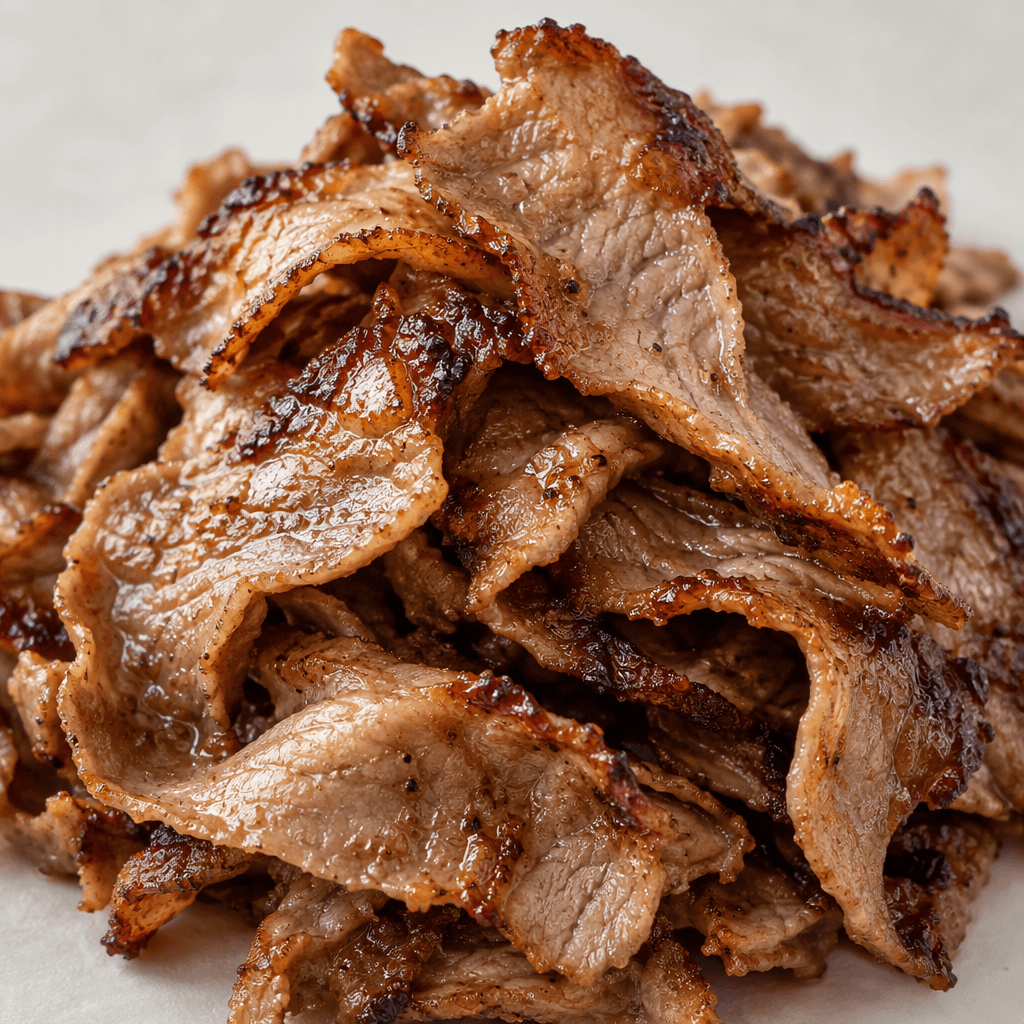
Doner meat Calories
High-protein doner meat with moderate-to-high fat and high sodium
CALORIES
GI
POTASSIUM
FIBER
Quick answer
100 g of Doner meat has 215 calories. It contains 2.8 g of carbs, 18.5 g of protein, 14.2 g of fat and 0 g of fiber. Its 1.9 µg of B12 covers 79% of the Daily Value. Its glycemic index is 0 (low), so it raises blood sugar slowly.
What is Doner meat?
Doner meat is seasoned meat cooked on a vertical spit and shaved into thin slices. The meat and seasoning vary by shop, and the slices may be served hot or eaten cold after cooling. Its tender, savoury pieces often have crisp, browned edges and a rich, slightly oily texture.
In Türkiye, it is commonly tucked into flatbread or served on a plate with rice, salad, onion and tomato; elsewhere, it is also popular in wraps, sandwiches and kebab plates. It provides substantial protein, while its fat and salt can add up, so a smaller portion with plenty of fresh salad makes a balanced meal. Reheat leftovers briefly in a pan to bring back some of the browned edges.
Doner meat Nutrition Facts
Selected: 100 g
215
KCAL / 100G
Carbs
2.8g
· 1% DV
Protein
18.5g
· 37% DV
Fat
14.2g
· 18% DV
Fiber
0g
· 0% DV
DV is the share of the daily value covered, on a 2,000 kcal reference diet.
Calories come from: Carbs 5% · Protein 35% · Fat 60%
Doner meat Vitamins & Minerals
Vitamins
B12
1.9µg · 79% DV
B3
4.9mg · 31% DV
B6
0.32mg · 19% DV
B2
0.18mg · 14% DV
Minerals
Sodium
780mg · 34% DV
Selenium
18µg · 33% DV
Zinc
3mg · 27% DV
Phosphorus
170mg · 24% DV
How Nutritious Is Doner meat?
Nutrient density
Medium
How many vitamins, minerals and how much fiber this food carries per calorie. A high score means a lot of nutrition for few calories.
Satiety score
Medium
An EatBetter score computed from fiber, protein and calorie density. A high score means staying full longer on the same calories.
Both scores are calculated per 100 g and do not change with the selected portion. The satiety score is EatBetter's own calculation, not a clinical measure.
Doner meat Glycemic Index
GLYCEMIC INDEX
GLYCEMIC LOAD
Accounts for portion size — a more realistic measure than GI alone.
How to Burn Off Doner meat
To burn the 215 calories in 100 g:
🚶
Walking (5 km/h)
🏃
Running (8 km/h)
🚴
Cycling
🏊
Swimming
Times are calculated with the MET equation for a 70 kg adult. Actual burn varies with your weight, age and pace.
Is Doner meat Processed?
NOVA 3
Processed
1. Unprocessed
2. Minimally Processed
3. Processed
4. Ultra-Processed
NOVA classifies foods into 4 groups by industrial processing. NOVA 1 (unprocessed) is the healthiest.
Does Doner meat Contain Allergens?
No known major allergens
Which Diets Is Doner meat Good For?
Vegan
— Not suitable
Vegetarian
— Not suitable
Gluten-Free
— Not suitable
Dairy-Free
— Not suitable
Mediterranean
— Not suitable
Paleo
✓ Suitable
Whole30
— Not suitable
DASH
— Not suitable
Keto
— Not suitable
Low FODMAP
— Not suitable
Doner meat Fat Profile
SATURATED
5.1g
MONOUNSATURATED
6.1g
POLYUNSATURATED
0.9g
Omega 6:3 ratio 7.8:1
Above the ideal 4:1 (7.8:1).
Compare Doner meat
Foods Similar to Doner meat
Frequently Asked Questions About Doner meat
What is doner meat made of?
Doner meat is usually made from seasoned beef, lamb, chicken, or a mixture, layered onto a vertical spit. Recipes vary by shop and region, and some beef doner uses several cuts of meat rather than one single cut.
How is doner meat cooked?
Doner meat is stacked on a vertical spit and cooked as the spit turns beside a heat source. The browned outer layer is shaved off in thin slices as it cooks, while the layers underneath continue cooking.
What is the difference between doner meat, shawarma, and gyro?
All three are cooked on a rotating vertical spit and sliced thinly, but they come from different food traditions and often use different seasonings and serving styles. Doner is Turkish in origin; shawarma is associated with Middle Eastern cuisines, while gyro is Greek.
Why is doner meat sliced so thinly?
Doner meat is shaved thinly from the cooked outside of the rotating spit so each serving gets browned edges and tender slices. Thin slices also make it easier to serve in bread, wraps, or on a plate.
Can you eat doner meat cold?
Yes, cooked doner meat can be eaten cold if it has been refrigerated promptly and kept chilled. Doner meat served cold is still cooked meat, not raw meat; discard it if it was left at room temperature for more than two hours.
How do you reheat doner meat without drying it out?
Reheat doner meat briefly in a covered pan with a splash of water, or with a little of its own fat, until steaming hot throughout. Avoid prolonged high heat, which can make the thin slices tough and dry.
How long does doner meat last in the fridge?
Store cooked doner meat in a covered container in the refrigerator and eat it within 3–4 days. Refrigerate it within two hours of serving, and sooner in hot weather; throw it away if it smells off or feels slimy.
Can you freeze doner meat?
Yes, cooked doner meat freezes well when packed airtight in meal-sized portions. Thaw it in the refrigerator and reheat it thoroughly; avoid refreezing meat once it has thawed.
Is doner meat healthy?
Doner meat provides protein, but it can also be high in fat and sodium. For a more balanced meal, choose a moderate portion and pair it with vegetables or salad rather than relying on salty sauces and extras.
Is doner meat made from one piece of meat?
Not always. Doner meat may be assembled from seasoned slices of meat, and some products use a formed mixture of meat and seasonings. The exact structure varies by recipe, so the appearance and texture can differ between shops.
Have another question about Doner meat?
Ask the AI nutrition coach — calories, portions, alternatives and more, answered in seconds in the app.

Scan calories with your camera
Instant AI nutrition analysis

Nutrition data compiled from USDA FoodData Central and scientific sources.