

Ready & Packaged Foods
All →Vegetables & Legumes
All →Desserts & Confectionery
All →Meat & Protein
All →Grains & Bakery
All →Beverages
All →Milk & Dairy
All →

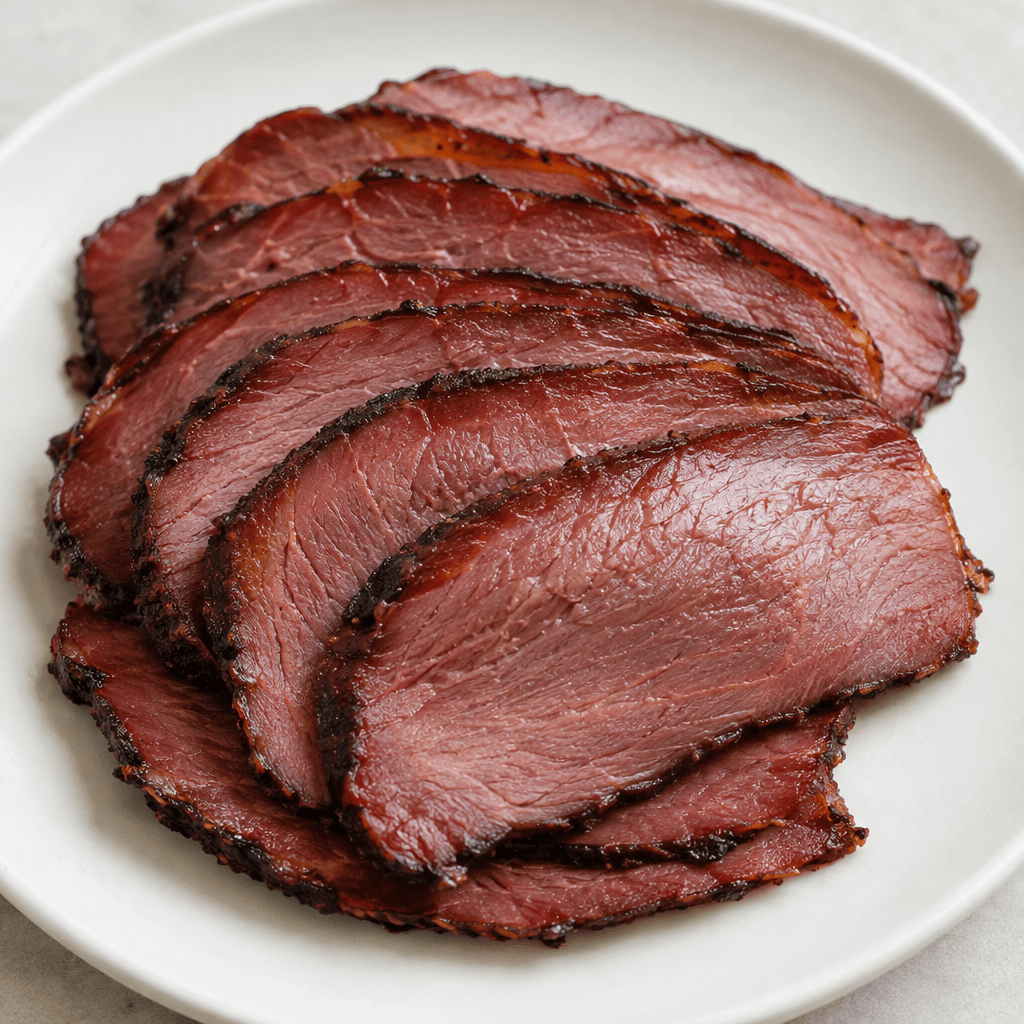
Smoked Meat Calories
High protein, rich in iron, smoky flavor
In season: Spring · Summer · Autumn · Winter
CALORIES
GI
POTASSIUM
FIBER
Quick answer
1 slice (medium) of Smoked Meat (40 g) has 72 calories. That works out to 180 calories per 100 g. It contains 0.4 g of carbs, 10.8 g of protein, 2.8 g of fat and 0 g of fiber. Its 0.9 µg of B12 covers 37% of the Daily Value. Its glycemic index is 0 (low), so it raises blood sugar slowly.
What is Smoked Meat?
Smoked meat is meat flavoured and cooked with smoke, commonly sold in thin slices. The type of meat and the smoking method vary, so its firmness, saltiness and depth of flavour can differ from one product to another.
Its savoury, smoky taste works well in sandwiches, breakfast plates and cold meat boards. In many places, it is served with bread, cheese, pickles or fresh vegetables; you can also add it to salads for a more filling meal. It is high in protein and low in carbohydrates, making it a substantial choice in a small serving. Pair it with plenty of fresh produce for a lighter plate.
Smoked Meat Nutrition Facts
Selected: 100 g
180
KCAL / 100G
Carbs
1g
· 0% DV
Protein
27g
· 54% DV
Fat
7g
· 9% DV
Fiber
0g
· 0% DV
DV is the share of the daily value covered, on a 2,000 kcal reference diet.
Calories come from: Carbs 2% · Protein 62% · Fat 36%
Smoked Meat Vitamins & Minerals
Vitamins
B12
2.2µg · 92% DV
B3
4.5mg · 28% DV
B6
0.45mg · 26% DV
B2
0.18mg · 14% DV
Minerals
Zinc
5mg · 45% DV
Sodium
900mg · 39% DV
Selenium
18µg · 33% DV
Phosphorus
220mg · 31% DV
How Nutritious Is Smoked Meat?
Nutrient density
High
How many vitamins, minerals and how much fiber this food carries per calorie. A high score means a lot of nutrition for few calories.
Satiety score
Medium
An EatBetter score computed from fiber, protein and calorie density. A high score means staying full longer on the same calories.
Both scores are calculated per 100 g and do not change with the selected portion. The satiety score is EatBetter's own calculation, not a clinical measure.
Smoked Meat Glycemic Index
GLYCEMIC INDEX
GLYCEMIC LOAD
Accounts for portion size — a more realistic measure than GI alone.
How to Burn Off Smoked Meat
To burn the 180 calories in 100 g:
🚶
Walking (5 km/h)
🏃
Running (8 km/h)
🚴
Cycling
🏊
Swimming
Times are calculated with the MET equation for a 70 kg adult. Actual burn varies with your weight, age and pace.
Is Smoked Meat Processed?
NOVA 3
Processed
1. Unprocessed
2. Minimally Processed
3. Processed
4. Ultra-Processed
NOVA classifies foods into 4 groups by industrial processing. NOVA 1 (unprocessed) is the healthiest.
Does Smoked Meat Contain Allergens?
No known major allergens
Which Diets Is Smoked Meat Good For?
Vegan
— Not suitable
Vegetarian
— Not suitable
Gluten-Free
✓ Suitable
Dairy-Free
— Not suitable
Mediterranean
✓ Suitable
Paleo
✓ Suitable
Whole30
— Not suitable
DASH
— Not suitable
Keto
✓ Suitable
Low FODMAP
— Not suitable
Smoked Meat Fat Profile
SATURATED
2.8g
MONOUNSATURATED
2.7g
POLYUNSATURATED
0.3g
Omega 6:3 ratio 1.5:1
Below the ideal 4:1 — a good omega balance.
Compare Smoked Meat
Foods Similar to Smoked Meat
Frequently Asked Questions About Smoked Meat
What is smoked meat made from?
Smoked meat is commonly made from beef, though versions made with pork, turkey, or other meats also exist. The meat is usually salted or cured before smoking, and the cut and seasoning vary by regional style and producer.
How is smoked meat made?
Smoked meat is made by curing or salting meat and exposing it to wood smoke. Hot smoking can cook the meat, while cold smoking adds smoke without cooking it, so the exact process matters when deciding whether it is ready to eat.
Is smoked meat already cooked?
Not always. Hot-smoked meat is generally cooked during smoking, but cold-smoked meat may remain uncooked. Follow the package’s cooking instructions, and do not assume a product is ready to eat just because it has a smoky color or aroma.
What is the difference between smoked meat and pastrami?
Smoked meat describes meat prepared with smoke, while pastrami is typically cured, heavily seasoned, and smoked; it is often associated with beef brisket. The terms can overlap, but pastrami’s distinctive spice coating and preparation set it apart.
Can you eat smoked meat cold in a sandwich?
Yes, if the package says the smoked meat is ready to eat. Cold slices work well in sandwiches, but meat sold with cooking instructions should be cooked as directed; smoking alone does not make every product safe to eat without further cooking.
Why does smoked meat have a dark outer layer?
The dark surface develops as smoke compounds settle on the meat during smoking, and curing or seasoning can deepen the color. A darker edge is normal, but unusual discoloration accompanied by a bad smell or sticky texture can signal spoilage.
How should you reheat smoked meat without drying it out?
Reheat smoked meat gently with a little liquid, covered, until it is hot throughout. A skillet with a splash of water or broth works for slices; high, dry heat can toughen the meat and make its smoky flavor taste harsh.
How long does smoked meat last after opening?
Keep opened smoked meat tightly wrapped or in a sealed container in the refrigerator and use it within a few days. Follow any shorter use-by guidance on the package, and discard it if it develops an off smell, slimy surface, or mold.
Can smoked meat be frozen?
Yes, smoked meat can be frozen. Wrap slices airtight, preferably in portions, and thaw them in the refrigerator before use. Freezing helps preserve it, though the texture may become less appealing; do not refreeze meat after it has thawed.
Is smoked meat safe to eat during pregnancy?
Cold, ready-to-eat smoked deli meat is safer to avoid during pregnancy because it can carry Listeria. If you choose to eat it, heat it until steaming hot throughout; ask your clinician for advice specific to your pregnancy.
Have another question about Smoked Meat?
Ask the AI nutrition coach — calories, portions, alternatives and more, answered in seconds in the app.

Scan calories with your camera
Instant AI nutrition analysis

Nutrition data compiled from USDA FoodData Central and scientific sources.