

Ready & Packaged Foods
All →Vegetables & Legumes
All →Desserts & Confectionery
All →Meat & Protein
All →Grains & Bakery
All →Beverages
All →Milk & Dairy
All →

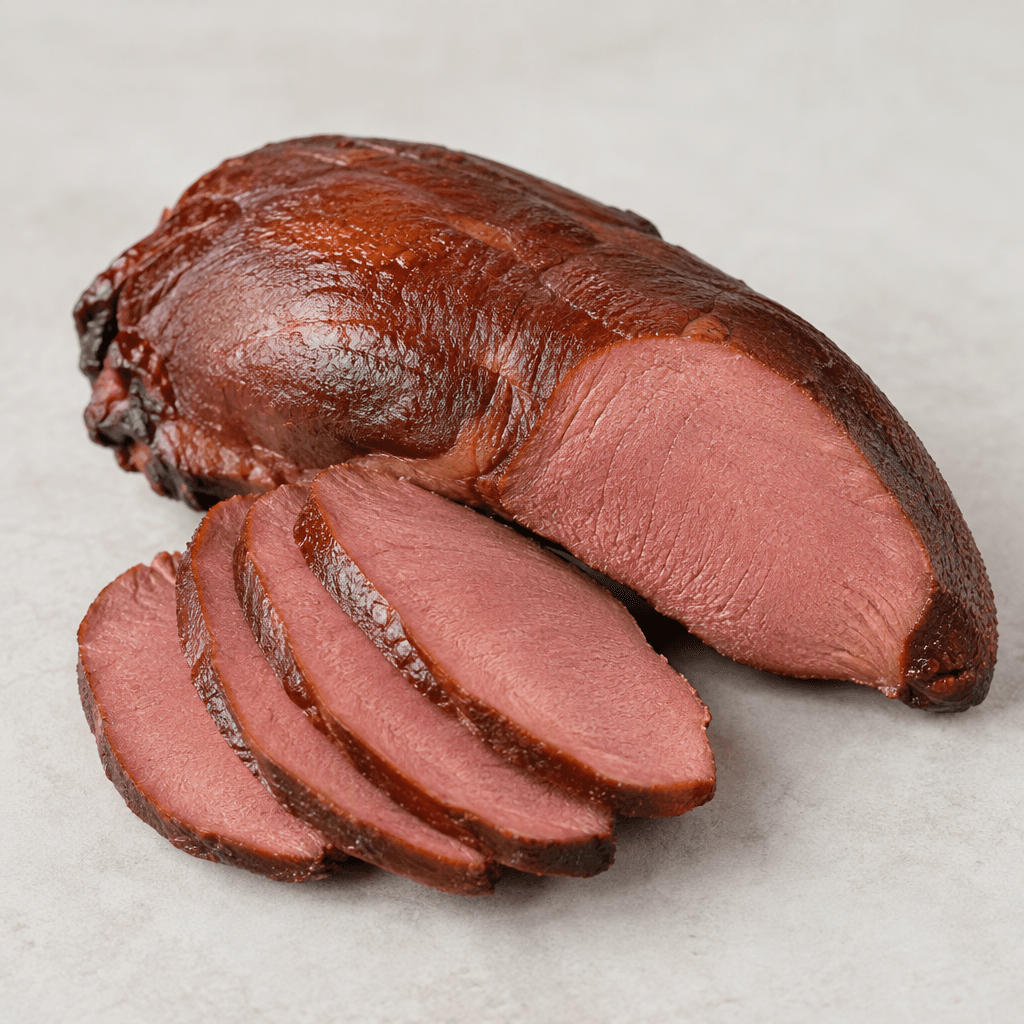
Smoked beef tongue Calories
Rich in protein and vitamin B12, smoked beef tongue
In season: Spring · Summer · Autumn · Winter
CALORIES · 100 G
GI
POTASSIUM · 100 G
FIBER · 100 G
Quick answer
1 slice (medium) of Smoked beef tongue (40 g) has 88 calories. That works out to 220 calories per 100 g. It contains 0.5 g of carbs, 6.6 g of protein, 6.6 g of fat and 0 g of fiber. Its 1.4 µg of B12 covers 60% of the Daily Value. Its glycemic index is 0 (low), so it raises blood sugar slowly.
Smoked beef tongue Nutrition Facts
Selected: 1 slice (medium) · 40 g
88
KCAL / 40G
Carbs
0.5g
· 0% DV
Protein
6.6g
· 13% DV
Fat
6.6g
· 8% DV
Fiber
0g
· 0% DV
DV is the share of the daily value covered, on a 2,000 kcal reference diet.
Calories come from: Carbs 2% · Protein 30% · Fat 68%
Smoked beef tongue nutrition facts table · 1 slice (medium) (40 g)
| Nutrient | Amount | % DV |
|---|---|---|
| Calories | 88 kcal | |
| Total fat | 6.6 g | 8% |
| Saturated fat | 2.44 g | 12% |
| Trans fat | 0.04 g | |
| Sodium | 380 mg | 17% |
| Total carbohydrate | 0.5 g | 0% |
| Fiber | 0 g | 0% |
| Protein | 6.6 g | 13% |
Calories: Calories measure energy. Average daily need is 2,000 kcal. Excess calories are stored as fat, too few cause weight loss.
Carbs: Your body's primary energy source. The brain runs exclusively on carbs. Daily need: 275g.
Protein: Essential for muscle repair and cell growth. Daily need: 50g. Keeps you full and boosts metabolism.
Fat: Needed for hormone production and vitamin absorption. Daily need: 78g. Limit saturated fats, choose unsaturated.
Fiber: Critical for digestive health and satiety. Daily need: 28g. Stabilizes blood sugar, lowers cholesterol.

Log this food in EatBetter
100,000+ people use it
- Get your daily calorie target
- Snap your meal, log it in seconds
- See every vitamin and mineral

📸 Scan the code to get the app free.

How Many Calories in 1 Slice of Smoked beef tongue?
| Serving | Amount | Calories |
|---|---|---|
| 1 slice (medium) | 40 g | 88 kcal |
| 1 slice (thin) | 25 g | 55 kcal |
| 1 slice (thick) | 60 g | 132 kcal |
| 1 serving (medium) | 80 g | 176 kcal |
| 100 g | 100 g | 220 kcal |
| 3 slice (medium) | 120 g | 264 kcal |
| 1 serving (large) | 150 g | 330 kcal |
| 1 piece (small) | 200 g | 440 kcal |
| 1 piece (large) | 350 g | 770 kcal |
Calculated from 220 calories per 100 g.
Frequently Asked Questions About Smoked beef tongue
What is smoked beef tongue, and how is it made?
Smoked beef tongue is beef tongue that is cooked and then smoked, giving it a distinctive smoky flavor. It is sold whole or sliced; whole pieces may still have a tough outer skin that needs removing.
Is smoked beef tongue ready to eat?
Usually, yes: smoked beef tongue is commonly cooked before smoking and can be eaten cold straight from the pack. Check the package directions, because some products may require further cooking or reheating.
What does smoked beef tongue taste like?
Smoked beef tongue tastes rich and savory, with a tender, dense texture and a clear smoky note. Its flavor is more distinctive than ordinary roast beef, and the saltiness can vary between products.
How do you serve smoked beef tongue?
Serve smoked beef tongue thinly sliced in sandwiches, on a charcuterie board, or alongside mustard, pickles, and rye bread. It can also be warmed and paired with potatoes or vegetables for a more substantial meal.
Do you have to peel smoked beef tongue?
Remove the thick outer skin if it is still attached; it is usually tough rather than pleasant to eat. Pre-sliced smoked beef tongue is generally already trimmed, while a whole piece may need peeling before slicing.
Can you cook smoked beef tongue in a pan?
Yes, you can warm smoked beef tongue briefly in a pan, or lightly brown the slices if you prefer. Avoid prolonged high heat, which can dry out the already-cooked meat and make its smoky flavor overpowering.
How long does smoked beef tongue last after opening?
Keep opened smoked beef tongue refrigerated in a tightly sealed container and follow the use-by guidance on its package. Use clean utensils when handling it, and discard it if its smell, texture, or appearance changes.
Can you freeze smoked beef tongue?
Yes, smoked beef tongue freezes well when wrapped airtight. Divide it into meal-sized portions before freezing, then thaw a portion in the refrigerator; avoid refreezing it after it has thawed.
How is smoked beef tongue different from pastrami?
Smoked beef tongue is made from the tongue, while pastrami is usually made from brisket or another cut of beef. Pastrami is typically cured and heavily seasoned before smoking; tongue has a softer, distinctive texture.
Can you use smoked beef tongue in a Reuben sandwich?
Yes, smoked beef tongue makes a flavorful alternative to the usual corned beef or pastrami in a Reuben-style sandwich. Layer thin slices with sauerkraut, Swiss cheese, and dressing, then grill the sandwich until the bread is crisp.
Smoked beef tongue Vitamins & Minerals
Vitamins
B12
1.44µg · 60% DV
B3
1.68mg · 11% DV
B2
0.12mg · 9% DV
B5
0.44mg · 9% DV
Minerals
Sodium
380mg · 17% DV
Zinc
1.4mg · 13% DV
Phosphorus
72mg · 10% DV
Selenium
5.6µg · 10% DV
Potassium ⭐
88mg · 3% DV
Smoked beef tongue Glycemic Index
GLYCEMIC INDEX
GLYCEMIC LOAD
Accounts for portion size — a more realistic measure than GI alone.
How to Burn Off Smoked beef tongue
To burn the 88 calories in 1 slice (medium) (40 g):
🚶
Walking (5 km/h)
🏃
Running (8 km/h)
🚴
Cycling
🏊
Swimming
Times are calculated with the MET equation for a 70 kg adult. Actual burn varies with your weight, age and pace.
What is Smoked beef tongue?
Smoked beef tongue is beef tongue that has been smoked and is commonly served in thin slices. Its exterior is dark and smoky, while the inside is smooth, dense and pink-red. The flavour is deeply savoury, with the distinctive richness of tongue balanced by the smoke.
It is enjoyed in deli and charcuterie traditions in different parts of the world, often chilled on a platter or layered into a sandwich. It also works well with mustard, pickles, crusty bread or crisp greens. Smoked beef tongue provides protein and is also relatively rich in fat, so a few slices alongside vegetables make a satisfying plate without making the meat the whole meal.
How Nutritious Is Smoked beef tongue?
Nutrient density
High
How many vitamins, minerals and how much fiber this food carries per calorie. A high score means a lot of nutrition for few calories.
Satiety score
Medium
An EatBetter score computed from fiber, protein and calorie density. A high score means staying full longer on the same calories.
Both scores are calculated per 100 g and do not change with the selected portion. The satiety score is EatBetter's own calculation, not a clinical measure.
Is Smoked beef tongue Processed?
NOVA 3
Processed
1. Unprocessed
2. Minimally Processed
3. Processed
4. Ultra-Processed
NOVA classifies foods into 4 groups by industrial processing. NOVA 1 (unprocessed) is the healthiest.
Does Smoked beef tongue Contain Allergens?
No known major allergens
Which Diets Is Smoked beef tongue Good For?
Vegan
— Not suitable
Vegetarian
— Not suitable
Gluten-Free
✓ Suitable
Dairy-Free
— Not suitable
Mediterranean
✓ Suitable
Paleo
✓ Suitable
Whole30
— Not suitable
DASH
— Not suitable
Keto
✓ Suitable
Low FODMAP
— Not suitable
Smoked beef tongue Fat Profile
SATURATED
2.44g
MONOUNSATURATED
2.88g
POLYUNSATURATED
0.2g
Omega 6:3 ratio 1.8:1
Below the ideal 4:1 — a good omega balance.
Compare Smoked beef tongue
Foods Similar to Smoked beef tongue
Have another question about Smoked beef tongue?
Ask the AI nutrition coach — calories, portions, alternatives and more, answered in seconds in the app.

Scan calories with your camera
Instant AI nutrition analysis

Nutrition data compiled from USDA FoodData Central and scientific sources.