

Ready & Packaged Foods
All →Vegetables & Legumes
All →Desserts & Confectionery
All →Meat & Protein
All →Grains & Bakery
All →Beverages
All →Milk & Dairy
All →

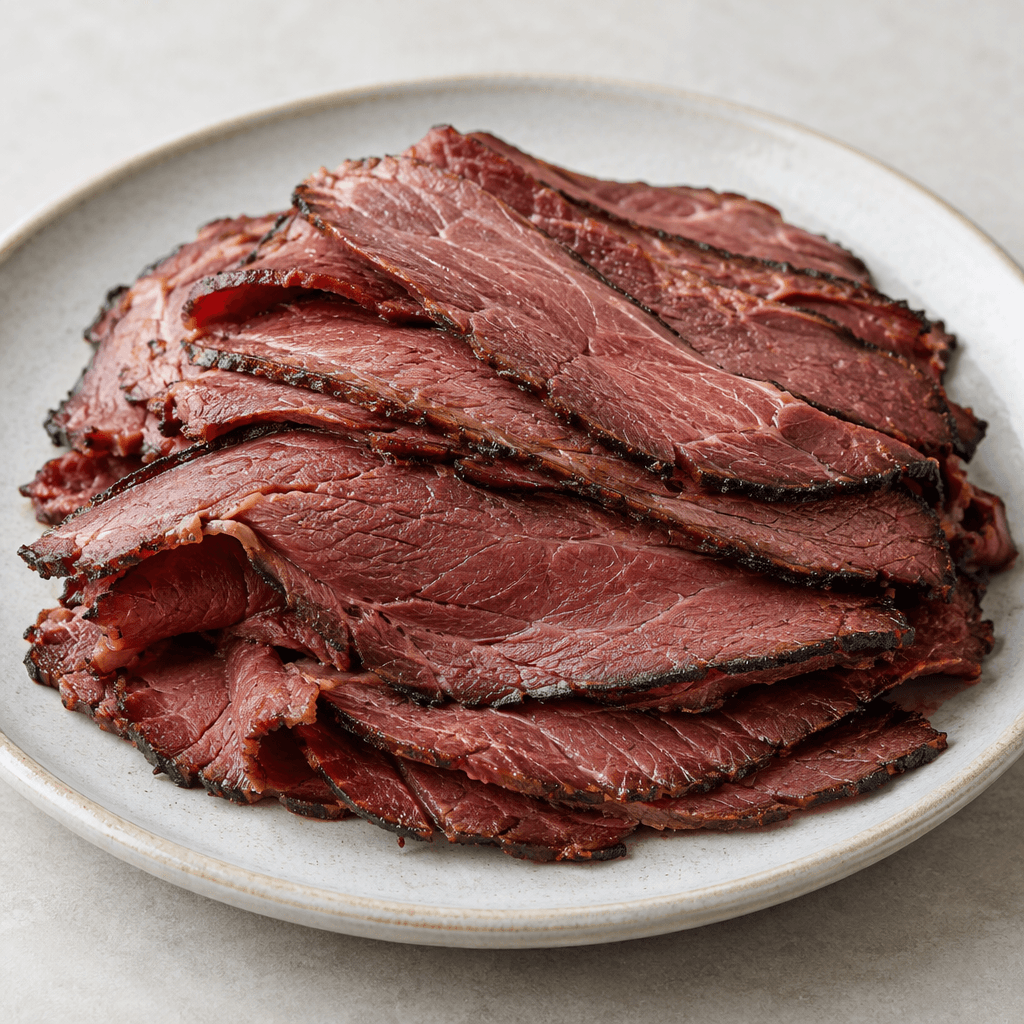
Smoked beef Calories
Protein source, smoky flavor, low carbohydrate
In season: Spring · Summer · Autumn · Winter
CALORIES
GI
POTASSIUM
FIBER
Quick answer
1 slice (medium) of Smoked beef (30 g) has 51 calories. That works out to 170 calories per 100 g. It contains 0.4 g of carbs, 8.1 g of protein, 2 g of fat and 0 g of fiber. Its 0.6 µg of B12 covers 26% of the Daily Value. Its glycemic index is 0 (low), so it raises blood sugar slowly.
What is Smoked beef?
Smoked beef is beef that has been smoked to give it a distinctive aroma and a darker exterior. It is often sold sliced, with the meat’s fibres visible in each slice, and can be eaten cold or gently warmed.
It works well in sandwiches, breakfast plates and cold-cut spreads; pair it with bread, cheese, pickles or fresh vegetables. The flavour is savoury and smoky, while the texture ranges from tender to firm depending on the cut and thickness. With 27 g of protein per 100 g and very little carbohydrate, it can add substance to a meal. For a lighter serving, use a few slices with salad rather than building the meal around bread.
Smoked beef Nutrition Facts
Selected: 100 g
170
KCAL / 100G
Carbs
1.2g
· 0% DV
Protein
27g
· 54% DV
Fat
6.5g
· 8% DV
Fiber
0g
· 0% DV
DV is the share of the daily value covered, on a 2,000 kcal reference diet.
Calories come from: Carbs 3% · Protein 63% · Fat 34%
Smoked beef Vitamins & Minerals
Vitamins
B12
2.1µg · 88% DV
B3
4.5mg · 28% DV
B6
0.41mg · 24% DV
B2
0.19mg · 15% DV
Minerals
Zinc
5mg · 45% DV
Sodium
950mg · 41% DV
Selenium
18µg · 33% DV
Phosphorus
210mg · 30% DV
How Nutritious Is Smoked beef?
Nutrient density
High
How many vitamins, minerals and how much fiber this food carries per calorie. A high score means a lot of nutrition for few calories.
Satiety score
Medium
An EatBetter score computed from fiber, protein and calorie density. A high score means staying full longer on the same calories.
Both scores are calculated per 100 g and do not change with the selected portion. The satiety score is EatBetter's own calculation, not a clinical measure.
Smoked beef Glycemic Index
GLYCEMIC INDEX
GLYCEMIC LOAD
Accounts for portion size — a more realistic measure than GI alone.
How to Burn Off Smoked beef
To burn the 170 calories in 100 g:
🚶
Walking (5 km/h)
🏃
Running (8 km/h)
🚴
Cycling
🏊
Swimming
Times are calculated with the MET equation for a 70 kg adult. Actual burn varies with your weight, age and pace.
Is Smoked beef Processed?
NOVA 3
Processed
1. Unprocessed
2. Minimally Processed
3. Processed
4. Ultra-Processed
NOVA classifies foods into 4 groups by industrial processing. NOVA 1 (unprocessed) is the healthiest.
Does Smoked beef Contain Allergens?
No known major allergens
Which Diets Is Smoked beef Good For?
Vegan
— Not suitable
Vegetarian
— Not suitable
Gluten-Free
✓ Suitable
Dairy-Free
— Not suitable
Mediterranean
✓ Suitable
Paleo
✓ Suitable
Whole30
— Not suitable
DASH
— Not suitable
Keto
✓ Suitable
Low FODMAP
— Not suitable
Smoked beef Fat Profile
SATURATED
2.7g
MONOUNSATURATED
2.3g
POLYUNSATURATED
0.3g
Omega 6:3 ratio 1.6:1
Below the ideal 4:1 — a good omega balance.
Compare Smoked beef
Foods Similar to Smoked beef
Frequently Asked Questions About Smoked beef
How is smoked beef made?
Smoked beef is made by exposing beef to wood smoke for flavor; some products are also salted, seasoned, cured, or cooked. The exact method varies, so sliced deli-style smoked beef is not necessarily made like a whole smoked brisket.
Can you eat smoked beef without cooking it?
Usually, yes: many packaged smoked beef slices are ready to eat. Check the package for cooking instructions, since products differ. Keep refrigerated smoked beef cold until serving, and do not leave it out for an extended time.
Is smoked beef the same as pastrami?
No. Smoked beef is a broad description of beef flavored with smoke, while pastrami is typically cured, coated with spices, and smoked. Pastrami has a distinctive peppery seasoning; smoked beef may be milder and prepared in many ways.
Is smoked beef the same as beef jerky?
No. Smoked beef can be tender and moist, especially when sold in slices, whereas beef jerky is dried until chewy and shelf-stable. Both may be seasoned and smoked, but their moisture level and preparation are different.
What cut of beef is used for smoked beef?
There is no single cut used for all smoked beef. Deli-style slices may come from lean beef roasts, while barbecue-style smoked beef often uses brisket; the cut depends on the product and the cooking method.
How do you serve smoked beef?
Serve smoked beef cold in sandwiches or salads, or warm it briefly for a hot meal. Mustard, pickles, cheese, and fresh vegetables complement its smoky flavor; avoid prolonged heating, which can make thin slices dry.
How long does smoked beef last in the fridge after opening?
The safe storage time depends on how the smoked beef was prepared and packaged. Follow the package’s after-opening instructions, keep it sealed and refrigerated, and discard it if it develops an unusual smell, slimy surface, or unexpected discoloration.
Can you freeze smoked beef?
Yes, smoked beef can be frozen. Divide it into portions, seal it well to limit freezer exposure, and thaw it in the refrigerator when needed. Freezing may slightly change the texture of thin slices, but they remain useful in cooked dishes.
How do you reheat smoked beef without drying it out?
Warm smoked beef gently and briefly, using a covered pan with a little moisture or placing the slices inside a hot sandwich. Avoid high heat and extended cooking, especially for thin deli slices, which lose moisture quickly.
Is smoked beef healthy to eat?
Smoked beef provides protein, but some products contain substantial added salt and are processed meats. Choose it as one part of a varied diet rather than relying on it as your everyday protein, and pair it with vegetables or whole grains.
Have another question about Smoked beef?
Ask the AI nutrition coach — calories, portions, alternatives and more, answered in seconds in the app.

Scan calories with your camera
Instant AI nutrition analysis

Nutrition data compiled from USDA FoodData Central and scientific sources.