

Ready & Packaged Foods
All →Vegetables & Legumes
All →Desserts & Confectionery
All →Meat & Protein
All →Grains & Bakery
All →Beverages
All →Milk & Dairy
All →

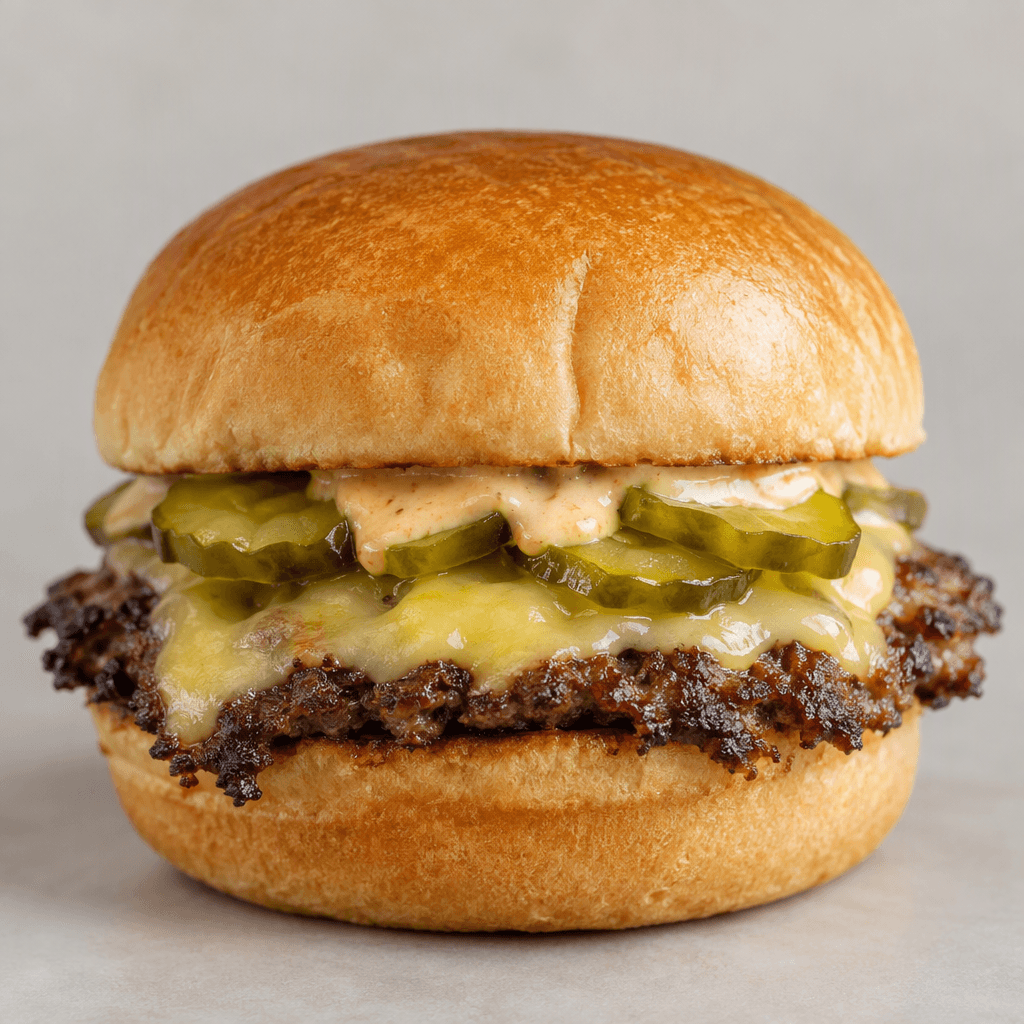
Smash burger Calories
Burger with thin smashed beef patty
CALORIES · 100 G
GI
POTASSIUM · 100 G
FIBER · 100 G
Quick answer
1 piece (medium) of Smash burger (180 g) has 482 calories. That works out to 268 calories per 100 g. It contains 36.2 g of carbs, 25.6 g of protein, 26.3 g of fat and 2.3 g of fiber. Its 2.1 µg of B12 covers 86% of the Daily Value. Its glycemic index is 52 (medium), so it raises blood sugar at a moderate pace.
Smash burger Nutrition Facts
Selected: 1 piece (medium) · 180 g
482
KCAL / 180G
Carbs
36.2g
· 13% DV
Protein
25.6g
· 51% DV
Fat
26.3g
· 34% DV
Fiber
2.3g
· 8% DV
DV is the share of the daily value covered, on a 2,000 kcal reference diet.
Calories come from: Carbs 30% · Protein 21% · Fat 49%
Smash burger nutrition facts table · 1 piece (medium) (180 g)
| Nutrient | Amount | % DV |
|---|---|---|
| Calories | 482 kcal | |
| Total fat | 26.3 g | 34% |
| Saturated fat | 9.72 g | 49% |
| Trans fat | 0.81 g | |
| Sodium | 774 mg | 34% |
| Total carbohydrate | 36.2 g | 13% |
| Fiber | 2.3 g | 8% |
| Protein | 25.6 g | 51% |
Calories: Calories measure energy. Average daily need is 2,000 kcal. Excess calories are stored as fat, too few cause weight loss.
Carbs: Your body's primary energy source. The brain runs exclusively on carbs. Daily need: 275g.
Protein: Essential for muscle repair and cell growth. Daily need: 50g. Keeps you full and boosts metabolism.
Fat: Needed for hormone production and vitamin absorption. Daily need: 78g. Limit saturated fats, choose unsaturated.
Fiber: Critical for digestive health and satiety. Daily need: 28g. Stabilizes blood sugar, lowers cholesterol.

Log this food in EatBetter
100,000+ people use it
- Get your daily calorie target
- Snap your meal, log it in seconds
- See every vitamin and mineral

📸 Scan the code to get the app free.

How Many Calories in 1 Medium Smash burger?
| Serving | Amount | Calories |
|---|---|---|
| 1 piece (medium) | 180 g | 482 kcal |
| 1 serving (half) | 90 g | 241 kcal |
| 100 g | 100 g | 268 kcal |
| 1 piece (mini) | 110 g | 295 kcal |
| 1 piece (small) | 130 g | 348 kcal |
| 1 piece (large) | 250 g | 670 kcal |
| 1 piece (double) | 320 g | 858 kcal |
| 1 piece (triple) | 420 g | 1126 kcal |
Calculated from 268 calories per 100 g.
Frequently Asked Questions About Smash burger
What is a Smash burger?
A Smash burger is made with a ball of ground beef pressed thin against a very hot, flat cooking surface. The broad contact creates a deeply browned crust and crisp edges, and the patty is usually served in a bun with toppings.
How do you make a Smash burger at home?
Heat a heavy, flat pan until very hot, then place a loosely formed ball of ground beef on it. Press it thin once with a sturdy spatula, season it, and let the underside brown before flipping. Add cheese if desired, then serve in a bun.
Why is a Smash burger smashed?
A Smash burger is pressed thin to maximize contact with the hot cooking surface. That contact helps the beef brown quickly and develop a flavorful crust, while the thin edges can turn crisp. Pressing the patty after it has cooked will not create the same crust.
What is the difference between a Smash burger and a regular burger?
A Smash burger is pressed thin while it cooks, producing a wide patty with browned, often crisp edges. A regular burger is commonly shaped thicker and left unpressed, so it tends to have a softer crust and a juicier center.
What kind of beef is best for a Smash burger?
Ground beef with some fat works best for a Smash burger because the thin patty cooks quickly and can dry out if the meat is too lean. Keep the beef loosely formed rather than kneading it, so the patty can brown well when pressed.
How do you get crispy edges on a Smash burger?
For crisp edges on a Smash burger, use a very hot, flat cooking surface and press the beef thin as soon as it hits the pan. Leave it undisturbed until a browned crust forms; moving or pressing it repeatedly can interfere with browning.
What cheese goes best on a Smash burger?
American cheese and cheddar are popular on a Smash burger because they melt readily over the thin patty. Add the slice after flipping the beef; covering the pan briefly helps it melt before you transfer the patty to the bun.
What toppings go on a Smash burger?
Common Smash burger toppings include pickles, sliced onion, lettuce, tomato, and a tangy burger sauce. Since the patty is thin and richly browned, a sharp or crunchy topping adds contrast; avoid piling on so much that the bun becomes difficult to handle.
What buns are best for a Smash burger?
Soft, lightly toasted buns work well for a Smash burger because they hold the thin patty without overpowering it. Toast the cut sides briefly to help keep sauce and juices from soaking through, and choose a bun that is not much wider than the patty.
Can you reheat a Smash burger?
Yes, you can reheat a Smash burger, but the bun and fresh toppings are better removed first. Warm the patty in a skillet until hot, then assemble it again with the bun and toppings; reheating the whole burger can make the bread soggy.
Smash burger Vitamins & Minerals
Vitamins
B12
2.07µg · 86% DV
B3
7.38mg · 46% DV
B6
0.43mg · 25% DV
B2
0.32mg · 25% DV
Minerals
Selenium
29µg · 53% DV
Zinc
4.86mg · 44% DV
Phosphorus
306mg · 44% DV
Sodium
774mg · 34% DV
Potassium ⭐
396mg · 12% DV
Smash burger Glycemic Index
GLYCEMIC INDEX
GLYCEMIC LOAD
Accounts for portion size — a more realistic measure than GI alone.
How to Burn Off Smash burger
To burn the 482 calories in 1 piece (medium) (180 g):
🚶
Walking (5 km/h)
🏃
Running (8 km/h)
🚴
Cycling
🏊
Swimming
Times are calculated with the MET equation for a 70 kg adult. Actual burn varies with your weight, age and pace.
What is Smash burger?
A smash burger is an American-style burger made by pressing a ball of ground beef onto a very hot griddle, creating a thin patty with browned, crisp edges. It is usually served in a soft bun with toppings such as pickles, lettuce, tomato and sauce; cheese is a common addition. The quick, high-heat cooking gives the beef a savoury crust while keeping the centre juicy.
In the US it is a casual diner or takeout favourite, often paired with fries and a drink; it is also widely served in burger restaurants elsewhere. The bun and patty make it a filling mix of protein, carbohydrates and fat. For a lighter meal, choose fewer sauces and pair it with a side salad instead of fries.
How Nutritious Is Smash burger?
Nutrient density
Low
How many vitamins, minerals and how much fiber this food carries per calorie. A high score means a lot of nutrition for few calories.
Satiety score
Medium
An EatBetter score computed from fiber, protein and calorie density. A high score means staying full longer on the same calories.
Both scores are calculated per 100 g and do not change with the selected portion. The satiety score is EatBetter's own calculation, not a clinical measure.
Is Smash burger Processed?
NOVA 3
Processed
1. Unprocessed
2. Minimally Processed
3. Processed
4. Ultra-Processed
NOVA classifies foods into 4 groups by industrial processing. NOVA 1 (unprocessed) is the healthiest.
Does Smash burger Contain Allergens?
Contains these allergens:
Which Diets Is Smash burger Good For?
Vegan
— Not suitable
Vegetarian
— Not suitable
Gluten-Free
— Not suitable
Dairy-Free
— Not suitable
Mediterranean
— Not suitable
Paleo
— Not suitable
Whole30
— Not suitable
DASH
— Not suitable
Keto
— Not suitable
Low FODMAP
— Not suitable
Smash burger Fat Profile
SATURATED
9.72g
MONOUNSATURATED
10.98g
POLYUNSATURATED
1.62g
Omega 6:3 ratio 14.4:1
Above the ideal 4:1 (14.4:1).
Compare Smash burger
Foods Similar to Smash burger
Have another question about Smash burger?
Ask the AI nutrition coach — calories, portions, alternatives and more, answered in seconds in the app.

Scan calories with your camera
Instant AI nutrition analysis

Nutrition data compiled from USDA FoodData Central and scientific sources.