

Ready & Packaged Foods
All →Vegetables & Legumes
All →Desserts & Confectionery
All →Meat & Protein
All →Grains & Bakery
All →Beverages
All →Milk & Dairy
All →

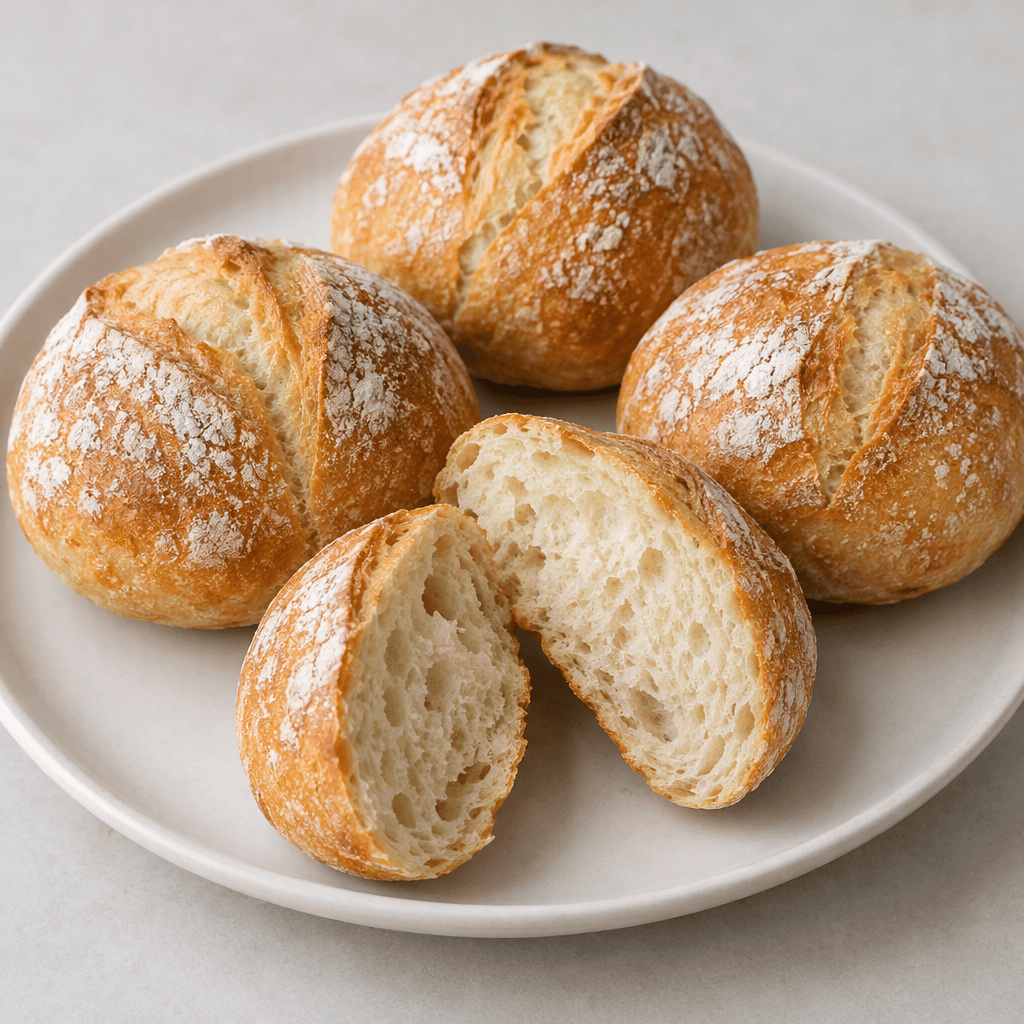
Small bread Calories
Small bread roll, typically made from wheat flour. Common for breakfast, sandwiches, or as a side.
In season: Spring · Summer · Autumn · Winter
CALORIES
GI
POTASSIUM
FIBER
Quick answer
1 piece (small) of Small bread (50 g) has 133 calories. That works out to 265 calories per 100 g. It contains 24.5 g of carbs, 4.3 g of protein, 1.6 g of fat and 1.4 g of fiber. Its 11 µg of Selenium covers 20% of the Daily Value. Its glycemic index is 70 (high), so it raises blood sugar quickly.
What is Small bread?
Small bread is an individual-sized loaf, usually made with wheat flour and baked with a lightly browned crust and a soft, pale centre. Similar small rolls are everyday bakery fare in many places, rather than a dish tied to one particular region, and are sold plain for meals or sandwiches.
It works well at breakfast, split and filled for lunch, or served alongside soup and other savoury dishes. The crust gives a little bite while the interior stays tender. Its energy comes mainly from carbohydrates, with some protein and fibre. For a more filling option, choose a whole-grain version or pair it with eggs, beans, cheese, or vegetables.
Small bread Nutrition Facts
Selected: 100 g
265
KCAL / 100G
Carbs
49g
· 18% DV
Protein
8.5g
· 17% DV
Fat
3.2g
· 4% DV
Fiber
2.7g
· 10% DV
DV is the share of the daily value covered, on a 2,000 kcal reference diet.
Calories come from: Carbs 76% · Protein 13% · Fat 11%
Small bread Vitamins & Minerals
Vitamins
B1
0.27mg · 23% DV
B3
3.6mg · 23% DV
Folate
65µg · 16% DV
B2
0.15mg · 12% DV
Minerals
Manganese
1mg · 43% DV
Selenium
22µg · 40% DV
Iron
4mg · 22% DV
Sodium
490mg · 21% DV
How Nutritious Is Small bread?
Nutrient density
Medium
How many vitamins, minerals and how much fiber this food carries per calorie. A high score means a lot of nutrition for few calories.
Satiety score
Medium
An EatBetter score computed from fiber, protein and calorie density. A high score means staying full longer on the same calories.
Both scores are calculated per 100 g and do not change with the selected portion. The satiety score is EatBetter's own calculation, not a clinical measure.
Small bread Glycemic Index
GLYCEMIC INDEX
GLYCEMIC LOAD
Accounts for portion size — a more realistic measure than GI alone.
How to Burn Off Small bread
To burn the 265 calories in 100 g:
🚶
Walking (5 km/h)
🏃
Running (8 km/h)
🚴
Cycling
🏊
Swimming
Times are calculated with the MET equation for a 70 kg adult. Actual burn varies with your weight, age and pace.
Is Small bread Processed?
NOVA 3
Processed
1. Unprocessed
2. Minimally Processed
3. Processed
4. Ultra-Processed
NOVA classifies foods into 4 groups by industrial processing. NOVA 1 (unprocessed) is the healthiest.
Does Small bread Contain Allergens?
Contains these allergens:
Which Diets Is Small bread Good For?
Vegan
✓ Suitable
Vegetarian
✓ Suitable
Gluten-Free
— Not suitable
Dairy-Free
— Not suitable
Mediterranean
✓ Suitable
Paleo
— Not suitable
Whole30
— Not suitable
DASH
— Not suitable
Keto
— Not suitable
Low FODMAP
— Not suitable
Small bread Fat Profile
SATURATED
0.7g
MONOUNSATURATED
0.6g
POLYUNSATURATED
0.5g
Omega 6:3 ratio 22.5:1
Above the ideal 4:1 (22.5:1).
Compare Small bread
Foods Similar to Small bread
Frequently Asked Questions About Small bread
Is small bread the same as a dinner roll?
Small bread is a general name for a small loaf or roll, while a dinner roll is usually served alongside a meal. The terms can describe similar breads, but small bread does not always have one standard shape or recipe.
How do you make small bread at home?
Small bread is made by mixing flour, yeast, water and salt into a dough, letting it rise, shaping it into small portions and baking until golden. Cover the rolls with a clean cloth after baking to help keep the crust soft.
Why does small bread come out dense?
Small bread can turn dense if the dough is under-kneaded, under-proofed or made with inactive yeast. Knead until the dough is elastic, give it enough time to rise, and avoid adding so much flour that the dough becomes stiff.
How do you keep small bread soft?
Store small bread at room temperature in an airtight container or bread bag to slow drying. Avoid the refrigerator, which can make bread stale faster. If you will not eat the rolls soon, freezing is a better way to preserve them.
Can you freeze small bread?
Yes, small bread freezes well. Let the rolls cool completely, seal them in a freezer-safe bag, and thaw only what you need. You can warm thawed rolls in the oven to refresh the crust and soften the inside.
How do you reheat small bread without drying it out?
Wrap small bread loosely in foil and warm it in the oven so it retains moisture. For a softer crust, lightly dampen the outside first. Avoid prolonged heating, which can dry the center and make the crust tough.
Can small bread be used for sliders?
Yes, small bread can work for sliders if each roll is soft enough to cut and hold its filling. Split it carefully, add the cooked filling and toppings, and warm the assembled sliders briefly so the bread does not crumble.
What should you serve with small bread?
Serve small bread with soups, salads, grilled foods or spreads; its mild wheat flavor works with both savory meals and breakfast foods. Split rolls can also be filled with cheese, vegetables or sliced meat for a simple sandwich.
Does small bread make you gain weight?
Small bread does not cause weight gain on its own, but eating it often in large portions can add substantially to your overall energy intake. Pairing a roll with protein-rich or high-fiber foods can make a meal more filling.
Can people with diabetes eat small bread?
People with diabetes can eat small bread, but its wheat flour can raise blood sugar. Keep the portion in mind alongside the rest of the meal, and ask your doctor or dietitian how it fits your individual eating plan.
Have another question about Small bread?
Ask the AI nutrition coach — calories, portions, alternatives and more, answered in seconds in the app.

Scan calories with your camera
Instant AI nutrition analysis

Nutrition data compiled from USDA FoodData Central and scientific sources.