

Ready & Packaged Foods
All →Vegetables & Legumes
All →Desserts & Confectionery
All →Meat & Protein
All →Grains & Bakery
All →Beverages
All →Milk & Dairy
All →

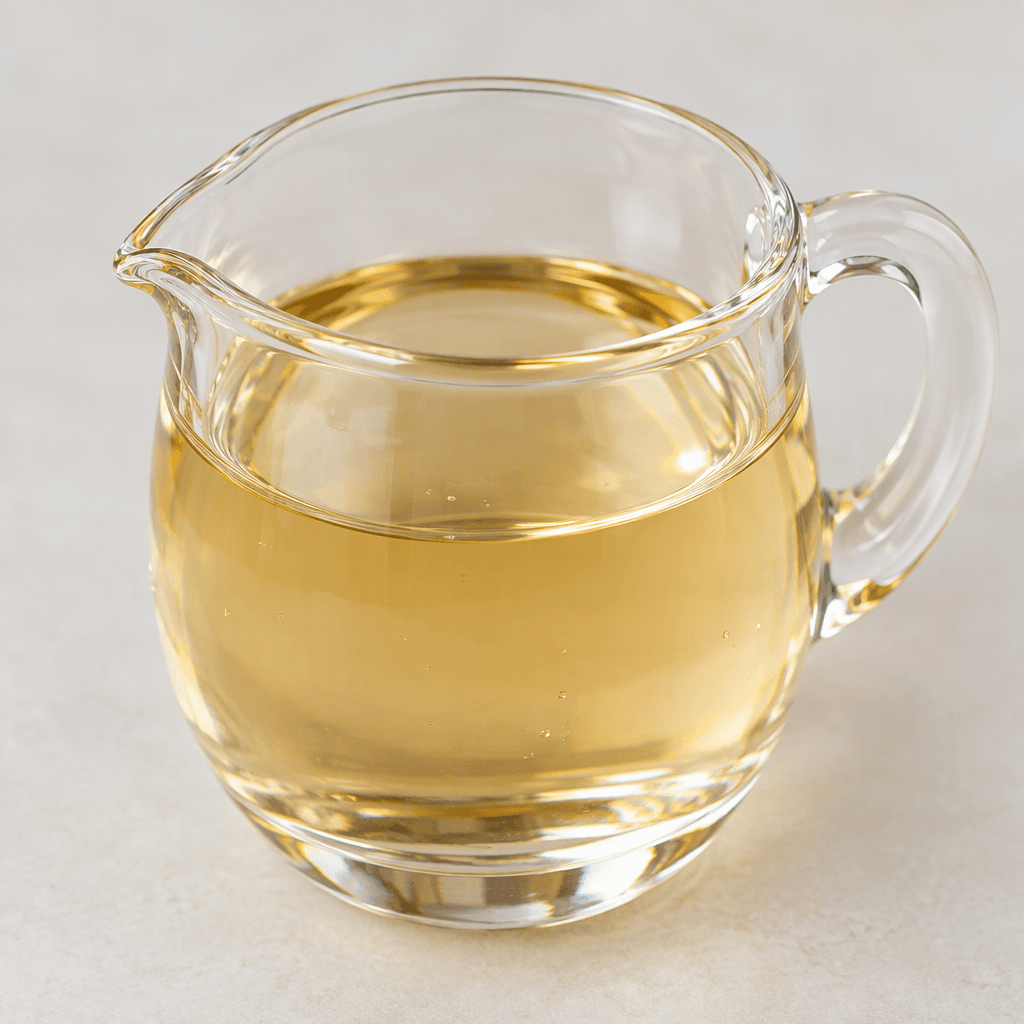
Simple Syrup Calories
Sweetener, used in drinks and desserts
CALORIES
GI
POTASSIUM
FIBER
Quick answer
1 tablespoon (medium) of Simple Syrup (20 g) has 52 calories. That works out to 260 calories per 100 g. It contains 13 g of carbs, 0 g of protein, 0 g of fat and 0 g of fiber. Its glycemic index is 65 (high), so it raises blood sugar quickly.
What is Simple Syrup?
Simple syrup is a pourable sweetener made by dissolving sugar in water, usually with gentle heat. It is a familiar bar ingredient because it blends smoothly into drinks where granulated sugar might not dissolve well. The proportions can vary, so some versions are thinner and others more concentrated.
Its taste is cleanly sweet and its texture ranges from light to slightly viscous. In cocktails, lemonade, iced tea and other cold drinks, a small pour adds sweetness evenly; it is also brushed or drizzled onto cakes and used in desserts. Nutritionally, it is essentially carbohydrate, with no protein or fat. If you want a less-sweet drink, start with a little and adjust to taste, or pair it with citrus, herbs or tart fruit.
Simple Syrup Nutrition Facts
Selected: 100 g
260
KCAL / 100G
Carbs
65g
· 24% DV
Protein
0g
· 0% DV
Fat
0g
· 0% DV
Fiber
0g
· 0% DV
DV is the share of the daily value covered, on a 2,000 kcal reference diet.
Calories come from: Carbs 100% · Protein 0% · Fat 0%
Simple Syrup Vitamins & Minerals
Vitamins
Vitamin A
0µg · 0% DV
B1
0mg · 0% DV
B2
0mg · 0% DV
B3
0mg · 0% DV
Minerals
Calcium
1mg · 0% DV
Iron
0mg · 0% DV
Magnesium
0mg · 0% DV
Zinc
0mg · 0% DV
How Nutritious Is Simple Syrup?
Nutrient density
Low
How many vitamins, minerals and how much fiber this food carries per calorie. A high score means a lot of nutrition for few calories.
Satiety score
Low
An EatBetter score computed from fiber, protein and calorie density. A high score means staying full longer on the same calories.
Both scores are calculated per 100 g and do not change with the selected portion. The satiety score is EatBetter's own calculation, not a clinical measure.
Simple Syrup Glycemic Index
GLYCEMIC INDEX
GLYCEMIC LOAD
Accounts for portion size — a more realistic measure than GI alone.
How to Burn Off Simple Syrup
To burn the 260 calories in 100 g:
🚶
Walking (5 km/h)
🏃
Running (8 km/h)
🚴
Cycling
🏊
Swimming
Times are calculated with the MET equation for a 70 kg adult. Actual burn varies with your weight, age and pace.
Is Simple Syrup Processed?
NOVA 3
Processed
1. Unprocessed
2. Minimally Processed
3. Processed
4. Ultra-Processed
NOVA classifies foods into 4 groups by industrial processing. NOVA 1 (unprocessed) is the healthiest.
Does Simple Syrup Contain Allergens?
No known major allergens
Which Diets Is Simple Syrup Good For?
Vegan
✓ Suitable
Vegetarian
✓ Suitable
Gluten-Free
✓ Suitable
Dairy-Free
— Not suitable
Mediterranean
— Not suitable
Paleo
— Not suitable
Whole30
— Not suitable
DASH
— Not suitable
Keto
— Not suitable
Low FODMAP
— Not suitable
Simple Syrup Fat Profile
SATURATED
0g
MONOUNSATURATED
0g
POLYUNSATURATED
0g
Compare Simple Syrup
Foods Similar to Simple Syrup
Frequently Asked Questions About Simple Syrup
How do you make simple syrup?
Make simple syrup by warming sugar and water together, stirring until the sugar dissolves. You do not need a prolonged boil; boiling it down can evaporate water and make the syrup thicker than intended.
What is the ratio of sugar to water for simple syrup?
Classic simple syrup uses equal volumes of sugar and water. For a thicker syrup, use more sugar; a concentrated syrup can be useful in cocktails, but it is also more prone to crystallizing as it cools.
Does simple syrup need to boil?
No, simple syrup does not need to boil. Warm it just enough for the sugar to dissolve, then take it off the heat; a hard or prolonged boil can change its concentration and make it thicker.
Why does simple syrup crystallize?
Simple syrup can crystallize when too much water evaporates or undissolved sugar crystals seed the mixture. Stir until the sugar dissolves, avoid scraping dry crystals from the pan’s sides, and do not simmer it longer than necessary.
How should you store simple syrup, and how long does it last?
Store simple syrup in a clean, tightly covered container in the refrigerator. Its keeping time varies with concentration and handling, so discard it if it turns cloudy, develops mold, bubbles unexpectedly, or smells fermented.
Can simple syrup replace granulated sugar in baking?
Not as a direct swap in most baking recipes. Simple syrup adds liquid as well as sweetness, which can change the texture and structure of cakes or cookies; use a recipe designed for syrup or adjust its other liquids.
What drinks can you sweeten with simple syrup?
Simple syrup works well in iced coffee, lemonade, tea, and cocktails because it blends smoothly into cold liquids. Add a little at a time and taste, since it sweetens without the graininess that undissolved sugar can leave.
How do you make flavored simple syrup?
Add ingredients such as citrus peel, vanilla, or spices while the simple syrup is warm, let them infuse, and strain before using. Refrigerate syrups made with fresh fruit or herbs, since those additions can shorten their storage life.
What is the difference between simple syrup and rich simple syrup?
Rich simple syrup contains more sugar relative to water, so it tastes sweeter and has a thicker texture than standard simple syrup. Cocktail recipes may use it when they need concentrated sweetness without adding as much liquid.
Can you freeze simple syrup?
Yes, you can freeze simple syrup in a freezer-safe container, leaving room for expansion. Thaw it in the refrigerator and stir before using; discard it if its smell or appearance changes after thawing.
Have another question about Simple Syrup?
Ask the AI nutrition coach — calories, portions, alternatives and more, answered in seconds in the app.

Scan calories with your camera
Instant AI nutrition analysis

Nutrition data compiled from USDA FoodData Central and scientific sources.