

Ready & Packaged Foods
All →Vegetables & Legumes
All →Desserts & Confectionery
All →Meat & Protein
All →Grains & Bakery
All →Beverages
All →Milk & Dairy
All →

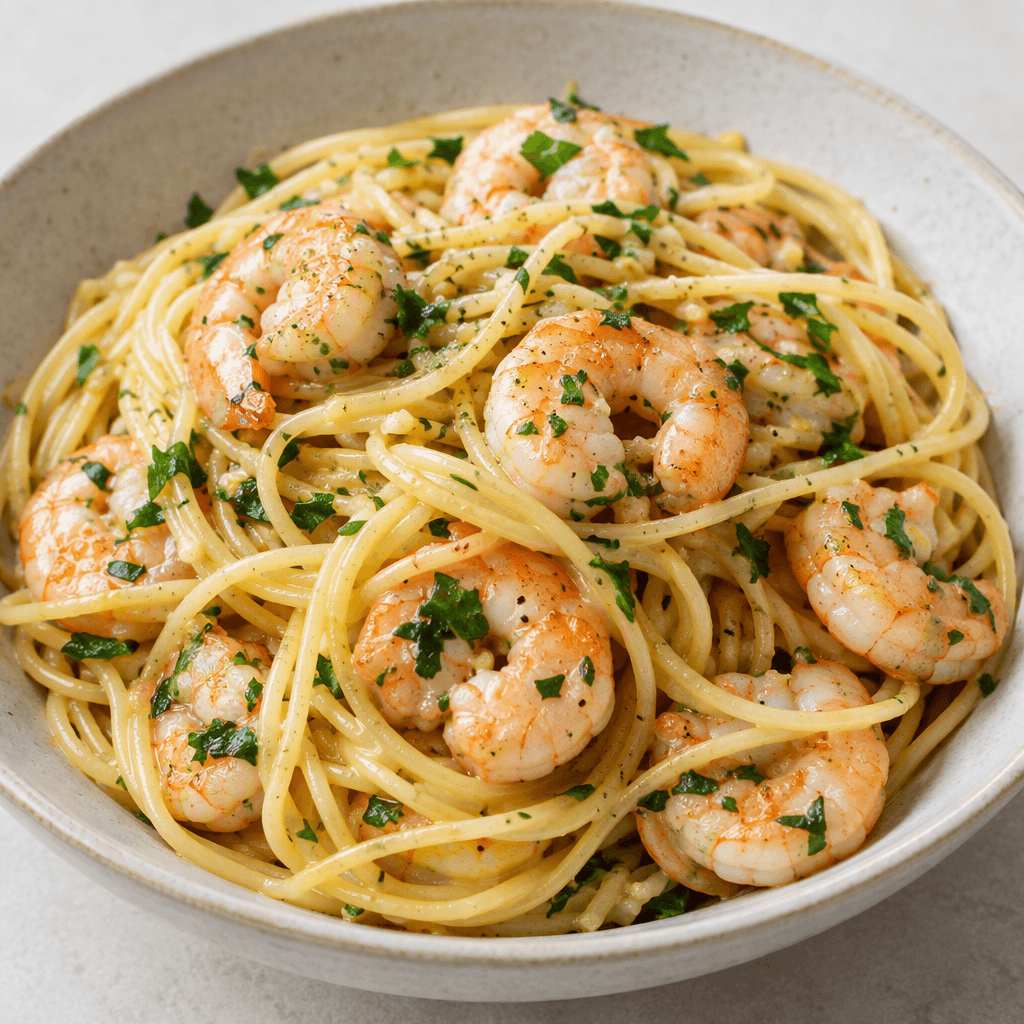
Shrimp Pasta Calories
Seafood pasta, source of protein and carbohydrates
In season: Spring · Summer · Autumn · Winter
CALORIES
GI
POTASSIUM
FIBER
Quick answer
1 serving (medium) of Shrimp Pasta (200 g) has 310 calories. That works out to 155 calories per 100 g. It contains 45 g of carbs, 16.4 g of protein, 5.6 g of fat and 3 g of fiber. Its 38 µg of Selenium covers 69% of the Daily Value. Its glycemic index is 55 (medium), so it raises blood sugar at a moderate pace.
What is Shrimp Pasta?
Shrimp pasta brings cooked pasta together with shrimp, often finished with garlic, olive oil, herbs, or a light sauce. It is not tied to one specific origin: versions appear in seafood-loving coastal cuisines and in home cooking, with the pasta shape and seasoning varying from place to place.
The shrimp’s gently sweet, briny flavour contrasts with the tender pasta. It is commonly served as a main meal, with lemon, fresh herbs, or a green salad alongside; a creamy sauce is another popular option. The dish combines carbohydrates with protein, providing 8.2 g of protein per 100 g. For a lighter plate, use a tomato or olive-oil sauce rather than a rich cream sauce, and add vegetables such as spinach or courgette.
Shrimp Pasta Nutrition Facts
Selected: 100 g
155
KCAL / 100G
Carbs
22.5g
· 8% DV
Protein
8.2g
· 16% DV
Fat
2.8g
· 4% DV
Fiber
1.5g
· 5% DV
DV is the share of the daily value covered, on a 2,000 kcal reference diet.
Calories come from: Carbs 61% · Protein 22% · Fat 17%
Shrimp Pasta Vitamins & Minerals
Vitamins
B12
0.7µg · 29% DV
B3
1.2mg · 8% DV
B2
0.09mg · 7% DV
Biotin
2.1µg · 7% DV
Minerals
Selenium
19µg · 35% DV
Phosphorus
98mg · 14% DV
Iodine
18µg · 12% DV
Zinc
1mg · 9% DV
How Nutritious Is Shrimp Pasta?
Nutrient density
Medium
How many vitamins, minerals and how much fiber this food carries per calorie. A high score means a lot of nutrition for few calories.
Satiety score
Medium
An EatBetter score computed from fiber, protein and calorie density. A high score means staying full longer on the same calories.
Both scores are calculated per 100 g and do not change with the selected portion. The satiety score is EatBetter's own calculation, not a clinical measure.
Shrimp Pasta Glycemic Index
GLYCEMIC INDEX
GLYCEMIC LOAD
Accounts for portion size — a more realistic measure than GI alone.
How to Burn Off Shrimp Pasta
To burn the 155 calories in 100 g:
🚶
Walking (5 km/h)
🏃
Running (8 km/h)
🚴
Cycling
🏊
Swimming
Times are calculated with the MET equation for a 70 kg adult. Actual burn varies with your weight, age and pace.
Is Shrimp Pasta Processed?
NOVA 3
Processed
1. Unprocessed
2. Minimally Processed
3. Processed
4. Ultra-Processed
NOVA classifies foods into 4 groups by industrial processing. NOVA 1 (unprocessed) is the healthiest.
Does Shrimp Pasta Contain Allergens?
Contains these allergens:
Which Diets Is Shrimp Pasta Good For?
Vegan
— Not suitable
Vegetarian
— Not suitable
Gluten-Free
— Not suitable
Dairy-Free
— Not suitable
Mediterranean
✓ Suitable
Paleo
— Not suitable
Whole30
— Not suitable
DASH
— Not suitable
Keto
— Not suitable
Low FODMAP
— Not suitable
Shrimp Pasta Fat Profile
SATURATED
0.6g
MONOUNSATURATED
0.7g
POLYUNSATURATED
0.4g
Omega 6:3 ratio 0.7:1
Below the ideal 4:1 — a good omega balance.
Compare Shrimp Pasta
Foods Similar to Shrimp Pasta
Frequently Asked Questions About Shrimp Pasta
How do you make shrimp pasta?
Make shrimp pasta by cooking the pasta while sautéing shrimp with garlic in a pan. Toss the drained pasta with the shrimp, olive oil, and a little pasta water; finish with lemon and herbs. Add the shrimp near the end so it stays tender.
What sauce goes best with shrimp pasta?
Garlic and olive oil, lemon-butter, tomato, and cream sauces all work well with shrimp pasta. Choose a sauce that complements rather than overwhelms the shrimp, and add lemon or fresh herbs at the end for brightness.
Can you use frozen shrimp for shrimp pasta?
Yes, frozen shrimp works well for shrimp pasta. Thaw it in the refrigerator, drain it, and pat it dry before cooking; excess water can dilute the sauce and prevent the shrimp from searing properly.
How do you keep shrimp from getting rubbery in shrimp pasta?
Cook the shrimp briefly and take it off the heat as soon as it turns opaque and pink. Shrimp continues cooking from residual heat, so avoid simmering it with the pasta for a long time.
What pasta shape is best for shrimp pasta?
Long shapes such as linguine and spaghetti are popular for shrimp pasta, while penne works well with a thicker sauce. The key is to toss the pasta with the sauce before serving so it coats the noodles evenly.
Can you make shrimp pasta with pre-cooked shrimp?
Yes, you can use pre-cooked shrimp in shrimp pasta, but add it only at the end to warm through. Cooking it from the start will make it tough; raw shrimp usually gives a better texture and lets its juices flavor the sauce.
What should you serve with shrimp pasta?
Serve shrimp pasta with a green salad, roasted vegetables, or crusty bread. A fresh, simple side balances a creamy or rich sauce without competing with the shrimp.
How long does shrimp pasta last in the fridge?
Store shrimp pasta in a covered container in the refrigerator and eat it within 2 days. Refrigerate it promptly after the meal rather than leaving seafood pasta at room temperature for an extended period.
Can you reheat shrimp pasta?
Yes, reheat shrimp pasta gently in a skillet over low heat with a splash of water or sauce. Heat only the portion you plan to eat; repeated heating can dry out the pasta and make the shrimp rubbery.
Should you cook shrimp before adding it to shrimp pasta?
Yes, cook the shrimp briefly in the pan before tossing in the pasta, or add raw shrimp near the end and cook until opaque. Either way, avoid prolonged cooking, which makes shrimp firm and chewy.
Have another question about Shrimp Pasta?
Ask the AI nutrition coach — calories, portions, alternatives and more, answered in seconds in the app.

Scan calories with your camera
Instant AI nutrition analysis

Nutrition data compiled from USDA FoodData Central and scientific sources.