

Ready & Packaged Foods
All →Vegetables & Legumes
All →Desserts & Confectionery
All →Meat & Protein
All →Grains & Bakery
All →Beverages
All →Milk & Dairy
All →

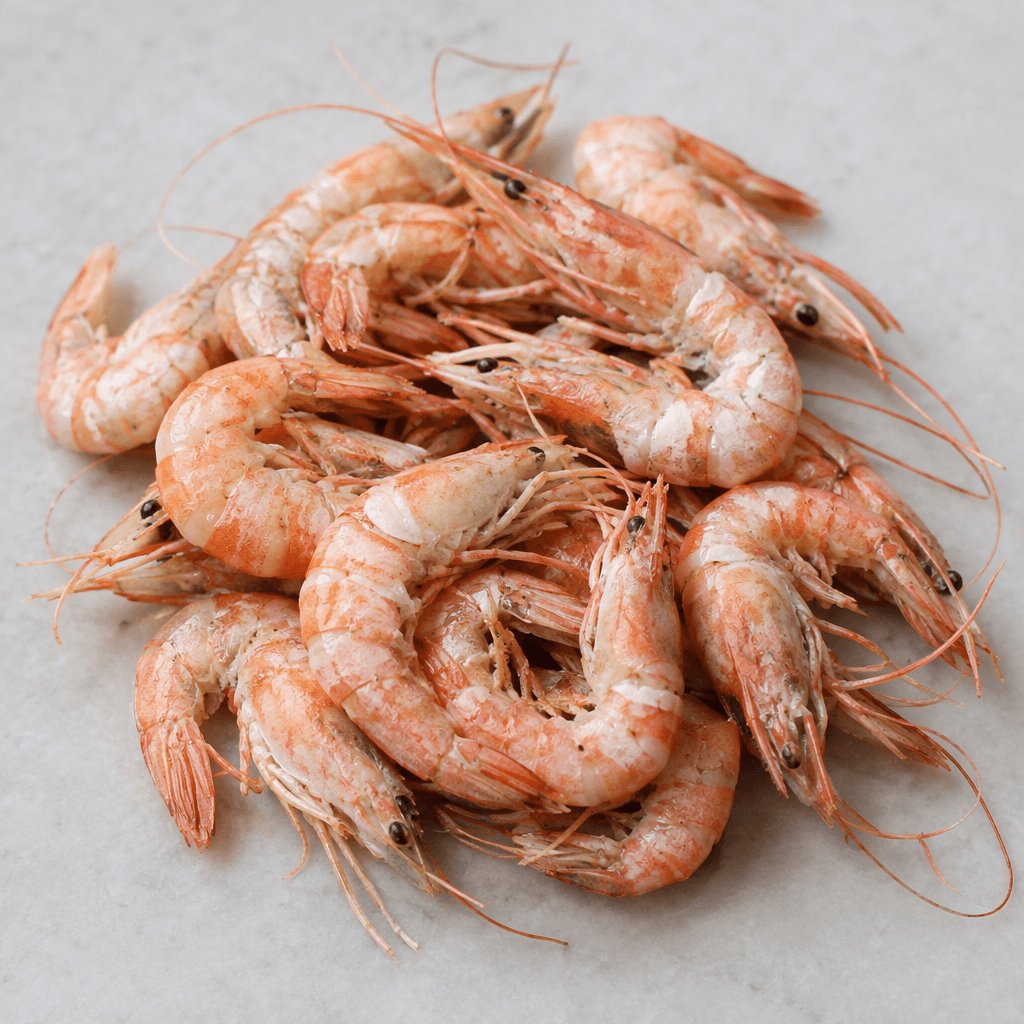
Shrimp Calories
Low-calorie, high-protein seafood, rich in selenium and B12
In season: Spring · Summer · Autumn · Winter
CALORIES
GI
POTASSIUM
FIBER
Quick answer
1 piece (medium) of Shrimp (15 g) has 15 calories. That works out to 99 calories per 100 g. It contains 0 g of carbs, 3.6 g of protein, 0 g of fat and 0 g of fiber. Its 6 µg of Selenium covers 11% of the Daily Value. Its glycemic index is 0 (low), so it raises blood sugar slowly.
What is Shrimp?
Shrimp are small aquatic crustaceans with a mild, slightly sweet flavour; they turn pink when cooked and are sold fresh or frozen, often already peeled. They appear in many coastal cuisines rather than belonging to one single place of origin. Their tender flesh cooks quickly and can become tough if left on the heat too long. Depending on where you live, you might find shrimp grilled, sautéed with garlic, folded into pasta or curry, or served in tacos, salads and seafood dishes. Lemon, herbs and a little chilli complement their delicate taste.
Shrimp are naturally low in fat and provide plenty of protein: a 100 g portion has 24 g. For a lighter meal, grill or briefly sauté them and pair with vegetables, rice or a crisp salad.
Shrimp Nutrition Facts
Selected: 100 g
99
KCAL / 100G
Carbs
0.2g
· 0% DV
Protein
24g
· 48% DV
Fat
0.3g
· 0% DV
Fiber
0g
· 0% DV
DV is the share of the daily value covered, on a 2,000 kcal reference diet.
Calories come from: Carbs 1% · Protein 96% · Fat 3%
Shrimp Vitamins & Minerals
Vitamins
B12
1.1µg · 46% DV
B3
1.7mg · 11% DV
Vitamin E
1.7mg · 11% DV
B2
0.11mg · 8% DV
Minerals
Selenium
40µg · 73% DV
Phosphorus
220mg · 31% DV
Iodine
35µg · 23% DV
Zinc
1mg · 9% DV
How Nutritious Is Shrimp?
Nutrient density
Very high
How many vitamins, minerals and how much fiber this food carries per calorie. A high score means a lot of nutrition for few calories.
Satiety score
High
An EatBetter score computed from fiber, protein and calorie density. A high score means staying full longer on the same calories.
Both scores are calculated per 100 g and do not change with the selected portion. The satiety score is EatBetter's own calculation, not a clinical measure.
Shrimp Glycemic Index
GLYCEMIC INDEX
GLYCEMIC LOAD
Accounts for portion size — a more realistic measure than GI alone.
How to Burn Off Shrimp
To burn the 99 calories in 100 g:
🚶
Walking (5 km/h)
🏃
Running (8 km/h)
🚴
Cycling
🏊
Swimming
Times are calculated with the MET equation for a 70 kg adult. Actual burn varies with your weight, age and pace.
Is Shrimp Processed?
NOVA 1
Unprocessed
1. Unprocessed
2. Minimally Processed
3. Processed
4. Ultra-Processed
NOVA classifies foods into 4 groups by industrial processing. NOVA 1 (unprocessed) is the healthiest.
Does Shrimp Contain Allergens?
No known major allergens
Which Diets Is Shrimp Good For?
Vegan
— Not suitable
Vegetarian
— Not suitable
Gluten-Free
✓ Suitable
Dairy-Free
— Not suitable
Mediterranean
✓ Suitable
Paleo
— Not suitable
Whole30
— Not suitable
DASH
— Not suitable
Keto
✓ Suitable
Low FODMAP
— Not suitable
Shrimp Fat Profile
SATURATED
0.06g
MONOUNSATURATED
0.03g
POLYUNSATURATED
0.18g
Omega 6:3 ratio 0.1:1
Below the ideal 4:1 — a good omega balance.
Compare Shrimp
Foods Similar to Shrimp
Frequently Asked Questions About Shrimp
How do you devein shrimp?
To devein shrimp, make a shallow cut along the back and lift out the dark digestive tract with the tip of a knife or a toothpick. Rinse briefly if needed, then dry the shrimp before cooking.
What is the difference between shrimp and prawns?
Shrimp and prawns are different kinds of crustaceans, but the names are often used interchangeably in recipes and shops. In places that distinguish them, prawns are generally larger and have different gill and body structures.
Can you eat the vein in shrimp?
Yes, the dark vein in shrimp is generally safe to eat; it is the digestive tract, not a poisonous vein. People often remove it because it can contain grit or waste and may affect the shrimp’s texture.
How do you cook shrimp without making it rubbery?
Cook shrimp briefly over fairly high heat and take it off the heat as soon as the flesh turns opaque and curls. Overcooking makes it tough and rubbery; spreading it in a single layer helps it cook evenly.
Can you eat raw shrimp?
Raw shrimp is not a safe choice because it can carry harmful bacteria or parasites. Cook shrimp until the flesh is opaque, and keep raw seafood and its juices separate from ready-to-eat foods.
How do you thaw frozen shrimp safely?
Thaw frozen shrimp in the refrigerator or place it in a sealed bag and submerge it in cold water. Avoid leaving shrimp on the counter, and cook it soon after thawing rather than refreezing it.
Can you cook shrimp straight from frozen?
Yes, shrimp can be cooked from frozen, though it may release extra water and cook less evenly. Separate any pieces stuck together, use a hot pan or oven, and make sure the flesh turns opaque throughout.
Can you eat shrimp shells?
Yes, shrimp shells are edible, especially when cooked until crisp. Larger shells can be tough or uncomfortable to chew, so many people peel shrimp before eating or remove the shells at the table.
How can you tell if shrimp has gone bad?
Fresh shrimp should smell mildly of the sea and feel firm, not slimy. A sharp sour or ammonia-like smell, mushy flesh, or dark discolouration are warning signs; discard shrimp with these changes.
Can you eat shrimp while pregnant?
Yes, cooked shrimp can be eaten during pregnancy; avoid raw or undercooked shrimp because of foodborne illness risks. If you have a specific medical concern or dietary restriction, ask your pregnancy care provider.
Have another question about Shrimp?
Ask the AI nutrition coach — calories, portions, alternatives and more, answered in seconds in the app.

Scan calories with your camera
Instant AI nutrition analysis

Nutrition data compiled from USDA FoodData Central and scientific sources.