

Ready & Packaged Foods
All →Vegetables & Legumes
All →Desserts & Confectionery
All →Meat & Protein
All →Grains & Bakery
All →Beverages
All →Milk & Dairy
All →

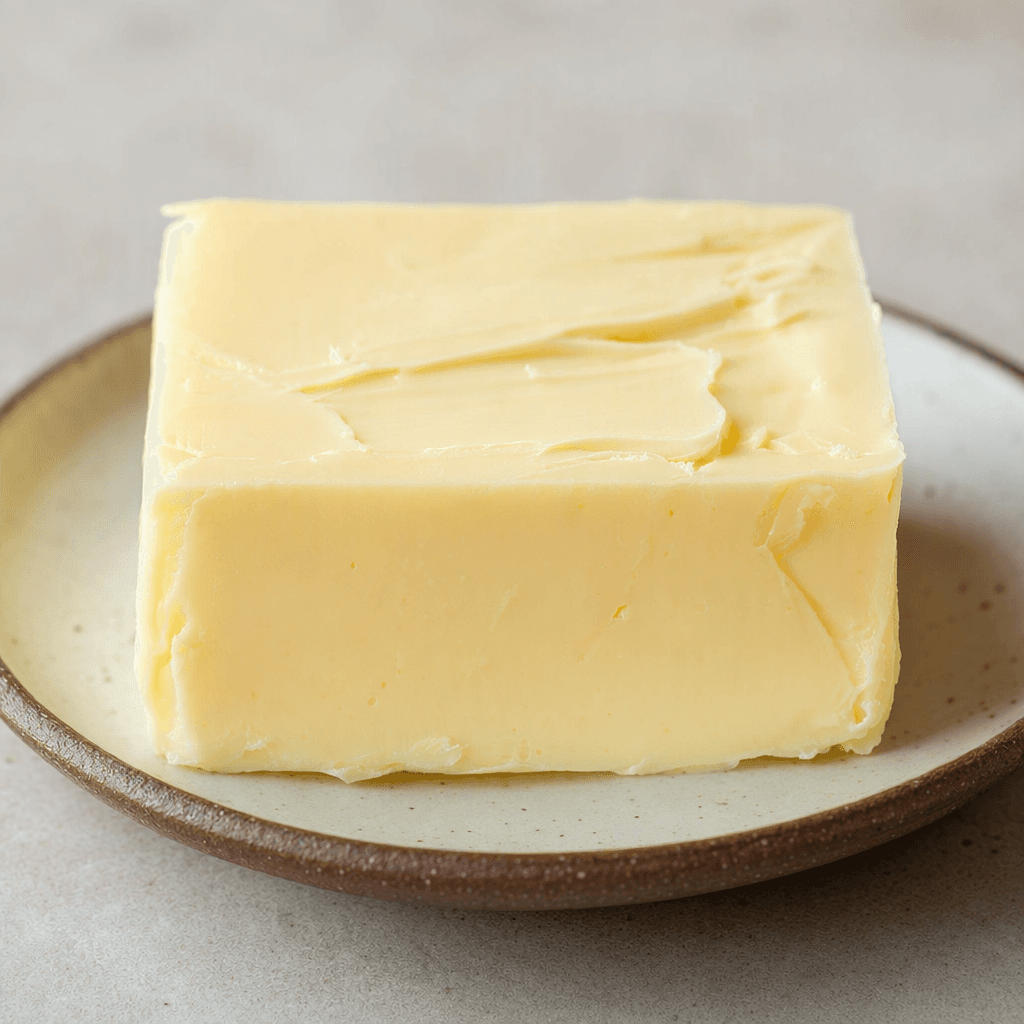
Sheep butter Calories
Butter made from sheep's milk, rich and aromatic
In season: Spring · Summer
CALORIES · 100 G
GI
POTASSIUM · 100 G
FIBER · 100 G
Quick answer
1 tablespoon (medium) of Sheep butter (14 g) has 104 calories. That works out to 740 calories per 100 g. It contains 0.1 g of carbs, 0.1 g of protein, 11.5 g of fat and 0 g of fiber. Its 112 µg of Vitamin A covers 12% of the Daily Value. Its glycemic index is 0 (low), so it raises blood sugar slowly.
Sheep butter Nutrition Facts
Selected: 1 tablespoon (medium) · 14 g
104
KCAL / 14G
Carbs
0.1g
· 0% DV
Protein
0.1g
· 0% DV
Fat
11.5g
· 15% DV
Fiber
0g
· 0% DV
DV is the share of the daily value covered, on a 2,000 kcal reference diet.
Calories come from: Carbs 0% · Protein 0% · Fat 100%
Sheep butter nutrition facts table · 1 tablespoon (medium) (14 g)
| Nutrient | Amount | % DV |
|---|---|---|
| Calories | 104 kcal | |
| Total fat | 11.5 g | 15% |
| Saturated fat | 7.56 g | 38% |
| Trans fat | 0.35 g | |
| Sodium | 1.4 mg | 0% |
| Total carbohydrate | 0.1 g | 0% |
| Fiber | 0 g | 0% |
| Protein | 0.1 g | 0% |
Calories: Calories measure energy. Average daily need is 2,000 kcal. Excess calories are stored as fat, too few cause weight loss.
Carbs: Your body's primary energy source. The brain runs exclusively on carbs. Daily need: 275g.
Protein: Essential for muscle repair and cell growth. Daily need: 50g. Keeps you full and boosts metabolism.
Fat: Needed for hormone production and vitamin absorption. Daily need: 78g. Limit saturated fats, choose unsaturated.
Fiber: Critical for digestive health and satiety. Daily need: 28g. Stabilizes blood sugar, lowers cholesterol.

Log this food in EatBetter
100,000+ people use it
- Get your daily calorie target
- Snap your meal, log it in seconds
- See every vitamin and mineral

📸 Scan the code to get the app free.

How Many Calories in 1 Tablespoon of Sheep butter?
| Serving | Amount | Calories |
|---|---|---|
| 1 tablespoon (medium) | 14 g | 104 kcal |
| 1 teaspoon (small) | 5 g | 37 kcal |
| 1 slice (thin) | 10 g | 74 kcal |
| 1 piece (small) | 10 g | 74 kcal |
| 1 slice (thick) | 20 g | 148 kcal |
| 1 piece (large) | 20 g | 148 kcal |
| 2 tablespoon (large) | 28 g | 207 kcal |
| 50 g | 50 g | 370 kcal |
| 100 g | 100 g | 740 kcal |
Calculated from 740 calories per 100 g.
Frequently Asked Questions About Sheep butter
What is sheep butter made from?
Sheep butter is made by churning cream from sheep’s milk. Traditional churning is a simple physical process, so the butter is minimally processed; salting or culturing may vary by producer.
How does sheep butter taste compared with cow’s butter?
Sheep butter is often richer and more aromatic than cow’s butter, with a distinctive dairy flavor. The exact taste varies with the sheep’s feed and the butter-making method, so products are not all identical.
Why is sheep butter sometimes white or pale?
Sheep butter can look paler than cow’s butter because sheep convert much of the beta-carotene in their feed into vitamin A before it reaches the milk. Color still varies with feed and production, so it cannot prove the milk source.
Can you cook with sheep butter?
Yes, sheep butter works in cooking, especially when you want its distinctive flavor in eggs, vegetables, or sauces. Use low to medium heat because butter can brown or burn faster than oils suited to high-heat cooking.
Can you bake with sheep butter?
Yes, sheep butter can be used in cookies, pastries, and other baked goods in place of ordinary butter. Its stronger flavor may be noticeable, so it works especially well in recipes where a rich, savory dairy note is welcome.
How should sheep butter be stored?
Keep sheep butter covered in the refrigerator and away from strongly scented foods, since it can absorb odors. Use a clean knife each time, and follow the package’s storage directions and date after opening.
Can sheep butter be frozen?
Yes, sheep butter can be frozen. Wrap it tightly or place it in an airtight freezer container to protect its aroma, then thaw it in the refrigerator. The texture may change slightly, but it remains useful for cooking.
Is sheep butter lactose-free?
No, sheep butter is not reliably lactose-free. Butter usually contains very little lactose, but traces may remain, so a person with lactose intolerance may still react. Choose a product specifically certified lactose-free if you need to avoid it.
Is sheep butter healthier than cow’s butter?
Sheep butter is not automatically healthier than cow’s butter just because it comes from sheep’s milk. Both are butter, and sheep butter’s rich flavor does not remove the need to moderate portions as part of your usual diet.
What is the difference between sheep butter and sheep ghee?
Sheep butter is churned from sheep’s milk cream, while sheep ghee is clarified butter heated to remove water and milk solids. Ghee has a different texture and cooking behavior, and its flavor is typically more toasted.
Sheep butter Vitamins & Minerals
Vitamins
Vitamin A
112µg · 12% DV
B12
0.07µg · 3% DV
Vitamin E
0.29mg · 2% DV
Vitamin D
0.21µg · 1% DV
Minerals
Phosphorus
2.1mg · 0% DV
Calcium
2.8mg · 0% DV
Selenium
0.14µg · 0% DV
Iodine
0.28µg · 0% DV
Potassium ⭐
2.1mg · 0% DV
Sodium
1.4mg · 0% DV
Sheep butter Glycemic Index
GLYCEMIC INDEX
GLYCEMIC LOAD
Accounts for portion size — a more realistic measure than GI alone.
How to Burn Off Sheep butter
To burn the 104 calories in 1 tablespoon (medium) (14 g):
🚶
Walking (5 km/h)
🏃
Running (8 km/h)
🚴
Cycling
🏊
Swimming
Times are calculated with the MET equation for a 70 kg adult. Actual burn varies with your weight, age and pace.
What is Sheep butter?
Sheep butter is made by churning cream from sheep’s milk. It is produced in regions with a strong tradition of sheep herding, including parts of the Mediterranean and Middle East, and is less familiar than cow’s butter in many English-speaking kitchens. Its colour and flavour can vary with the animals’ diet and the season.
The butter has a rich, aromatic taste and works well spread on bread or melted into grains, vegetables and savoury baking. In cuisines where it is traditionally made, it often brings depth to everyday home cooking. It is very high in fat, with little protein or carbohydrate, so a small amount can add plenty of flavour. Try it with warm flatbread or use it in place of another butter when you want a more pronounced taste.
How Nutritious Is Sheep butter?
Nutrient density
Low
How many vitamins, minerals and how much fiber this food carries per calorie. A high score means a lot of nutrition for few calories.
Satiety score
Low
An EatBetter score computed from fiber, protein and calorie density. A high score means staying full longer on the same calories.
Both scores are calculated per 100 g and do not change with the selected portion. The satiety score is EatBetter's own calculation, not a clinical measure.
Is Sheep butter Processed?
NOVA 2
Minimally Processed
1. Unprocessed
2. Minimally Processed
3. Processed
4. Ultra-Processed
NOVA classifies foods into 4 groups by industrial processing. NOVA 1 (unprocessed) is the healthiest.
Does Sheep butter Contain Allergens?
Contains these allergens:
Which Diets Is Sheep butter Good For?
Vegan
— Not suitable
Vegetarian
— Not suitable
Gluten-Free
✓ Suitable
Dairy-Free
— Not suitable
Mediterranean
✓ Suitable
Paleo
✓ Suitable
Whole30
— Not suitable
DASH
— Not suitable
Keto
✓ Suitable
Low FODMAP
— Not suitable
Sheep butter Fat Profile
SATURATED
7.56g
MONOUNSATURATED
2.8g
POLYUNSATURATED
0.35g
Omega 6:3 ratio 2.4:1
Below the ideal 4:1 — a good omega balance.
Compare Sheep butter
Foods Similar to Sheep butter
Have another question about Sheep butter?
Ask the AI nutrition coach — calories, portions, alternatives and more, answered in seconds in the app.

Scan calories with your camera
Instant AI nutrition analysis

Nutrition data compiled from USDA FoodData Central and scientific sources.