

Ready & Packaged Foods
All →Vegetables & Legumes
All →Desserts & Confectionery
All →Meat & Protein
All →Grains & Bakery
All →Beverages
All →Milk & Dairy
All →

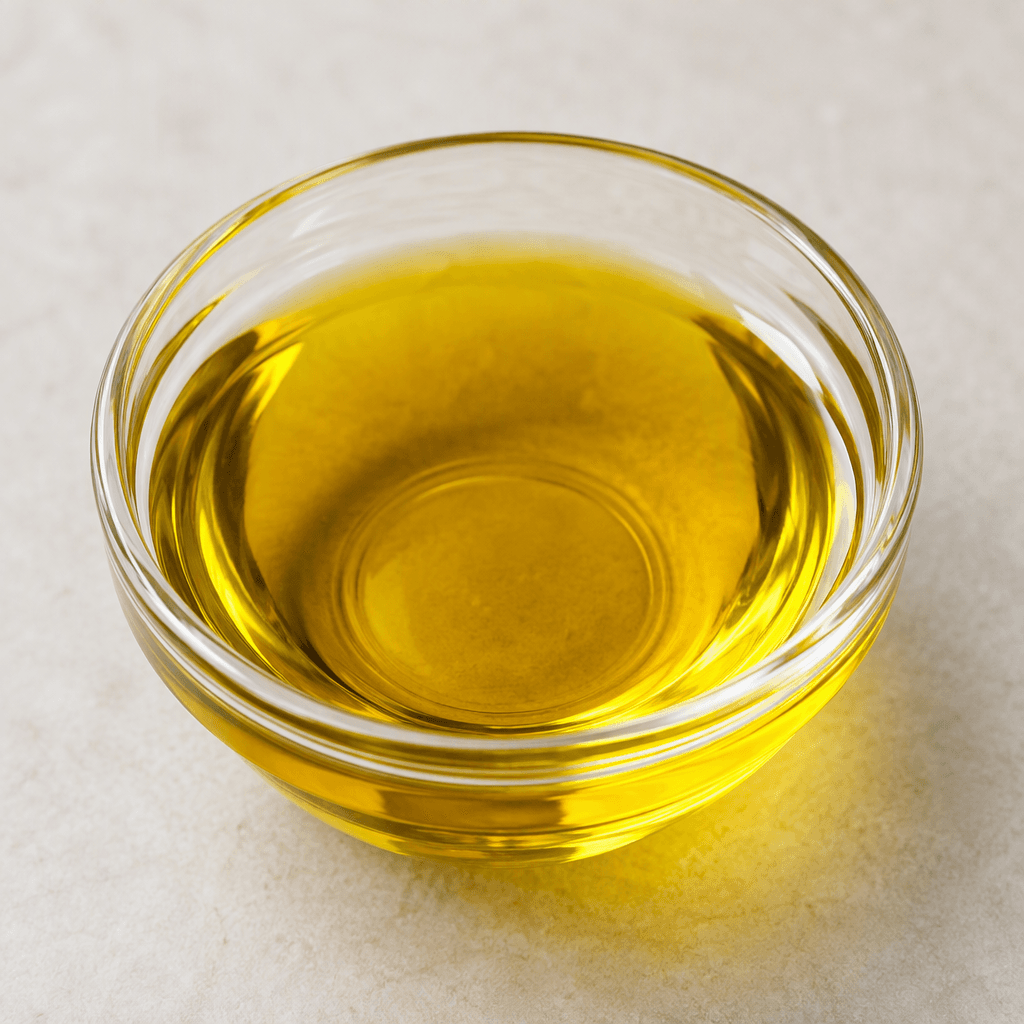
Sesame Oil Calories
Rich in unsaturated fatty acids, source of vitamin E, common in Asian cuisine
In season: Spring · Summer · Autumn · Winter
CALORIES
GI
POTASSIUM
FIBER
Quick answer
1 tablespoon (medium) of Sesame Oil (14 g) has 119 calories. That works out to 884 calories per 100 g. It contains 0 g of carbs, 0 g of protein, 13.5 g of fat and 0 g of fiber. Its glycemic index is 0 (low), so it raises blood sugar slowly.
What is Sesame Oil?
Sesame oil is pressed from sesame seeds and is used widely in Asian cooking. Lighter varieties have a mild, seed-like taste, while oil made from toasted seeds is darker and much more aromatic. The toasted kind is usually added near the end of cooking or used as a seasoning; lighter sesame oil can also be used for cooking.
Its nutty aroma works well in noodles, stir-fries, vegetables and dressings, and a little can go a long way. In many kitchens it is paired with ingredients such as soy sauce, ginger or vinegar. Sesame oil is entirely fat and is rich in unsaturated fatty acids, so use it sparingly if you want to keep a dish lighter.
Sesame Oil Nutrition Facts
Selected: 100 g
884
KCAL / 100G
Carbs
0g
· 0% DV
Protein
0g
· 0% DV
Fat
100g
· 128% DV
Fiber
0g
· 0% DV
DV is the share of the daily value covered, on a 2,000 kcal reference diet.
Calories come from: Carbs 0% · Protein 0% · Fat 100%
Sesame Oil Vitamins & Minerals
Vitamins
Vitamin K
13.6µg · 11% DV
Vitamin E
1.4mg · 9% DV
Vitamin A
0µg · 0% DV
B1
0mg · 0% DV
Minerals
Calcium
0mg · 0% DV
Iron
0mg · 0% DV
Magnesium
0mg · 0% DV
Zinc
0mg · 0% DV
How Nutritious Is Sesame Oil?
Nutrient density
Low
How many vitamins, minerals and how much fiber this food carries per calorie. A high score means a lot of nutrition for few calories.
Satiety score
Low
An EatBetter score computed from fiber, protein and calorie density. A high score means staying full longer on the same calories.
Both scores are calculated per 100 g and do not change with the selected portion. The satiety score is EatBetter's own calculation, not a clinical measure.
Sesame Oil Glycemic Index
GLYCEMIC INDEX
GLYCEMIC LOAD
Accounts for portion size — a more realistic measure than GI alone.
How to Burn Off Sesame Oil
To burn the 884 calories in 100 g:
🚶
Walking (5 km/h)
🏃
Running (8 km/h)
🚴
Cycling
🏊
Swimming
Times are calculated with the MET equation for a 70 kg adult. Actual burn varies with your weight, age and pace.
Is Sesame Oil Processed?
NOVA 2
Minimally Processed
1. Unprocessed
2. Minimally Processed
3. Processed
4. Ultra-Processed
NOVA classifies foods into 4 groups by industrial processing. NOVA 1 (unprocessed) is the healthiest.
Does Sesame Oil Contain Allergens?
Contains these allergens:
Which Diets Is Sesame Oil Good For?
Vegan
✓ Suitable
Vegetarian
✓ Suitable
Gluten-Free
✓ Suitable
Dairy-Free
— Not suitable
Mediterranean
✓ Suitable
Paleo
✓ Suitable
Whole30
— Not suitable
DASH
— Not suitable
Keto
— Not suitable
Low FODMAP
— Not suitable
Sesame Oil Fat Profile
SATURATED
14.2g
MONOUNSATURATED
39.7g
POLYUNSATURATED
41.7g
Omega 6:3 ratio 137.7:1
Above the ideal 4:1 (137.7:1).
Compare Sesame Oil
Foods Similar to Sesame Oil
Frequently Asked Questions About Sesame Oil
What is sesame oil used for?
Sesame oil is used to season stir-fries, noodles, rice, marinades and dressings. Toasted sesame oil is especially useful as a finishing oil: add a small amount after cooking to preserve its pronounced aroma.
What is the difference between toasted and untoasted sesame oil?
Toasted sesame oil is darker and has a stronger, nuttier flavor; untoasted sesame oil is milder and usually better suited to cooking. Use toasted sesame oil mainly for dressings or to finish a dish, rather than for prolonged high-heat cooking.
Can you fry with sesame oil?
Yes, light or refined sesame oil can be used for frying. Toasted sesame oil has a more delicate aroma that can fade with high heat, so it is usually better added to the finished dish or used in a dressing.
What can I use instead of sesame oil?
For cooking, canola, sunflower or another neutral oil can replace untoasted sesame oil. They will not reproduce toasted sesame oil’s distinctive nutty flavor; toasted sesame seeds can add some of that flavor to the finished dish.
Is sesame oil the same as tahini?
No, sesame oil and tahini are different foods. Sesame oil is the liquid oil extracted from sesame seeds, while tahini is a paste made by grinding the seeds. They have different textures and are not interchangeable in every recipe.
Should sesame oil be refrigerated after opening?
Not always: keep sesame oil tightly closed in a cool, dark cupboard unless the label says otherwise. Refrigerating toasted sesame oil after opening can help preserve its aroma for longer; the oil may become cloudy or thicker when cold.
How can you tell if sesame oil has gone bad?
Sesame oil that smells sour, sharp or paint-like, or tastes unpleasantly bitter, should be discarded. These are signs it may have turned rancid. Don’t rely on appearance alone, since spoiled oil can still look clear.
Is sesame oil healthy?
Sesame oil provides mostly unsaturated fats and can be part of a balanced way of eating. It is still a concentrated source of energy, so use it as a flavorful cooking or finishing oil rather than pouring it freely.
Can you use sesame oil for oil pulling?
Yes, sesame oil is traditionally used for oil pulling, but swishing it has not been shown to replace brushing, flossing or dental care. Do not swallow the oil, and avoid oil pulling if you have trouble spitting safely.
Can you use sesame oil on your skin?
Sesame oil can be applied to skin as an emollient, but it may irritate some people or trigger a reaction. Test a small area first, and avoid applying it if you have a sesame allergy or develop redness, itching or swelling.
Have another question about Sesame Oil?
Ask the AI nutrition coach — calories, portions, alternatives and more, answered in seconds in the app.

Scan calories with your camera
Instant AI nutrition analysis

Nutrition data compiled from USDA FoodData Central and scientific sources.