

Ready & Packaged Foods
All →Vegetables & Legumes
All →Desserts & Confectionery
All →Meat & Protein
All →Grains & Bakery
All →Beverages
All →Milk & Dairy
All →

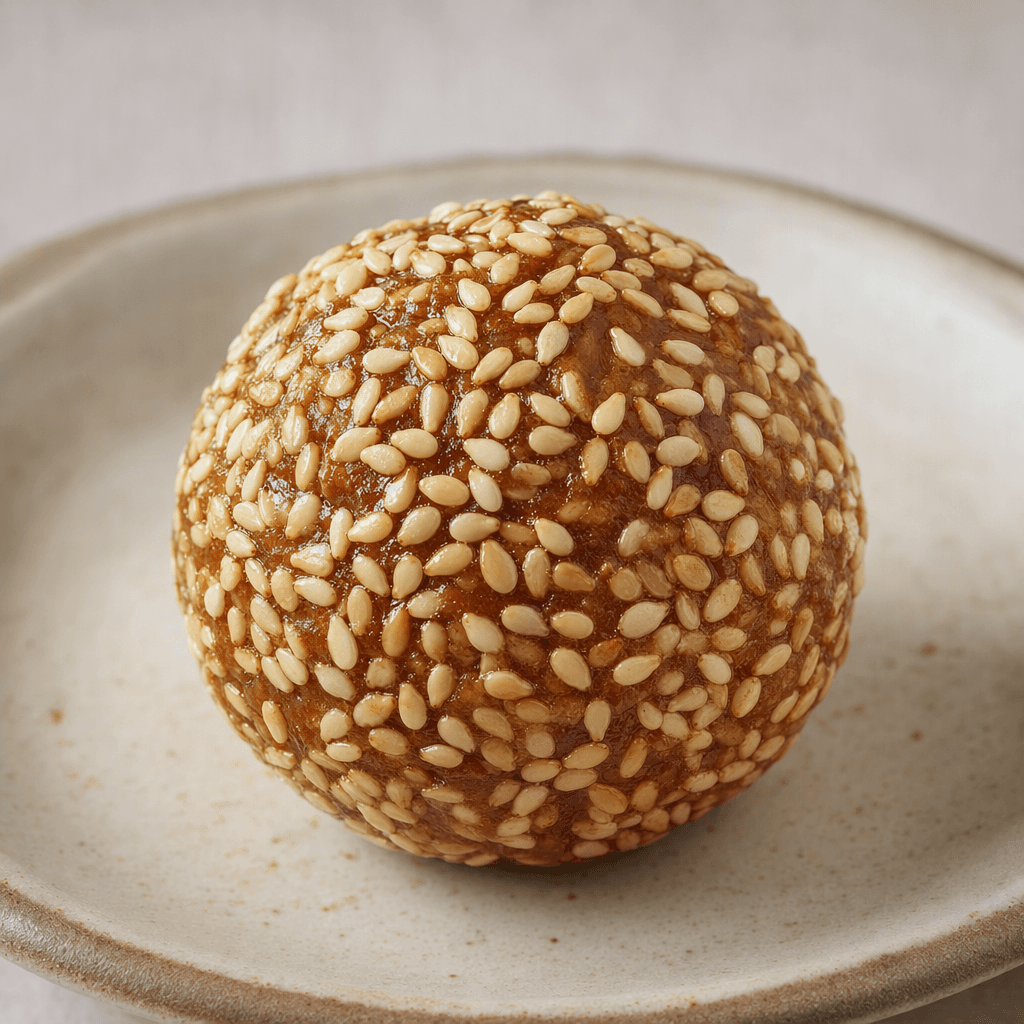
Sesame energy ball Calories
Energy-dense sesame-based snack
CALORIES
GI
POTASSIUM
FIBER
Quick answer
1 piece (medium) of Sesame energy ball (25 g) has 123 calories. That works out to 490 calories per 100 g. It contains 10.5 g of carbs, 3.1 g of protein, 7.8 g of fat and 1.7 g of fiber. Its 0.3 mg of Copper covers 31% of the Daily Value. Its glycemic index is 48 (low), so it raises blood sugar slowly.
What is Sesame energy ball?
A sesame energy ball is a small, usually no-bake snack made by combining sesame seeds or tahini with a sticky ingredient such as dates or syrup, then shaping the mixture into balls. Recipes vary and may include nuts or oats; it has no single traditional origin and is part of the wider modern energy-ball trend. A coating of sesame gives it a nutty aroma, while the centre is typically soft and chewy. It works as a portable snack between meals, after exercise, or with coffee or tea, and can be packed for a commute or lunchbox. Sesame energy balls are energy-dense, with fats, fibre and some protein; 100 g provides 490 calories. If you want a lighter snack, have one medium piece—about 25 g—and pair it with fruit or plain yoghurt.
Sesame energy ball Nutrition Facts
Selected: 100 g
490
KCAL / 100G
Carbs
42g
· 15% DV
Protein
12.5g
· 25% DV
Fat
31g
· 40% DV
Fiber
6.8g
· 24% DV
DV is the share of the daily value covered, on a 2,000 kcal reference diet.
Calories come from: Carbs 34% · Protein 10% · Fat 56%
Sesame energy ball Vitamins & Minerals
Vitamins
B1
0.55mg · 46% DV
Biotin
9µg · 30% DV
B3
4.1mg · 26% DV
Folate
95µg · 24% DV
Minerals
Copper
1mg · 111% DV
Manganese
2mg · 87% DV
Magnesium
260mg · 62% DV
Phosphorus
430mg · 61% DV
How Nutritious Is Sesame energy ball?
Nutrient density
Medium
How many vitamins, minerals and how much fiber this food carries per calorie. A high score means a lot of nutrition for few calories.
Satiety score
Medium
An EatBetter score computed from fiber, protein and calorie density. A high score means staying full longer on the same calories.
Both scores are calculated per 100 g and do not change with the selected portion. The satiety score is EatBetter's own calculation, not a clinical measure.
Sesame energy ball Glycemic Index
GLYCEMIC INDEX
GLYCEMIC LOAD
Accounts for portion size — a more realistic measure than GI alone.
How to Burn Off Sesame energy ball
To burn the 490 calories in 100 g:
🚶
Walking (5 km/h)
🏃
Running (8 km/h)
🚴
Cycling
🏊
Swimming
Times are calculated with the MET equation for a 70 kg adult. Actual burn varies with your weight, age and pace.
Is Sesame energy ball Processed?
NOVA 3
Processed
1. Unprocessed
2. Minimally Processed
3. Processed
4. Ultra-Processed
NOVA classifies foods into 4 groups by industrial processing. NOVA 1 (unprocessed) is the healthiest.
Does Sesame energy ball Contain Allergens?
Contains these allergens:
Which Diets Is Sesame energy ball Good For?
Vegan
✓ Suitable
Vegetarian
✓ Suitable
Gluten-Free
✓ Suitable
Dairy-Free
— Not suitable
Mediterranean
✓ Suitable
Paleo
— Not suitable
Whole30
— Not suitable
DASH
— Not suitable
Keto
— Not suitable
Low FODMAP
— Not suitable
Sesame energy ball Fat Profile
SATURATED
4.6g
MONOUNSATURATED
11.2g
POLYUNSATURATED
13.1g
Omega 6:3 ratio 103.3:1
Above the ideal 4:1 (103.3:1).
Compare Sesame energy ball
Foods Similar to Sesame energy ball
Frequently Asked Questions About Sesame energy ball
How do you make sesame energy balls?
Sesame energy balls are usually made by blending soft dates with tahini or another nut or seed butter, then shaping the mixture and rolling it in sesame seeds. Add the seeds gradually until the mixture holds together, then chill the balls to firm them up.
What are sesame energy balls made of?
Sesame energy balls commonly contain sesame seeds, dates, and tahini. Recipes may also include oats, cocoa, or nuts, so the exact ingredients vary; the sesame coating gives the balls their characteristic appearance and flavor.
Can you make sesame energy balls without dates?
Yes, sesame energy balls can be made without dates. Soft dried figs or apricots can help bind the mixture, while some recipes use a syrup; adjust the amount gradually so the mixture is firm enough to roll rather than sticky or crumbly.
Do sesame energy balls need to be refrigerated?
Yes, refrigerating sesame energy balls is the best way to keep homemade ones fresh, especially when they contain dates or tahini. Store them in a covered container and take them out shortly before serving if you prefer a softer texture.
Why are my sesame energy balls too sticky?
Sesame energy balls are usually too sticky when the mixture contains too much moisture or binder. Mix in a little oats, ground nuts, or sesame seeds at a time until it is easy to shape, then chill the balls before serving.
Can sesame energy balls be frozen?
Yes, sesame energy balls freeze well. Arrange them separately until firm, then transfer them to a sealed freezer-safe container; thaw only the portion you need in the refrigerator so the remaining balls stay frozen.
How long do sesame energy balls last?
Sesame energy balls generally keep for several days in a covered container in the refrigerator, though recipes differ. Use clean hands and utensils when handling them, and discard any that develop an unusual smell, appearance, or texture.
Are sesame energy balls good before a workout?
Yes, sesame energy balls can work as a convenient pre-workout snack because they provide carbohydrates in a compact form. Their sesame and nut ingredients can make them relatively rich, so allow time to digest them if eating close to exercise.
Can I use sesame paste instead of sesame seeds in sesame energy balls?
Yes, sesame paste, or tahini, can be used in the mixture, but it does not replace the sesame coating one-for-one. Add it gradually because it makes the mixture softer; use whole seeds on the outside for the familiar finish.
Can you make sesame energy balls without a food processor?
Yes, you can make sesame energy balls by hand if the dates are soft enough to mash. Chop or mash the ingredients thoroughly, knead them in a bowl until they hold together, then roll the mixture and coat each ball with sesame seeds.
Have another question about Sesame energy ball?
Ask the AI nutrition coach — calories, portions, alternatives and more, answered in seconds in the app.

Scan calories with your camera
Instant AI nutrition analysis

Nutrition data compiled from USDA FoodData Central and scientific sources.