

Ready & Packaged Foods
All →Vegetables & Legumes
All →Desserts & Confectionery
All →Meat & Protein
All →Grains & Bakery
All →Beverages
All →Milk & Dairy
All →

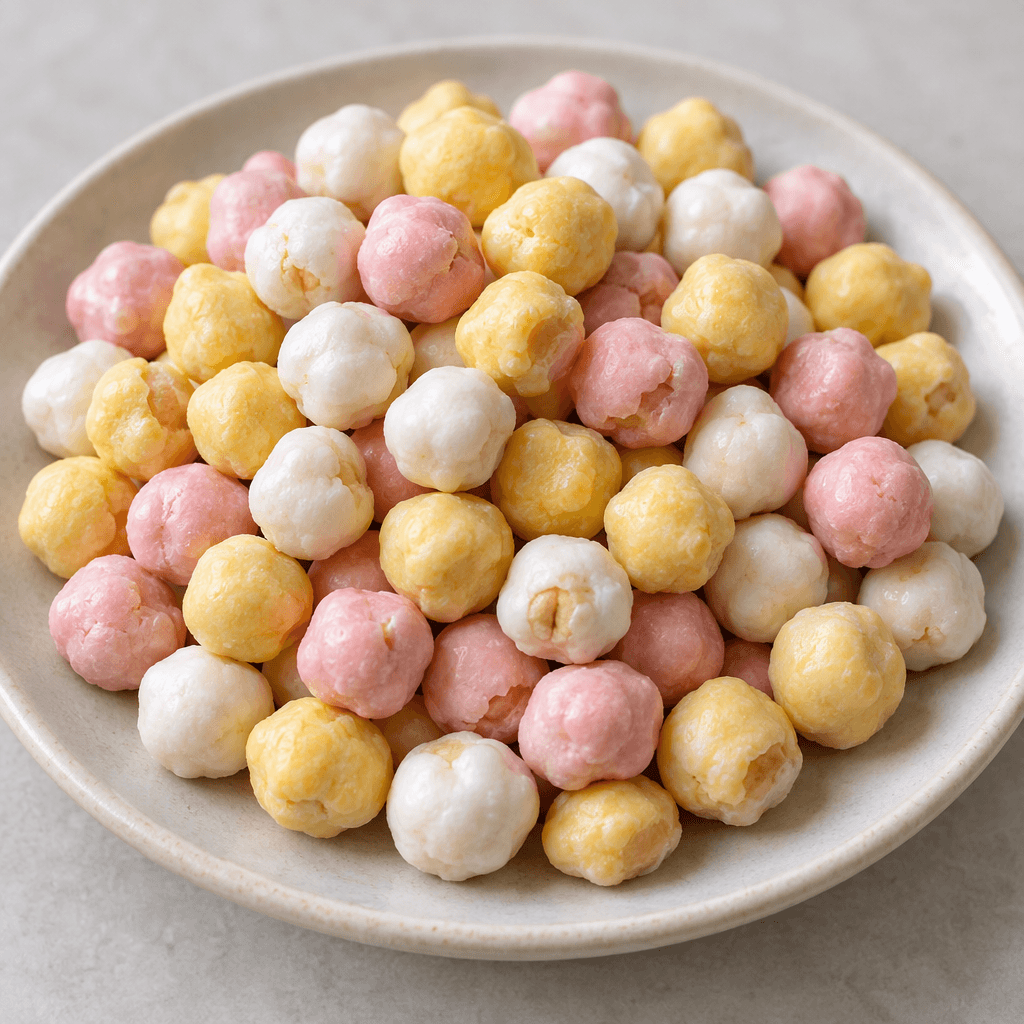
Sugar-coated chickpea Calories
Sweet snack, contains protein and fiber, high in sugar
CALORIES
GI
POTASSIUM
FIBER
Quick answer
1 serving (medium) of Sugar-coated chickpea (30 g) has 123 calories. That works out to 410 calories per 100 g. It contains 24.9 g of carbs, 2.3 g of protein, 1 g of fat and 1.7 g of fiber. Its 0.1 mg of Copper covers 6% of the Daily Value. Its glycemic index is 70 (high), so it raises blood sugar quickly.
What is Sugar-coated chickpea?
Sugar-coated chickpeas are roasted chickpeas covered in a smooth, hard shell of sugar. They are a familiar Turkish confection, often sold in sweet shops and markets and shared as a small treat during celebrations.
The shell gives way with a crisp snap, followed by the dry, toasty crunch of the chickpea; pastel colours make them a cheerful addition to a sweets bowl. In Turkey they may be offered with tea or served among other nibbles. Chickpeas contribute some protein and fibre, but the coating makes this a sugary snack rather than an everyday staple. For a less sweet handful, mix a few with plain roasted chickpeas.
Sugar-coated chickpea Nutrition Facts
Selected: 100 g
410
KCAL / 100G
Carbs
83g
· 30% DV
Protein
7.5g
· 15% DV
Fat
3.2g
· 4% DV
Fiber
5.5g
· 20% DV
DV is the share of the daily value covered, on a 2,000 kcal reference diet.
Calories come from: Carbs 85% · Protein 8% · Fat 7%
Sugar-coated chickpea Vitamins & Minerals
Vitamins
Folate
35µg · 9% DV
B1
0.08mg · 7% DV
Biotin
2µg · 7% DV
B3
0.6mg · 4% DV
Minerals
Phosphorus
85mg · 12% DV
Iron
2mg · 11% DV
Zinc
1mg · 9% DV
Magnesium
28mg · 7% DV
How Nutritious Is Sugar-coated chickpea?
Nutrient density
Low
How many vitamins, minerals and how much fiber this food carries per calorie. A high score means a lot of nutrition for few calories.
Satiety score
Medium
An EatBetter score computed from fiber, protein and calorie density. A high score means staying full longer on the same calories.
Both scores are calculated per 100 g and do not change with the selected portion. The satiety score is EatBetter's own calculation, not a clinical measure.
Sugar-coated chickpea Glycemic Index
GLYCEMIC INDEX
GLYCEMIC LOAD
Accounts for portion size — a more realistic measure than GI alone.
How to Burn Off Sugar-coated chickpea
To burn the 410 calories in 100 g:
🚶
Walking (5 km/h)
🏃
Running (8 km/h)
🚴
Cycling
🏊
Swimming
Times are calculated with the MET equation for a 70 kg adult. Actual burn varies with your weight, age and pace.
Is Sugar-coated chickpea Processed?
NOVA 3
Processed
1. Unprocessed
2. Minimally Processed
3. Processed
4. Ultra-Processed
NOVA classifies foods into 4 groups by industrial processing. NOVA 1 (unprocessed) is the healthiest.
Does Sugar-coated chickpea Contain Allergens?
No known major allergens
Which Diets Is Sugar-coated chickpea Good For?
Vegan
— Not suitable
Vegetarian
✓ Suitable
Gluten-Free
— Not suitable
Dairy-Free
— Not suitable
Mediterranean
— Not suitable
Paleo
— Not suitable
Whole30
— Not suitable
DASH
— Not suitable
Keto
— Not suitable
Low FODMAP
— Not suitable
Sugar-coated chickpea Fat Profile
SATURATED
0.4g
MONOUNSATURATED
0.7g
POLYUNSATURATED
1.2g
Omega 6:3 ratio 36.7:1
Above the ideal 4:1 (36.7:1).
Compare Sugar-coated chickpea
Foods Similar to Sugar-coated chickpea
Frequently Asked Questions About Sugar-coated chickpea
What are sugar-coated chickpeas made of?
Sugar-coated chickpeas are made from chickpeas covered in a hard sugar shell. Depending on the recipe or maker, the coating may also include water, food coloring, or flavoring, so ingredients can vary between products.
Are sugar-coated chickpeas roasted before they are coated?
Yes, sugar-coated chickpeas are generally made with roasted chickpeas, which give the center its crisp texture. The chickpeas are then coated with sugar syrup and dried until the outer layer becomes firm and crunchy.
Why are sugar-coated chickpeas different colors?
Sugar-coated chickpeas are often colored with food dyes to create pastel shades such as pink, yellow, and white. The colors do not necessarily indicate different chickpea varieties or flavors; coloring and flavoring depend on the maker.
Are sugar-coated chickpeas a Turkish sweet?
Yes, sugar-coated chickpeas are a sweet version of leblebi, the roasted chickpea snack associated with Turkey. They are sold as a confection and are often served alongside tea or offered as a small treat to guests.
Are sugar-coated chickpeas the same as Jordan almonds?
No, sugar-coated chickpeas have a chickpea center, while Jordan almonds are almonds covered in a hard sugar shell. Their colorful coatings may look similar, but the main ingredient and texture inside are different.
How should you store sugar-coated chickpeas?
Store sugar-coated chickpeas in an airtight container in a cool, dry place away from sunlight. Humidity can make the sugar shell sticky or soft, so seal the package after opening and avoid storing it near steam or moisture.
Why does the coating on sugar-coated chickpeas crack?
The sugar shell on sugar-coated chickpeas can crack if the pieces are knocked together, squeezed, or exposed to changes in humidity. A cracked coating does not automatically mean the chickpeas have spoiled, but keeping them dry and handling them gently helps preserve the shell.
Can you make sugar-coated chickpeas at home?
Yes, you can make sugar-coated chickpeas at home by coating roasted chickpeas with sugar syrup and drying them. Getting an even, hard shell takes steady stirring and careful drying, so homemade pieces may look less uniform than packaged ones.
Are sugar-coated chickpeas good for you?
Sugar-coated chickpeas provide some protein and fiber from the chickpeas, but the sugar shell makes them a sweet treat rather than an everyday health food. Enjoying them occasionally and in a modest amount keeps their added sugar in perspective.
Can people with diabetes eat sugar-coated chickpeas?
Sugar-coated chickpeas can raise blood sugar because they contain a sweet coating as well as carbohydrates from the chickpeas. If you have diabetes, ask your clinician or dietitian how to fit them into your eating plan and portion size.
Have another question about Sugar-coated chickpea?
Ask the AI nutrition coach — calories, portions, alternatives and more, answered in seconds in the app.

Scan calories with your camera
Instant AI nutrition analysis

Nutrition data compiled from USDA FoodData Central and scientific sources.