

Ready & Packaged Foods
All →Vegetables & Legumes
All →Desserts & Confectionery
All →Meat & Protein
All →Grains & Bakery
All →Beverages
All →Milk & Dairy
All →

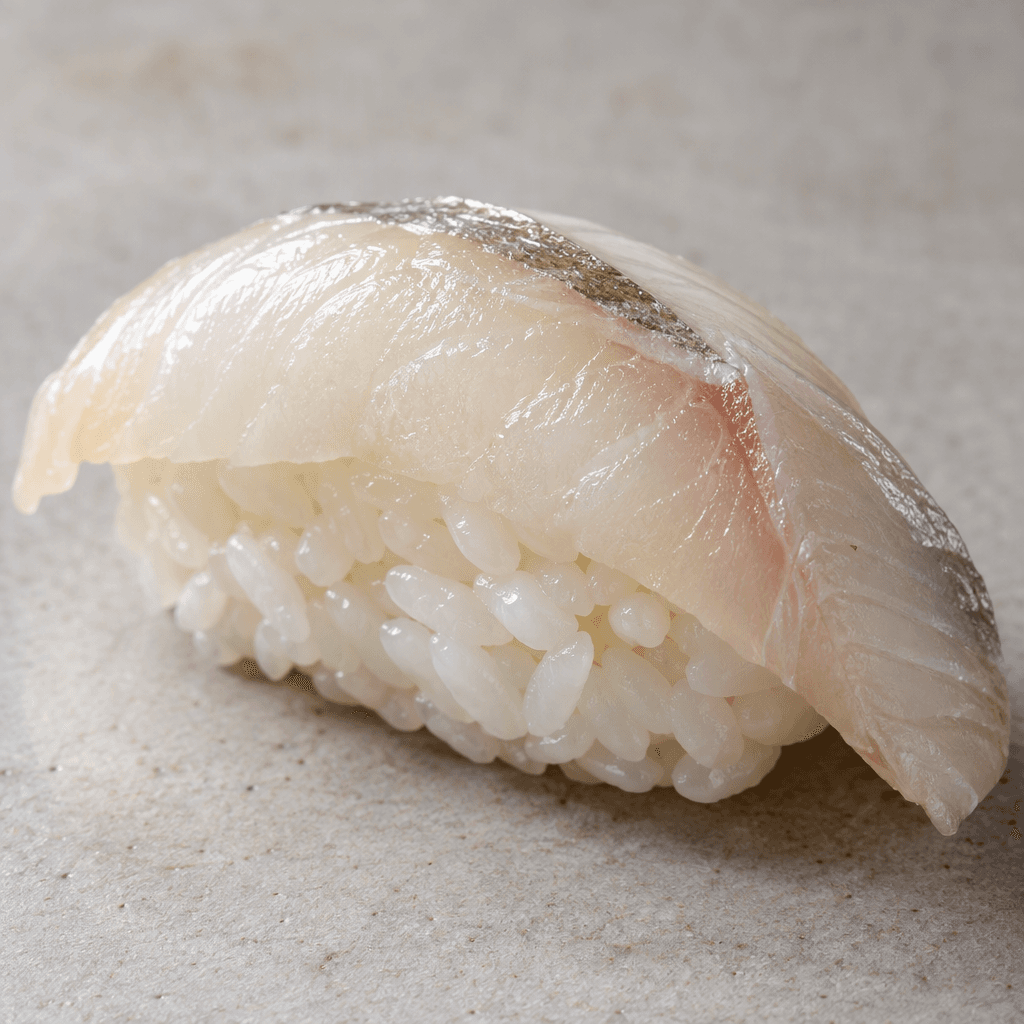
Sea Bass Nigiri Calories
Low calorie, good protein source, contains omega-3
In season: Spring · Summer · Autumn · Winter
CALORIES · 100 G
GI
POTASSIUM · 100 G
FIBER · 100 G
Quick answer
2 piece (medium) of Sea Bass Nigiri (40 g) has 48 calories. That works out to 120 calories per 100 g. It contains 7 g of carbs, 5.4 g of protein, 0.7 g of fat and 0.1 g of fiber. Its 0.4 µg of B12 covers 18% of the Daily Value. Its glycemic index is 65 (medium), so it raises blood sugar at a moderate pace.
Sea Bass Nigiri Nutrition Facts
Selected: 2 piece (medium) · 40 g
48
KCAL / 40G
Carbs
7g
· 3% DV
Protein
5.4g
· 11% DV
Fat
0.7g
· 1% DV
Fiber
0.1g
· 0% DV
DV is the share of the daily value covered, on a 2,000 kcal reference diet.
Calories come from: Carbs 50% · Protein 39% · Fat 11%
Sea Bass Nigiri nutrition facts table · 2 piece (medium) (40 g)
| Nutrient | Amount | % DV |
|---|---|---|
| Calories | 48 kcal | |
| Total fat | 0.7 g | 1% |
| Saturated fat | 0.16 g | 1% |
| Trans fat | 0 g | |
| Sodium | 84 mg | 4% |
| Total carbohydrate | 7 g | 3% |
| Fiber | 0.1 g | 0% |
| Protein | 5.4 g | 11% |
Calories: Calories measure energy. Average daily need is 2,000 kcal. Excess calories are stored as fat, too few cause weight loss.
Carbs: Your body's primary energy source. The brain runs exclusively on carbs. Daily need: 275g.
Protein: Essential for muscle repair and cell growth. Daily need: 50g. Keeps you full and boosts metabolism.
Fat: Needed for hormone production and vitamin absorption. Daily need: 78g. Limit saturated fats, choose unsaturated.
Fiber: Critical for digestive health and satiety. Daily need: 28g. Stabilizes blood sugar, lowers cholesterol.

Log this food in EatBetter
100,000+ people use it
- Get your daily calorie target
- Snap your meal, log it in seconds
- See every vitamin and mineral

📸 Scan the code to get the app free.

How Many Calories in 2 Pieces of Sea Bass Nigiri?
| Serving | Amount | Calories |
|---|---|---|
| 2 piece (medium) | 40 g | 48 kcal |
| 1 piece (small) | 20 g | 24 kcal |
| 3 piece (large) | 60 g | 72 kcal |
| 1 serving (medium) | 60 g | 72 kcal |
| 100 g | 100 g | 120 kcal |
| 5 piece (jumbo) | 100 g | 120 kcal |
| 1 serving (large) | 100 g | 120 kcal |
Calculated from 120 calories per 100 g.
Frequently Asked Questions About Sea Bass Nigiri
What is Sea Bass Nigiri made of?
Sea Bass Nigiri is a small mound of seasoned sushi rice topped with a slice of sea bass. The fish is commonly served raw, though some restaurants lightly sear it; the simple preparation lets the fish remain the main flavor.
Is Sea Bass Nigiri raw?
Usually, yes: Sea Bass Nigiri is typically topped with raw sea bass. Some menus offer aburi, meaning the fish is briefly flame-seared, so ask the restaurant if you want to know whether your serving is fully raw.
What does Sea Bass Nigiri taste like?
Sea Bass Nigiri has a mild, clean flavor and a tender texture, rather than the strong taste of oily fish. Its subtle sweetness pairs with the lightly vinegared rice without needing a heavy sauce.
Is it safe to eat raw Sea Bass Nigiri?
It can be safe when the sea bass is intended for raw service and handled properly by a reputable sushi restaurant. Raw fish still carries some food-safety risk, so avoid nigiri from an uncertain source or fish that has been left unrefrigerated.
How is Sea Bass Nigiri different from sea bass sashimi?
Sea Bass Nigiri pairs a slice of sea bass with a small portion of sushi rice. Sea bass sashimi is sliced fish served without rice, so the two differ in both their composition and how filling a serving is.
How should you eat Sea Bass Nigiri?
Eat Sea Bass Nigiri in one bite if it is comfortably sized, using your fingers or chopsticks. If you add soy sauce, dip the fish side lightly rather than soaking the rice, which can make the nigiri fall apart.
Can you make Sea Bass Nigiri at home?
Yes, you can make Sea Bass Nigiri at home with seasoned sushi rice and sea bass specifically suitable for raw consumption. Shape the rice gently and lay a thin fish slice on top; sourcing and keeping the fish cold are essential.
How long does Sea Bass Nigiri last in the fridge?
Sea Bass Nigiri is best eaten fresh. Refrigerate leftovers promptly in a covered container and aim to eat them the same day; discard any that have been left out for a long time or whose storage temperature is uncertain.
Can you eat Sea Bass Nigiri during pregnancy?
Raw Sea Bass Nigiri is not recommended during pregnancy because raw seafood can carry foodborne infection risks. Choose a version made with thoroughly cooked sea bass instead, and confirm with the restaurant that the fish is fully cooked.
Does Sea Bass Nigiri have bones?
Properly prepared Sea Bass Nigiri should be free of bones because the fish is filleted and checked before serving. If you notice a bone, remove it carefully and let the restaurant know.
Sea Bass Nigiri Vitamins & Minerals
Vitamins
B12
0.44µg · 18% DV
B3
0.84mg · 5% DV
B5
0.24mg · 5% DV
B6
0.07mg · 4% DV
Minerals
Selenium
5.2µg · 9% DV
Iodine
10µg · 7% DV
Phosphorus
44mg · 6% DV
Sodium
84mg · 4% DV
Potassium ⭐
64mg · 2% DV
Sea Bass Nigiri Glycemic Index
GLYCEMIC INDEX
GLYCEMIC LOAD
Accounts for portion size — a more realistic measure than GI alone.
How to Burn Off Sea Bass Nigiri
To burn the 48 calories in 2 piece (medium) (40 g):
🚶
Walking (5 km/h)
🏃
Running (8 km/h)
🚴
Cycling
🏊
Swimming
Times are calculated with the MET equation for a 70 kg adult. Actual burn varies with your weight, age and pace.
What is Sea Bass Nigiri?
Sea Bass Nigiri is a Japanese-style nigiri: a slice of sea bass laid over a small, hand-shaped mound of lightly vinegared rice. The fish may be served raw, lightly seared or prepared another way, depending on the restaurant, so its texture can range from delicate and tender to lightly smoky.
It is commonly served as part of a sushi meal, with soy sauce, wasabi and pickled ginger; outside Japan, it is also a familiar choice on sushi menus worldwide. The rice supplies most of the carbohydrates, while the sea bass makes it a lean source of protein. At about 120 calories per 100 g, it can suit a lighter meal; pair it with salad or edamame for a more substantial plate.
How Nutritious Is Sea Bass Nigiri?
Nutrient density
High
How many vitamins, minerals and how much fiber this food carries per calorie. A high score means a lot of nutrition for few calories.
Satiety score
Medium
An EatBetter score computed from fiber, protein and calorie density. A high score means staying full longer on the same calories.
Both scores are calculated per 100 g and do not change with the selected portion. The satiety score is EatBetter's own calculation, not a clinical measure.
Is Sea Bass Nigiri Processed?
NOVA 2
Minimally Processed
1. Unprocessed
2. Minimally Processed
3. Processed
4. Ultra-Processed
NOVA classifies foods into 4 groups by industrial processing. NOVA 1 (unprocessed) is the healthiest.
Does Sea Bass Nigiri Contain Allergens?
Contains these allergens:
Which Diets Is Sea Bass Nigiri Good For?
Vegan
— Not suitable
Vegetarian
— Not suitable
Gluten-Free
✓ Suitable
Dairy-Free
— Not suitable
Mediterranean
✓ Suitable
Paleo
— Not suitable
Whole30
— Not suitable
DASH
— Not suitable
Keto
— Not suitable
Low FODMAP
— Not suitable
Sea Bass Nigiri Fat Profile
SATURATED
0.16g
MONOUNSATURATED
0.24g
POLYUNSATURATED
0.12g
Omega 6:3 ratio 0.2:1
Below the ideal 4:1 — a good omega balance.
Compare Sea Bass Nigiri
Foods Similar to Sea Bass Nigiri
Have another question about Sea Bass Nigiri?
Ask the AI nutrition coach — calories, portions, alternatives and more, answered in seconds in the app.

Scan calories with your camera
Instant AI nutrition analysis

Nutrition data compiled from USDA FoodData Central and scientific sources.