

Ready & Packaged Foods
All →Vegetables & Legumes
All →Desserts & Confectionery
All →Meat & Protein
All →Grains & Bakery
All →Beverages
All →Milk & Dairy
All →

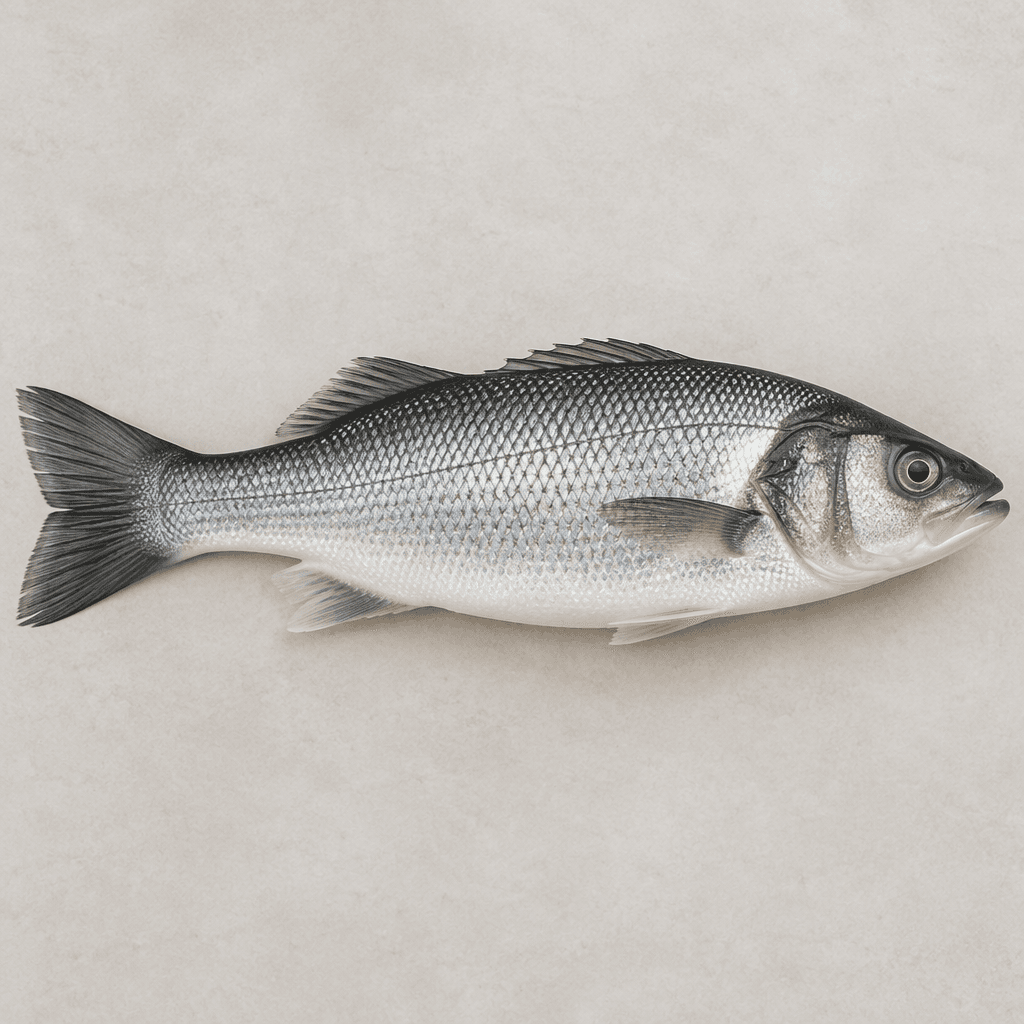
Sea Bass Calories
High protein, low fat, source of omega-3
In season: Spring · Summer · Autumn · Winter
CALORIES
GI
POTASSIUM
FIBER
Quick answer
1 piece (medium) of Sea Bass (150 g) has 146 calories. That works out to 97 calories per 100 g. It contains 0 g of carbs, 27.6 g of protein, 3 g of fat and 0 g of fiber. Its 3 µg of B12 covers 125% of the Daily Value. Its glycemic index is 0 (low), so it raises blood sugar slowly.
What is Sea Bass?
Sea Bass, here referring to European sea bass, is a coastal fish found around the Mediterranean and in the eastern Atlantic. It has mild, delicate flesh that flakes readily when cooked. It is commonly served whole, grilled or baked, or prepared as fillets for pan-cooking.
Across the Mediterranean, it often comes to the table with lemon, herbs and vegetables; elsewhere, it works just as well with a simple salad or roasted sides. Sea Bass is high in protein, relatively low in fat and a source of omega-3. For a lighter meal, grill or bake it rather than frying, and pair it with seasonal vegetables.
Sea Bass Nutrition Facts
Selected: 100 g
97
KCAL / 100G
Carbs
0g
· 0% DV
Protein
18.4g
· 37% DV
Fat
2g
· 3% DV
Fiber
0g
· 0% DV
DV is the share of the daily value covered, on a 2,000 kcal reference diet.
Calories come from: Carbs 0% · Protein 80% · Fat 20%
Sea Bass Vitamins & Minerals
Vitamins
B12
2µg · 83% DV
B6
0.3mg · 18% DV
B3
2.1mg · 13% DV
Vitamin D
2.5µg · 13% DV
Minerals
Selenium
36µg · 65% DV
Phosphorus
210mg · 30% DV
Iodine
30µg · 20% DV
Potassium ⭐
320mg · 9% DV
How Nutritious Is Sea Bass?
Nutrient density
High
How many vitamins, minerals and how much fiber this food carries per calorie. A high score means a lot of nutrition for few calories.
Satiety score
Medium
An EatBetter score computed from fiber, protein and calorie density. A high score means staying full longer on the same calories.
Both scores are calculated per 100 g and do not change with the selected portion. The satiety score is EatBetter's own calculation, not a clinical measure.
Sea Bass Glycemic Index
GLYCEMIC INDEX
GLYCEMIC LOAD
Accounts for portion size — a more realistic measure than GI alone.
How to Burn Off Sea Bass
To burn the 97 calories in 100 g:
🚶
Walking (5 km/h)
🏃
Running (8 km/h)
🚴
Cycling
🏊
Swimming
Times are calculated with the MET equation for a 70 kg adult. Actual burn varies with your weight, age and pace.
Is Sea Bass Processed?
NOVA 1
Unprocessed
1. Unprocessed
2. Minimally Processed
3. Processed
4. Ultra-Processed
NOVA classifies foods into 4 groups by industrial processing. NOVA 1 (unprocessed) is the healthiest.
Does Sea Bass Contain Allergens?
Contains these allergens:
Which Diets Is Sea Bass Good For?
Vegan
— Not suitable
Vegetarian
— Not suitable
Gluten-Free
✓ Suitable
Dairy-Free
— Not suitable
Mediterranean
✓ Suitable
Paleo
✓ Suitable
Whole30
— Not suitable
DASH
— Not suitable
Keto
✓ Suitable
Low FODMAP
— Not suitable
Sea Bass Fat Profile
SATURATED
0.5g
MONOUNSATURATED
0.7g
POLYUNSATURATED
0.6g
Omega 6:3 ratio 0.1:1
Below the ideal 4:1 — a good omega balance.
Compare Sea Bass
Foods Similar to Sea Bass
Frequently Asked Questions About Sea Bass
How do you cook sea bass?
Sea bass can be baked, grilled, pan-fried, or steamed. Its flesh is delicate, so cook it just until opaque and easy to flake, then season simply with lemon, herbs, and olive oil.
Does sea bass have a lot of bones?
Sea bass has a central backbone and small pin bones, but it is manageable to eat. Ask the fishmonger to remove the pin bones from fillets, and check each bite before serving it to children.
Is sea bass healthy to eat?
Yes, sea bass is a nutritious fish that provides protein and omega-3 fats. Baking, grilling, or steaming it keeps the meal lighter than deep-frying, while sauces and sides can add substantial salt or fat.
Is sea bass the same as Chilean sea bass?
No. The name sea bass usually refers to several species, including European sea bass, while Chilean sea bass is Patagonian toothfish. They are different fish, with distinct textures, flavors, and sustainability considerations.
Can you eat sea bass skin?
Yes, sea bass skin is edible. For crisp skin, pat it dry and cook the fillet skin-side down in a hot pan; make sure the scales have been removed before cooking.
What does sea bass taste like?
Sea bass has a mild, slightly sweet flavor and tender, flaky white flesh. Its taste is less pronounced than that of oily fish, so it pairs well with citrus, herbs, and light sauces.
How can you tell if sea bass is fresh?
Fresh sea bass should smell clean and mild, with clear, bright eyes, moist skin, and firm flesh that springs back when touched. Avoid fish with a sour, strong, or ammonia-like odor.
How long does sea bass last in the fridge?
Keep raw sea bass covered in the coldest part of the refrigerator and cook it within one to two days of purchase. Freeze it if you need to keep it longer, rather than leaving it refrigerated.
How do you bake sea bass?
To bake sea bass, season a whole cleaned fish or fillets with olive oil, lemon, and herbs, then place them in a baking dish. Cook until the thickest part is opaque and flakes easily.
Can you freeze sea bass?
Yes, sea bass can be frozen. Wrap it tightly or seal it in a freezer bag, removing as much air as possible to limit freezer burn; thaw it in the refrigerator before cooking.
Have another question about Sea Bass?
Ask the AI nutrition coach — calories, portions, alternatives and more, answered in seconds in the app.

Scan calories with your camera
Instant AI nutrition analysis

Nutrition data compiled from USDA FoodData Central and scientific sources.