

Ready & Packaged Foods
All →Vegetables & Legumes
All →Desserts & Confectionery
All →Meat & Protein
All →Grains & Bakery
All →Beverages
All →Milk & Dairy
All →

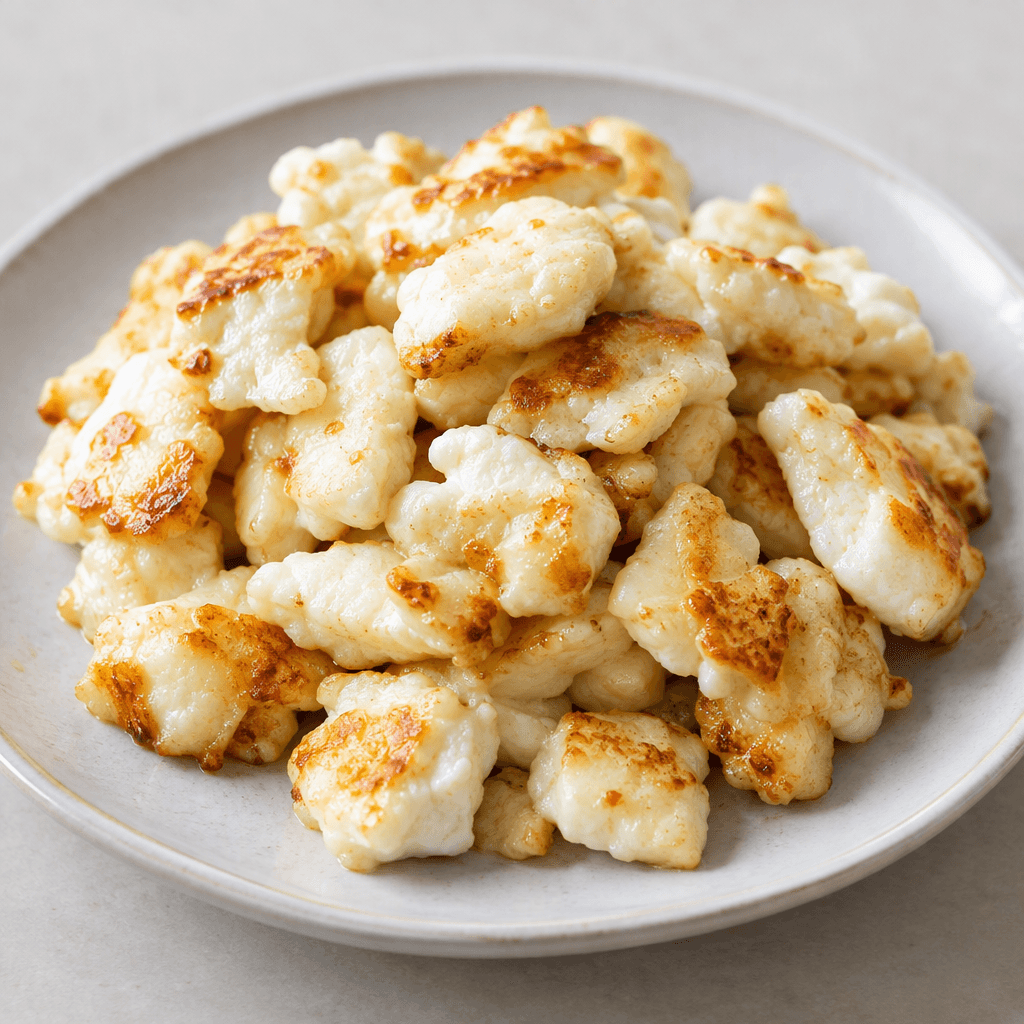
Sauteed curd cheese Calories
Protein-rich, low-carb sauteed curd cheese.
CALORIES
GI
POTASSIUM
FIBER
Quick answer
100 g of Sauteed curd cheese has 168 calories. It contains 3.2 g of carbs, 16.8 g of protein, 9.8 g of fat and 0 g of fiber. Its 0.8 µg of B12 covers 34% of the Daily Value. Its glycemic index is 27 (low), so it raises blood sugar slowly.
What is Sauteed curd cheese?
Sauteed curd cheese is a simple Turkish home-style dish made by warming fresh lor, a soft cheese curd, in a pan with butter or a little oil. The curds have a mild, milky flavour and become slightly firmer as they cook; seasonings or herbs can be added, but the cheese is often allowed to stand on its own.
In Turkey it is commonly served warm at breakfast, with bread and fresh vegetables, and may also be used as a filling for pastries or gözleme. It is protein-rich and relatively low in carbohydrate, so it can make a satisfying option when you want something savoury without a heavy meal. Use just enough fat to coat the pan, and pair it with tomatoes or herbs for freshness.
Sauteed curd cheese Nutrition Facts
Selected: 100 g
168
KCAL / 100G
Carbs
3.2g
· 1% DV
Protein
16.8g
· 34% DV
Fat
9.8g
· 13% DV
Fiber
0g
· 0% DV
DV is the share of the daily value covered, on a 2,000 kcal reference diet.
Calories come from: Carbs 8% · Protein 40% · Fat 52%
Sauteed curd cheese Vitamins & Minerals
Vitamins
B12
0.82µg · 34% DV
B2
0.24mg · 18% DV
Vitamin A
92µg · 10% DV
B5
0.52mg · 10% DV
Minerals
Phosphorus
186mg · 27% DV
Selenium
9.4µg · 17% DV
Sodium
342mg · 15% DV
Calcium
118mg · 12% DV
How Nutritious Is Sauteed curd cheese?
Nutrient density
Medium
How many vitamins, minerals and how much fiber this food carries per calorie. A high score means a lot of nutrition for few calories.
Satiety score
Medium
An EatBetter score computed from fiber, protein and calorie density. A high score means staying full longer on the same calories.
Both scores are calculated per 100 g and do not change with the selected portion. The satiety score is EatBetter's own calculation, not a clinical measure.
Sauteed curd cheese Glycemic Index
GLYCEMIC INDEX
GLYCEMIC LOAD
Accounts for portion size — a more realistic measure than GI alone.
How to Burn Off Sauteed curd cheese
To burn the 168 calories in 100 g:
🚶
Walking (5 km/h)
🏃
Running (8 km/h)
🚴
Cycling
🏊
Swimming
Times are calculated with the MET equation for a 70 kg adult. Actual burn varies with your weight, age and pace.
Is Sauteed curd cheese Processed?
NOVA 2
Minimally Processed
1. Unprocessed
2. Minimally Processed
3. Processed
4. Ultra-Processed
NOVA classifies foods into 4 groups by industrial processing. NOVA 1 (unprocessed) is the healthiest.
Does Sauteed curd cheese Contain Allergens?
Contains these allergens:
Which Diets Is Sauteed curd cheese Good For?
Vegan
— Not suitable
Vegetarian
✓ Suitable
Gluten-Free
✓ Suitable
Dairy-Free
— Not suitable
Mediterranean
✓ Suitable
Paleo
— Not suitable
Whole30
— Not suitable
DASH
— Not suitable
Keto
✓ Suitable
Low FODMAP
— Not suitable
Sauteed curd cheese Fat Profile
SATURATED
6.1g
MONOUNSATURATED
2.6g
POLYUNSATURATED
0.33g
Omega 6:3 ratio 5.6:1
Above the ideal 4:1 (5.6:1).
Compare Sauteed curd cheese
Foods Similar to Sauteed curd cheese
Frequently Asked Questions About Sauteed curd cheese
What is sauteed curd cheese?
Sauteed curd cheese is a simple dish made by warming curd cheese in a pan, usually with a little butter or oil. It is commonly served hot, and additions such as herbs, spices, or eggs vary by recipe.
How do you make sauteed curd cheese without making it watery?
To keep sauteed curd cheese from turning watery, drain the curds first and heat the pan before adding them. Cook in a small batch over medium heat, stirring briefly; crowded, cool pans encourage moisture to collect.
Can you use cottage cheese for sauteed curd cheese?
Yes, cottage cheese can stand in for curd cheese in sauteed curd cheese, but it is usually wetter and may have a softer texture. Drain it well before cooking, and expect a less firm result than with drier curds.
Can you add eggs to sauteed curd cheese?
Yes, eggs work well in sauteed curd cheese. Stir a beaten egg into the warmed curds or cook an egg on top; remove the pan from the heat once the egg is just set to avoid a dry, rubbery texture.
What herbs and spices go with sauteed curd cheese?
Black pepper, chili flakes, thyme, and fresh parsley pair well with sauteed curd cheese. Add dried spices while the curds warm, then finish with fresh herbs; taste before salting because some curd cheeses are already salty.
How is sauteed curd cheese usually served?
Sauteed curd cheese is usually served warm as a breakfast dish or a quick savory meal. Pair it with bread, tomatoes, or fresh greens, and serve it soon after cooking because it firms up as it cools.
Why does sauteed curd cheese become dry and crumbly?
Sauteed curd cheese becomes dry and crumbly when it is cooked too long or over high heat. Warm it just until hot, and stir in a small splash of milk if the curds need a softer consistency.
How long does sauteed curd cheese last in the refrigerator?
Sauteed curd cheese keeps for about three days in a covered container in the refrigerator. Refrigerate it within two hours of cooking, and discard it if its smell, color, or texture has changed noticeably.
Can you freeze sauteed curd cheese?
Yes, sauteed curd cheese can be frozen, although thawing may make it grainier or release water. Freeze it in a sealed portion, thaw it in the refrigerator, and reheat it thoroughly in a pan.
Can you eat sauteed curd cheese cold?
Yes, sauteed curd cheese can be eaten cold if it was refrigerated promptly and kept chilled. Its texture will be firmer than when warm; stir it briefly or let it sit out only long enough to take the chill off.
Have another question about Sauteed curd cheese?
Ask the AI nutrition coach — calories, portions, alternatives and more, answered in seconds in the app.

Scan calories with your camera
Instant AI nutrition analysis

Nutrition data compiled from USDA FoodData Central and scientific sources.