

Ready & Packaged Foods
All →Vegetables & Legumes
All →Desserts & Confectionery
All →Meat & Protein
All →Grains & Bakery
All →Beverages
All →Milk & Dairy
All →

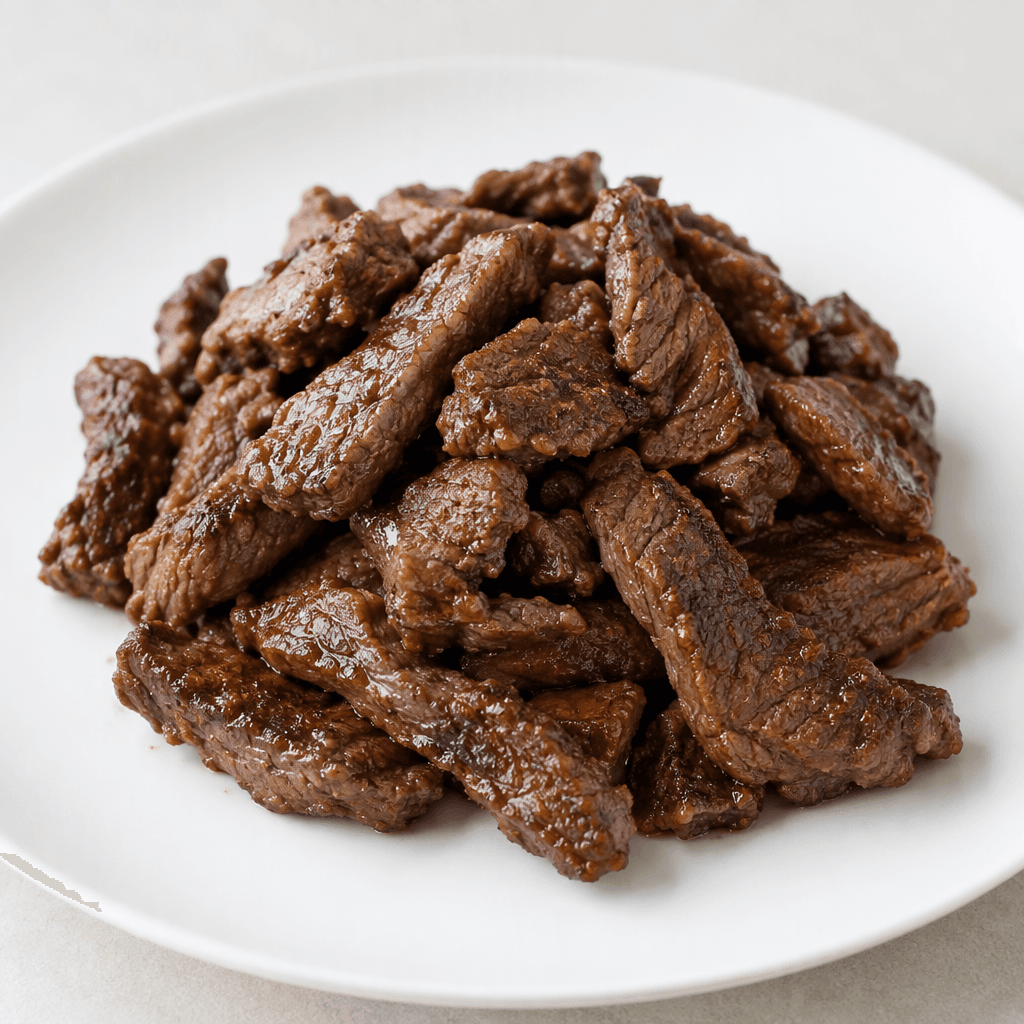
Low-fat sautéed beef Calories
Lean protein source, low fat, rich in iron and zinc
In season: Spring · Summer · Autumn · Winter
CALORIES
GI
POTASSIUM
FIBER
Quick answer
1 piece (medium) of Low-fat sautéed beef (120 g) has 174 calories. That works out to 145 calories per 100 g. It contains 0.4 g of carbs, 31.8 g of protein, 5 g of fat and 0 g of fiber. Its 2.6 µg of B12 covers 110% of the Daily Value. Its glycemic index is 0 (low), so it raises blood sugar slowly.
What is Low-fat sautéed beef?
Low-fat sautéed beef is lean beef cut into small pieces, cooked with little added fat or in its own juices, then browned for flavour. It takes inspiration from Turkish kavurma, a traditional way of cooking and preserving meat; this leaner version is suited to everyday meals rather than relying on a rich layer of rendered fat.
The pieces are savoury and tender, with browned edges and a satisfying, substantial texture. Serve them with rice, bread or vegetables, or add them to eggs for a hearty breakfast. It is a protein-rich choice with relatively little fat: a 100 g portion provides 26.5 g of protein. For a lighter plate, use minimal cooking oil and pair the beef with a generous portion of vegetables.
Low-fat sautéed beef Nutrition Facts
Selected: 100 g
145
KCAL / 100G
Carbs
0.3g
· 0% DV
Protein
26.5g
· 53% DV
Fat
4.2g
· 5% DV
Fiber
0g
· 0% DV
DV is the share of the daily value covered, on a 2,000 kcal reference diet.
Calories come from: Carbs 1% · Protein 73% · Fat 26%
Low-fat sautéed beef Vitamins & Minerals
Vitamins
B12
2.2µg · 92% DV
B3
4.8mg · 30% DV
B6
0.38mg · 22% DV
B2
0.18mg · 14% DV
Minerals
Zinc
5mg · 45% DV
Selenium
17µg · 31% DV
Phosphorus
210mg · 30% DV
Iron
3mg · 17% DV
How Nutritious Is Low-fat sautéed beef?
Nutrient density
High
How many vitamins, minerals and how much fiber this food carries per calorie. A high score means a lot of nutrition for few calories.
Satiety score
Medium
An EatBetter score computed from fiber, protein and calorie density. A high score means staying full longer on the same calories.
Both scores are calculated per 100 g and do not change with the selected portion. The satiety score is EatBetter's own calculation, not a clinical measure.
Low-fat sautéed beef Glycemic Index
GLYCEMIC INDEX
GLYCEMIC LOAD
Accounts for portion size — a more realistic measure than GI alone.
How to Burn Off Low-fat sautéed beef
To burn the 145 calories in 100 g:
🚶
Walking (5 km/h)
🏃
Running (8 km/h)
🚴
Cycling
🏊
Swimming
Times are calculated with the MET equation for a 70 kg adult. Actual burn varies with your weight, age and pace.
Is Low-fat sautéed beef Processed?
NOVA 2
Minimally Processed
1. Unprocessed
2. Minimally Processed
3. Processed
4. Ultra-Processed
NOVA classifies foods into 4 groups by industrial processing. NOVA 1 (unprocessed) is the healthiest.
Does Low-fat sautéed beef Contain Allergens?
No known major allergens
Which Diets Is Low-fat sautéed beef Good For?
Vegan
— Not suitable
Vegetarian
— Not suitable
Gluten-Free
✓ Suitable
Dairy-Free
— Not suitable
Mediterranean
✓ Suitable
Paleo
✓ Suitable
Whole30
— Not suitable
DASH
— Not suitable
Keto
✓ Suitable
Low FODMAP
— Not suitable
Low-fat sautéed beef Fat Profile
SATURATED
1.7g
MONOUNSATURATED
1.7g
POLYUNSATURATED
0.2g
Omega 6:3 ratio 1.5:1
Below the ideal 4:1 — a good omega balance.
Compare Low-fat sautéed beef
Foods Similar to Low-fat sautéed beef
Frequently Asked Questions About Low-fat sautéed beef
What cut of beef is best for low-fat sautéed beef?
Lean cuts such as top round or sirloin work well for low-fat sautéed beef. Trim visible fat and cut the meat into evenly sized pieces so they cook at the same rate; very lean meat needs careful timing to avoid drying out.
How do you make low-fat sautéed beef tender?
Cook low-fat sautéed beef in a hot, wide pan without crowding it, then lower the heat if it needs more time to soften. Overcrowding traps steam, while prolonged high heat can make lean beef tough. Add a splash of liquid if the pieces remain firm.
Is low-fat sautéed beef the same as Turkish kavurma?
Low-fat sautéed beef describes a leaner preparation of kavurma, a Turkish dish of meat cooked by sautéing or roasting. Traditional kavurma is often cooked with more of the meat’s own fat and can be made in larger batches for keeping.
What seasoning goes well with low-fat sautéed beef?
Salt and black pepper are simple choices for low-fat sautéed beef; cumin, oregano, or red pepper flakes also work. For a Turkish-style flavor, add the spices sparingly so they complement rather than cover the browned beef.
How long does low-fat sautéed beef last in the fridge?
Refrigerate low-fat sautéed beef in a covered container within two hours of cooking. Cooked beef generally keeps for three to four days in the fridge. Discard it if it develops an off smell, unusual texture, or signs of spoilage.
Can you freeze low-fat sautéed beef?
Yes, low-fat sautéed beef freezes well when cooled and packed in airtight, meal-sized portions. Thaw it in the refrigerator rather than on the counter, and avoid refreezing once thawed. Smaller portions also make reheating easier and help prevent waste.
What is the best way to reheat low-fat sautéed beef?
Reheat low-fat sautéed beef in a covered pan over low heat with a small splash of water or broth. Stir until it is hot throughout; gentle heating helps keep lean pieces tender. You can also use a microwave, checking and stirring between short heating intervals.
What should you serve with low-fat sautéed beef?
Low-fat sautéed beef pairs well with rice, bulgur, flatbread, or roasted vegetables. For a lighter plate, serve it with a crisp salad and a yogurt-based side; these also complement the savory, browned flavor of the beef.
Is low-fat sautéed beef a good source of protein?
Yes, low-fat sautéed beef is a protein-rich food and also provides iron and zinc. Pair it with vegetables or a whole grain for a more balanced meal; the amount of protein in a serving depends on the portion you eat.
Does low-fat sautéed beef help with weight loss?
Low-fat sautéed beef can fit into a weight-loss meal because its protein may help you feel full, but it does not cause weight loss by itself. Keep added cooking fat modest and serve it with vegetables rather than relying on a large portion of meat.
Have another question about Low-fat sautéed beef?
Ask the AI nutrition coach — calories, portions, alternatives and more, answered in seconds in the app.

Scan calories with your camera
Instant AI nutrition analysis

Nutrition data compiled from USDA FoodData Central and scientific sources.