

Ready & Packaged Foods
All →Vegetables & Legumes
All →Desserts & Confectionery
All →Meat & Protein
All →Grains & Bakery
All →Beverages
All →Milk & Dairy
All →

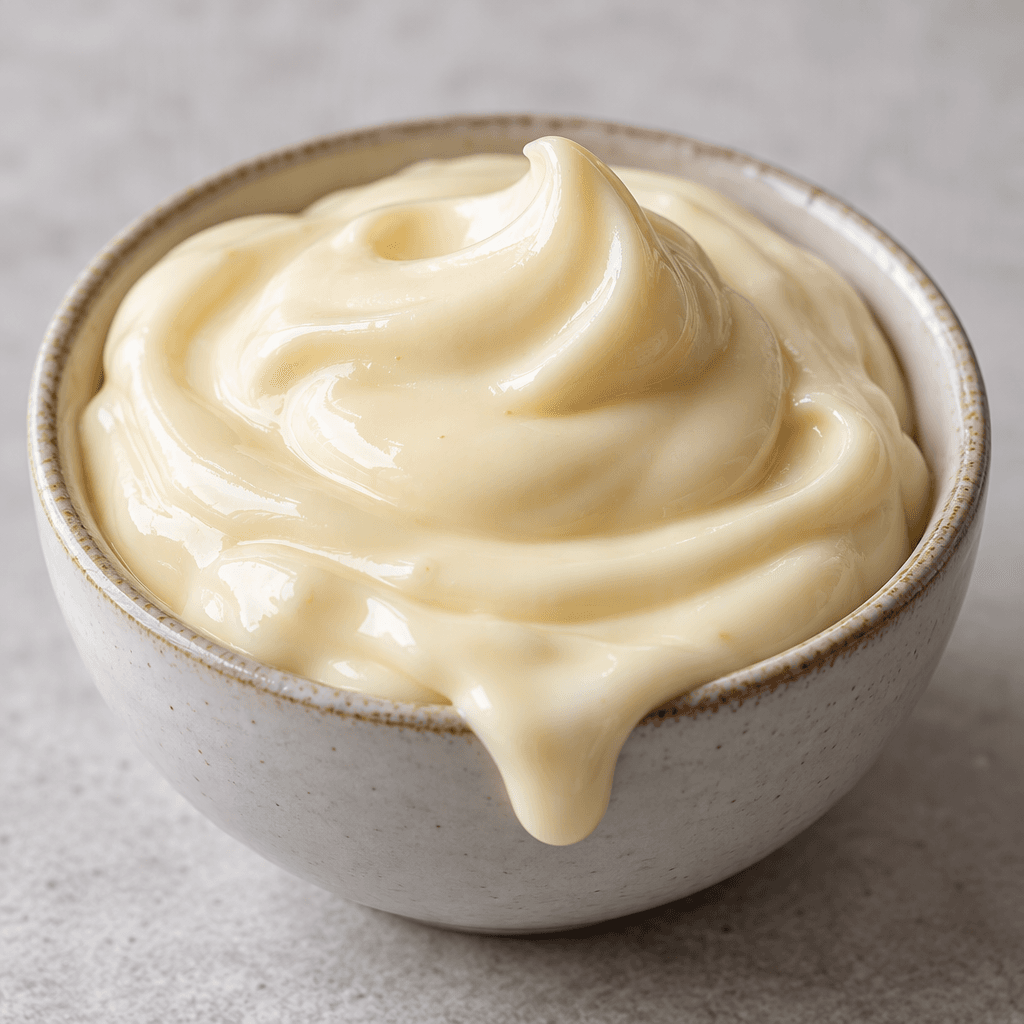
Creamy sauce Calories
Rich and creamy sauce, adds flavor to dishes
CALORIES
GI
POTASSIUM
FIBER
Quick answer
2 tablespoon (medium) of Creamy sauce (30 g) has 66 calories. That works out to 220 calories per 100 g. It contains 2 g of carbs, 0.7 g of protein, 6.1 g of fat and 0.1 g of fiber. Its 117 mg of Sodium covers 5% of the Daily Value. Its glycemic index is 45 (low), so it raises blood sugar slowly.
What is Creamy sauce?
Creamy sauce is a smooth, thick condiment used to add richness and flavour to a dish. It is a broad style rather than a single regional recipe, so its exact ingredients and seasonings vary by product and cook. Its glossy texture makes it easy to spoon over food or serve on the side.
Use it with sandwiches, wraps, potatoes, grilled vegetables or meat; it also works as a dip for snacks. The sauce is rich in fat, with 20.5 g per 100 g, so a small spoonful can go a long way. For a lighter plate, serve a modest amount alongside fresh salad or simply grilled ingredients.
Creamy sauce Nutrition Facts
Selected: 100 g
220
KCAL / 100G
Carbs
6.5g
· 2% DV
Protein
2.2g
· 4% DV
Fat
20.5g
· 26% DV
Fiber
0.2g
· 1% DV
DV is the share of the daily value covered, on a 2,000 kcal reference diet.
Calories come from: Carbs 12% · Protein 4% · Fat 84%
Creamy sauce Vitamins & Minerals
Vitamins
Vitamin A
120µg · 13% DV
B12
0.3µg · 13% DV
Biotin
2.5µg · 8% DV
Vitamin E
1.2mg · 8% DV
Minerals
Sodium
390mg · 17% DV
Calcium
60mg · 6% DV
Phosphorus
45mg · 6% DV
Iodine
8µg · 5% DV
How Nutritious Is Creamy sauce?
Nutrient density
Low
How many vitamins, minerals and how much fiber this food carries per calorie. A high score means a lot of nutrition for few calories.
Satiety score
Low
An EatBetter score computed from fiber, protein and calorie density. A high score means staying full longer on the same calories.
Both scores are calculated per 100 g and do not change with the selected portion. The satiety score is EatBetter's own calculation, not a clinical measure.
Creamy sauce Glycemic Index
GLYCEMIC INDEX
GLYCEMIC LOAD
Accounts for portion size — a more realistic measure than GI alone.
How to Burn Off Creamy sauce
To burn the 220 calories in 100 g:
🚶
Walking (5 km/h)
🏃
Running (8 km/h)
🚴
Cycling
🏊
Swimming
Times are calculated with the MET equation for a 70 kg adult. Actual burn varies with your weight, age and pace.
Is Creamy sauce Processed?
NOVA 3
Processed
1. Unprocessed
2. Minimally Processed
3. Processed
4. Ultra-Processed
NOVA classifies foods into 4 groups by industrial processing. NOVA 1 (unprocessed) is the healthiest.
Does Creamy sauce Contain Allergens?
Contains these allergens:
Which Diets Is Creamy sauce Good For?
Vegan
— Not suitable
Vegetarian
✓ Suitable
Gluten-Free
— Not suitable
Dairy-Free
— Not suitable
Mediterranean
✓ Suitable
Paleo
— Not suitable
Whole30
— Not suitable
DASH
— Not suitable
Keto
— Not suitable
Low FODMAP
— Not suitable
Creamy sauce Fat Profile
SATURATED
7.5g
MONOUNSATURATED
7.8g
POLYUNSATURATED
1.4g
Omega 6:3 ratio 15:1
Above the ideal 4:1 (15:1).
Compare Creamy sauce
Foods Similar to Creamy sauce
Frequently Asked Questions About Creamy sauce
What is creamy sauce made of?
Creamy sauce is a smooth, rich sauce, commonly made with a dairy-based ingredient and sometimes egg. Recipes vary, so its exact flavor and thickness depend on the ingredients and how it is prepared.
How do you make creamy sauce from scratch?
You can make a homemade creamy sauce by gently combining a dairy base with seasonings and, in some recipes, egg. Heat it slowly while stirring, and avoid boiling so the mixture stays smooth.
Why does creamy sauce split?
Creamy sauce can split when it gets too hot or boils, causing its ingredients to separate. Warm it gently over low heat and stir regularly; avoid adding cold liquid suddenly to a hot sauce.
Can you use creamy sauce in pasta?
Yes, creamy sauce works well with pasta. Toss it with freshly cooked noodles off the heat, adding a little pasta water if needed to help it coat evenly without overheating the sauce.
How do you keep creamy sauce from getting too thick?
Stir in a small amount of warm milk or water until creamy sauce reaches the consistency you want. Add the liquid gradually, mixing between additions so the sauce does not become watery.
Can creamy sauce be reheated?
Yes, creamy sauce can be reheated, but do it gently over low heat and stir often. Avoid bringing it to a boil, since high heat can make the sauce separate or turn grainy.
How long does homemade creamy sauce last in the fridge?
Homemade creamy sauce is best kept covered in the refrigerator and used within a few days. Discard it if its smell, appearance, or texture changes, and do not leave it out for extended periods.
Can you freeze creamy sauce?
Freezing creamy sauce is usually not recommended because it may separate and become grainy when thawed. Dairy- and egg-based sauces are especially likely to lose their smooth texture, so make only what you plan to use.
What goes well with creamy sauce besides pasta?
Creamy sauce pairs well with roasted vegetables, chicken, mushrooms, or potatoes. Use it as a drizzle or dip, and serve it alongside a fresh or lightly dressed side to balance its richness.
Can creamy sauce be served cold?
Yes, creamy sauce can be served cold as a dip or dressing when its recipe suits that use. Keep it refrigerated until serving, especially if it contains dairy or egg.
Have another question about Creamy sauce?
Ask the AI nutrition coach — calories, portions, alternatives and more, answered in seconds in the app.

Scan calories with your camera
Instant AI nutrition analysis

Nutrition data compiled from USDA FoodData Central and scientific sources.