

Ready & Packaged Foods
All →Vegetables & Legumes
All →Desserts & Confectionery
All →Meat & Protein
All →Grains & Bakery
All →Beverages
All →Milk & Dairy
All →

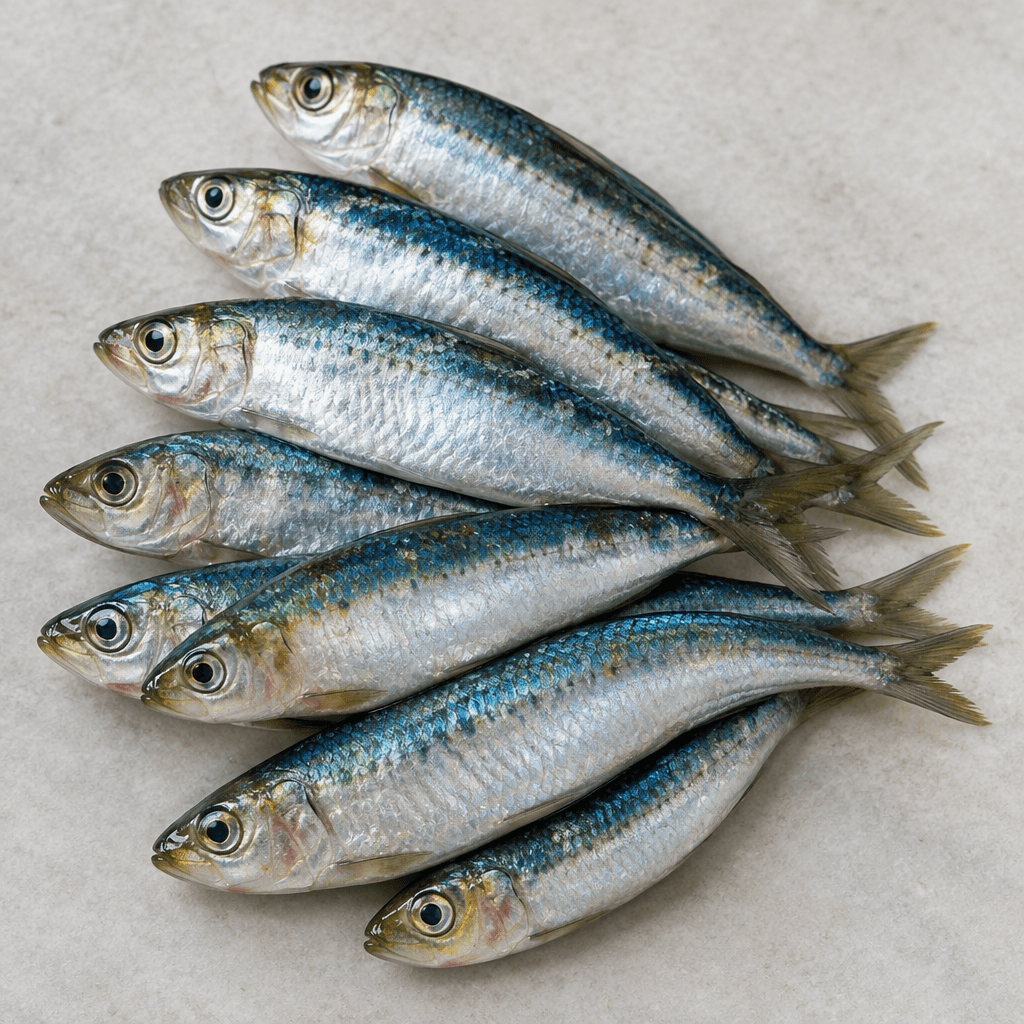
Sardine Calories
Rich in omega-3, high protein, source of vitamin D
In season: Spring · Summer · Autumn
CALORIES
GI
POTASSIUM
FIBER
Quick answer
1 piece (medium) of Sardine (25 g) has 52 calories. That works out to 208 calories per 100 g. It contains 0 g of carbs, 6.3 g of protein, 2.9 g of fat and 0 g of fiber. Its 48.3 µg of Vitamin D covers 241% of the Daily Value. Its glycemic index is 0 (low), so it raises blood sugar slowly.
What is Sardine?
Sardines are small, oily fish that travel in schools and are eaten fresh or preserved in many coastal cuisines. In Turkey, fresh sardines are especially familiar around the Aegean and Marmara coasts, where they appear in season at fishmongers and on home tables.
Their flesh is savoury and tender, with crisp skin when grilled or pan-fried. They are often served simply with lemon, onion and salad, or tucked into bread for an easy meal. Across the English-speaking world, tinned sardines are also a convenient pantry staple, eaten on toast or stirred into salads and pasta. Sardines provide substantial protein and omega-3 fats, with no carbohydrates. For a lighter plate, grill them and pair with vegetables rather than frying.
Sardine Nutrition Facts
Selected: 100 g
208
KCAL / 100G
Carbs
0g
· 0% DV
Protein
25g
· 50% DV
Fat
11.5g
· 15% DV
Fiber
0g
· 0% DV
DV is the share of the daily value covered, on a 2,000 kcal reference diet.
Calories come from: Carbs 0% · Protein 49% · Fat 51%
Sardine Vitamins & Minerals
Vitamins
Vitamin D
193µg · 965% DV
B12
8.9µg · 371% DV
B3
5.6mg · 35% DV
B2
0.23mg · 18% DV
Minerals
Selenium
52.7µg · 96% DV
Phosphorus
490mg · 70% DV
Calcium
382mg · 38% DV
Iodine
35µg · 23% DV
How Nutritious Is Sardine?
Nutrient density
Very high
How many vitamins, minerals and how much fiber this food carries per calorie. A high score means a lot of nutrition for few calories.
Satiety score
Medium
An EatBetter score computed from fiber, protein and calorie density. A high score means staying full longer on the same calories.
Both scores are calculated per 100 g and do not change with the selected portion. The satiety score is EatBetter's own calculation, not a clinical measure.
Sardine Glycemic Index
GLYCEMIC INDEX
GLYCEMIC LOAD
Accounts for portion size — a more realistic measure than GI alone.
How to Burn Off Sardine
To burn the 208 calories in 100 g:
🚶
Walking (5 km/h)
🏃
Running (8 km/h)
🚴
Cycling
🏊
Swimming
Times are calculated with the MET equation for a 70 kg adult. Actual burn varies with your weight, age and pace.
Is Sardine Processed?
NOVA 1
Unprocessed
1. Unprocessed
2. Minimally Processed
3. Processed
4. Ultra-Processed
NOVA classifies foods into 4 groups by industrial processing. NOVA 1 (unprocessed) is the healthiest.
Does Sardine Contain Allergens?
Contains these allergens:
Which Diets Is Sardine Good For?
Vegan
— Not suitable
Vegetarian
— Not suitable
Gluten-Free
✓ Suitable
Dairy-Free
— Not suitable
Mediterranean
✓ Suitable
Paleo
✓ Suitable
Whole30
— Not suitable
DASH
— Not suitable
Keto
✓ Suitable
Low FODMAP
— Not suitable
Sardine Fat Profile
SATURATED
2.7g
MONOUNSATURATED
4.1g
POLYUNSATURATED
3.5g
Omega 6:3 ratio 0.1:1
Below the ideal 4:1 — a good omega balance.
Compare Sardine
Foods Similar to Sardine
Frequently Asked Questions About Sardine
Are sardines healthy?
Yes, sardines are a nutritious fish that provides protein, omega-3 fats and vitamin D. Grilling or baking them keeps added fat low, while canned varieties can contain more salt depending on how they are packed.
Can you eat sardine bones?
Yes, the small bones in cooked sardines are usually soft enough to eat, especially in canned sardines. If you prefer not to eat them, split the cooked fish and lift out the backbone before serving.
Are sardines high in mercury?
No, sardines are generally low in mercury compared with large predatory fish such as swordfish. They can be a useful lower-mercury seafood choice, though pregnant people should follow local guidance on fish portions.
How do you cook fresh sardines?
Fresh sardines cook well on a grill, in a hot pan or in the oven. Pat them dry and season simply; because they are small, cook just until the flesh turns opaque and separates easily.
How do you clean sardines?
To clean sardines, remove the head, open the belly and pull out the innards. Rinse briefly under cold running water, then dry thoroughly; soaking them can water down their flavor.
What is the difference between sardines and anchovies?
Sardines are usually larger and meatier, with a milder taste than anchovies. Both are small oily fish, but anchovies are often salt-cured and intensely savory, while sardines are commonly cooked fresh or sold canned.
Can you eat raw sardines?
It is safer not to eat raw sardines unless they have been handled and frozen specifically for raw consumption. Raw fish can carry parasites or harmful bacteria, so cook sardines thoroughly if their raw-fish safety is uncertain.
How should you store fresh sardines?
Keep fresh sardines covered in the coldest part of the refrigerator and cook them as soon as possible. Discard them if they develop a sour smell, a sticky surface or dull, sunken eyes.
Are canned sardines as good as fresh sardines?
Canned sardines are a convenient alternative and retain protein and omega-3 fats, but their texture and flavor differ from fresh fish. Check the packing liquid and salt level if you want to limit added oil or sodium.
How can you tell if sardines are fresh?
Fresh sardines should have shiny, intact skin, clear eyes and a mild sea smell. Avoid fish with a strong sour or ammonia-like odor, dull eyes, damaged bodies or flesh that feels unusually soft.
Have another question about Sardine?
Ask the AI nutrition coach — calories, portions, alternatives and more, answered in seconds in the app.

Scan calories with your camera
Instant AI nutrition analysis

Nutrition data compiled from USDA FoodData Central and scientific sources.