

Ready & Packaged Foods
All →Vegetables & Legumes
All →Desserts & Confectionery
All →Meat & Protein
All →Grains & Bakery
All →Beverages
All →Milk & Dairy
All →

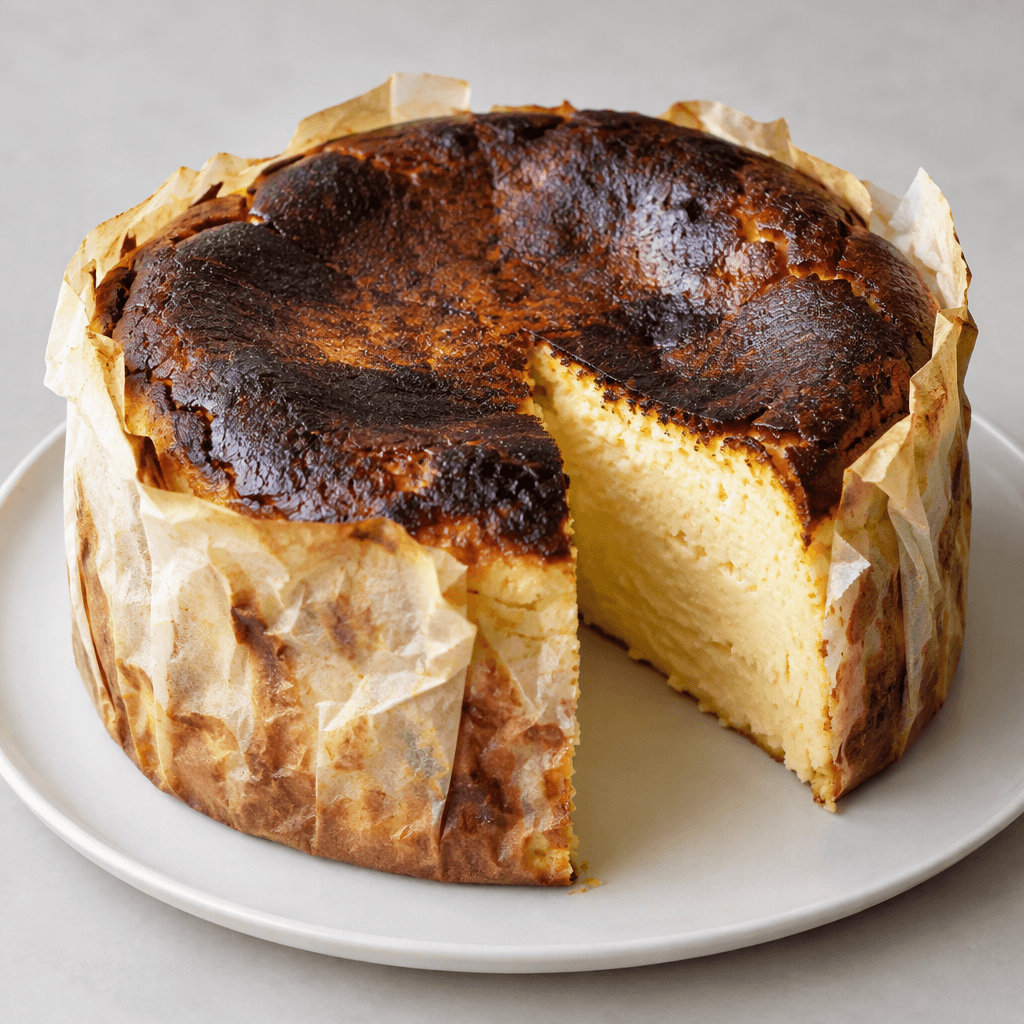
San Sebastian Cheesecake Calories
Rich, creamy Spanish cheesecake with caramelized top
In season: Spring · Summer · Autumn · Winter
CALORIES
GI
POTASSIUM
FIBER
Quick answer
1 slice (medium) of San Sebastian Cheesecake (90 g) has 288 calories. That works out to 320 calories per 100 g. It contains 23 g of carbs, 5.6 g of protein, 19.4 g of fat and 0.3 g of fiber. Its 162 µg of Vitamin A covers 18% of the Daily Value. Its glycemic index is 55 (medium), so it raises blood sugar at a moderate pace.
What is San Sebastian Cheesecake?
San Sebastian Cheesecake comes from San Sebastián in Spain’s Basque Country. It is made with cream cheese, eggs, sugar and cream, and baked without a crust at a high temperature. The top turns deeply browned while the centre stays soft and creamy.
In Spain it is commonly served by the slice in cafés and as a dessert after a meal; elsewhere, it is also a popular bakery and restaurant treat. It needs little adornment: serve it chilled or at room temperature, plain or with fresh fruit. Rich and filling, it is high in fat and provides very little fibre, so a modest slice makes a satisfying dessert. Coffee or unsweetened tea balances its creamy sweetness.
San Sebastian Cheesecake Nutrition Facts
Selected: 100 g
320
KCAL / 100G
Carbs
25.5g
· 9% DV
Protein
6.2g
· 12% DV
Fat
21.5g
· 28% DV
Fiber
0.3g
· 1% DV
DV is the share of the daily value covered, on a 2,000 kcal reference diet.
Calories come from: Carbs 32% · Protein 8% · Fat 60%
San Sebastian Cheesecake Vitamins & Minerals
Vitamins
Vitamin A
180µg · 20% DV
B2
0.22mg · 17% DV
Biotin
4.5µg · 15% DV
B12
0.35µg · 15% DV
Minerals
Phosphorus
105mg · 15% DV
Calcium
120mg · 12% DV
Selenium
5.5µg · 10% DV
Zinc
1mg · 9% DV
How Nutritious Is San Sebastian Cheesecake?
Nutrient density
Low
How many vitamins, minerals and how much fiber this food carries per calorie. A high score means a lot of nutrition for few calories.
Satiety score
Low
An EatBetter score computed from fiber, protein and calorie density. A high score means staying full longer on the same calories.
Both scores are calculated per 100 g and do not change with the selected portion. The satiety score is EatBetter's own calculation, not a clinical measure.
San Sebastian Cheesecake Glycemic Index
GLYCEMIC INDEX
GLYCEMIC LOAD
Accounts for portion size — a more realistic measure than GI alone.
How to Burn Off San Sebastian Cheesecake
To burn the 320 calories in 100 g:
🚶
Walking (5 km/h)
🏃
Running (8 km/h)
🚴
Cycling
🏊
Swimming
Times are calculated with the MET equation for a 70 kg adult. Actual burn varies with your weight, age and pace.
Is San Sebastian Cheesecake Processed?
NOVA 3
Processed
1. Unprocessed
2. Minimally Processed
3. Processed
4. Ultra-Processed
NOVA classifies foods into 4 groups by industrial processing. NOVA 1 (unprocessed) is the healthiest.
Does San Sebastian Cheesecake Contain Allergens?
Contains these allergens:
Which Diets Is San Sebastian Cheesecake Good For?
Vegan
— Not suitable
Vegetarian
✓ Suitable
Gluten-Free
— Not suitable
Dairy-Free
— Not suitable
Mediterranean
— Not suitable
Paleo
— Not suitable
Whole30
— Not suitable
DASH
— Not suitable
Keto
— Not suitable
Low FODMAP
— Not suitable
San Sebastian Cheesecake Fat Profile
SATURATED
12.5g
MONOUNSATURATED
6.8g
POLYUNSATURATED
1.1g
Omega 6:3 ratio 8.8:1
Above the ideal 4:1 (8.8:1).
Compare San Sebastian Cheesecake
Foods Similar to San Sebastian Cheesecake
Frequently Asked Questions About San Sebastian Cheesecake
Is San Sebastian cheesecake supposed to look burnt?
Yes, San Sebastian cheesecake is meant to have a deeply browned, almost burnt-looking top. High-heat baking caramelizes the surface and gives it a bittersweet flavor; the top should be dark, not charred through and bitter.
Is San Sebastian cheesecake the same as Basque cheesecake?
Yes, San Sebastian cheesecake is a style of Basque cheesecake, named for San Sebastián in Spain’s Basque Country. The names usually refer to the same crustless cake with a deeply browned top and creamy center.
Does San Sebastian cheesecake have a crust?
No, San Sebastian cheesecake is traditionally made without a biscuit or pastry crust. The batter is baked directly in a parchment-lined pan, which also helps create its tall, rustic sides.
Why is San Sebastian cheesecake so creamy in the middle?
San Sebastian cheesecake has a rich, soft center because it is baked at high heat until the outside sets while the middle remains custardy. It firms up as it cools, so a warm cake will seem softer.
How can you tell when San Sebastian cheesecake is done?
San Sebastian cheesecake is ready when its top is deeply browned, its edges look set, and the center still wobbles slightly when the pan is moved. It will continue to set as it cools.
Where did San Sebastian cheesecake come from?
San Sebastian cheesecake originated in San Sebastián, in Spain’s Basque Country. It became known for its intentionally dark top, parchment-lined shape, and soft interior rather than the pale, neatly finished look of many other cheesecakes.
Can you eat San Sebastian cheesecake warm?
Yes, you can eat San Sebastian cheesecake warm, when its center is at its softest. Let it cool enough to slice safely; chilling it first gives cleaner slices and a firmer, more cheesecake-like texture.
What should you serve with San Sebastian cheesecake?
San Sebastian cheesecake is often served plain because its caramelized top and creamy center are flavorful on their own. Fresh berries or a little fruit sauce can add tartness, while coffee makes a simple pairing.
How long does San Sebastian cheesecake keep in the fridge?
Keep San Sebastian cheesecake covered in the refrigerator for about 3 days. Its dairy- and egg-based filling should stay chilled, and the parchment should be removed or kept from touching the cut surface if it becomes damp.
Can you freeze San Sebastian cheesecake?
Yes, San Sebastian cheesecake freezes well in individual portions. Wrap each slice tightly and thaw it in the refrigerator before serving; freezing may slightly change the center’s silky texture, but the cake remains enjoyable.
Have another question about San Sebastian Cheesecake?
Ask the AI nutrition coach — calories, portions, alternatives and more, answered in seconds in the app.

Scan calories with your camera
Instant AI nutrition analysis

Nutrition data compiled from USDA FoodData Central and scientific sources.