

Ready & Packaged Foods
All →Vegetables & Legumes
All →Desserts & Confectionery
All →Meat & Protein
All →Grains & Bakery
All →Beverages
All →Milk & Dairy
All →

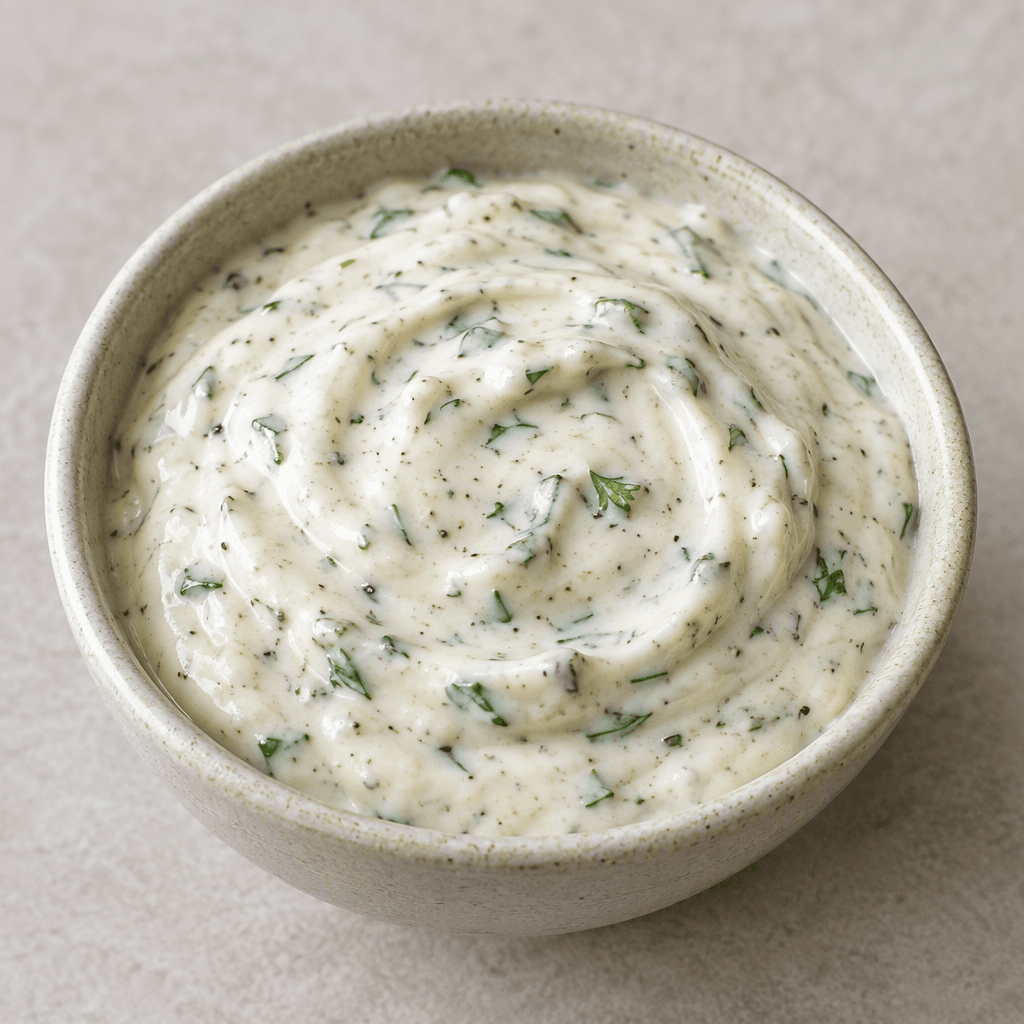
Ranch Dressing Calories
Creamy, popular salad dressing, high in fat and calories
In season: Spring · Summer · Autumn · Winter
CALORIES
GI
POTASSIUM
FIBER
Quick answer
2 tablespoon (medium) of Ranch Dressing (30 g) has 144 calories. That works out to 480 calories per 100 g. It contains 1.8 g of carbs, 0.6 g of protein, 15 g of fat and 0 g of fiber. Its 285 mg of Sodium covers 12% of the Daily Value. Its glycemic index is 30 (low), so it raises blood sugar slowly.
What is Ranch Dressing?
Ranch dressing is a creamy American dressing, commonly made with mayonnaise or sour cream, a cultured dairy ingredient such as buttermilk, and herbs and seasonings like dill, garlic and onion. Recipes vary, but its tangy, savoury flavour and thick, smooth texture make it cling well to leaves and vegetables.
In the United States, it is used on salads and as a dip for raw vegetables, chicken wings and other snacks; elsewhere, it also works with salads, sandwiches or a tray of roasted vegetables. It is high in fat and energy but low in protein, so a little can go a long way. For a lighter dip or dressing, mix it with plain yoghurt and add lemon or fresh herbs.
Ranch Dressing Nutrition Facts
Selected: 100 g
480
KCAL / 100G
Carbs
6g
· 2% DV
Protein
2g
· 4% DV
Fat
50g
· 64% DV
Fiber
0g
· 0% DV
DV is the share of the daily value covered, on a 2,000 kcal reference diet.
Calories come from: Carbs 5% · Protein 2% · Fat 93%
Ranch Dressing Vitamins & Minerals
Vitamins
Vitamin K
18µg · 15% DV
Vitamin A
120µg · 13% DV
Vitamin E
1.5mg · 10% DV
B2
0.12mg · 9% DV
Minerals
Sodium
950mg · 41% DV
Calcium
60mg · 6% DV
Phosphorus
45mg · 6% DV
Iodine
7µg · 5% DV
How Nutritious Is Ranch Dressing?
Nutrient density
Low
How many vitamins, minerals and how much fiber this food carries per calorie. A high score means a lot of nutrition for few calories.
Satiety score
Low
An EatBetter score computed from fiber, protein and calorie density. A high score means staying full longer on the same calories.
Both scores are calculated per 100 g and do not change with the selected portion. The satiety score is EatBetter's own calculation, not a clinical measure.
Ranch Dressing Glycemic Index
GLYCEMIC INDEX
GLYCEMIC LOAD
Accounts for portion size — a more realistic measure than GI alone.
How to Burn Off Ranch Dressing
To burn the 480 calories in 100 g:
🚶
Walking (5 km/h)
🏃
Running (8 km/h)
🚴
Cycling
🏊
Swimming
Times are calculated with the MET equation for a 70 kg adult. Actual burn varies with your weight, age and pace.
Is Ranch Dressing Processed?
NOVA 3
Processed
1. Unprocessed
2. Minimally Processed
3. Processed
4. Ultra-Processed
NOVA classifies foods into 4 groups by industrial processing. NOVA 1 (unprocessed) is the healthiest.
Does Ranch Dressing Contain Allergens?
Contains these allergens:
Which Diets Is Ranch Dressing Good For?
Vegan
— Not suitable
Vegetarian
✓ Suitable
Gluten-Free
— Not suitable
Dairy-Free
— Not suitable
Mediterranean
✓ Suitable
Paleo
— Not suitable
Whole30
— Not suitable
DASH
— Not suitable
Keto
— Not suitable
Low FODMAP
— Not suitable
Ranch Dressing Fat Profile
SATURATED
8.5g
MONOUNSATURATED
20g
POLYUNSATURATED
9g
Omega 6:3 ratio 26.7:1
Above the ideal 4:1 (26.7:1).
Compare Ranch Dressing
Foods Similar to Ranch Dressing
Frequently Asked Questions About Ranch Dressing
What is ranch dressing made of?
Ranch dressing is usually made with a creamy base such as mayonnaise, buttermilk, or sour cream, plus herbs, garlic, onion, and seasonings. Bottled and homemade versions can use different ingredients.
How do you make ranch dressing at home?
Mix mayonnaise with buttermilk or yogurt, then add garlic, onion powder, dill, parsley, and seasoning to make ranch dressing. Add more buttermilk for a thinner consistency and chill it before serving.
What does ranch dressing taste like?
Ranch dressing tastes creamy and tangy, with herbal notes and a savory garlic-and-onion flavor. Its thickness and seasoning vary by recipe, and bottled versions can taste saltier than homemade ones.
What foods go well with ranch dressing?
Ranch dressing pairs well with green salads, raw vegetables, chicken wings, sandwiches, and fries. It also works as a dip for pizza crust or crunchy snacks when you want a creamy, tangy accompaniment.
What is the difference between ranch dressing and blue cheese dressing?
Ranch dressing gets its flavor mainly from herbs, garlic, and onion, while blue cheese dressing contains crumbled blue cheese and has a sharper, more pungent taste. Both are commonly served with vegetables and chicken wings.
Does ranch dressing need to be refrigerated?
Opened ranch dressing should be refrigerated, and homemade ranch dressing should always be kept cold. An unopened shelf-stable bottle can usually stay in the pantry until opened; follow its storage instructions.
Can you freeze ranch dressing?
Freezing ranch dressing is not recommended. Its creamy ingredients can separate during thawing, leaving the dressing watery or grainy instead of smooth; use it chilled rather than frozen.
What can you use instead of ranch dressing?
A quick substitute for ranch dressing is plain yogurt or sour cream mixed with garlic, dill, parsley, and a little lemon juice. Blue cheese dressing works for dips, but its stronger flavor changes the dish.
Is ranch dressing healthy?
Ranch dressing can fit into meals, but its creamy, high-fat composition makes it easy to add substantial richness to a dish. Use a modest amount or choose a yogurt-based version if you want a lighter dressing.
Why is it called ranch dressing?
Ranch dressing takes its name from Hidden Valley Ranch, the California ranch where Steve Henson developed the dressing in the 1950s. It became popular in the United States first as a seasoning mix and later as a bottled dressing.
Have another question about Ranch Dressing?
Ask the AI nutrition coach — calories, portions, alternatives and more, answered in seconds in the app.

Scan calories with your camera
Instant AI nutrition analysis

Nutrition data compiled from USDA FoodData Central and scientific sources.