

Ready & Packaged Foods
All →Vegetables & Legumes
All →Desserts & Confectionery
All →Meat & Protein
All →Grains & Bakery
All →Beverages
All →Milk & Dairy
All →

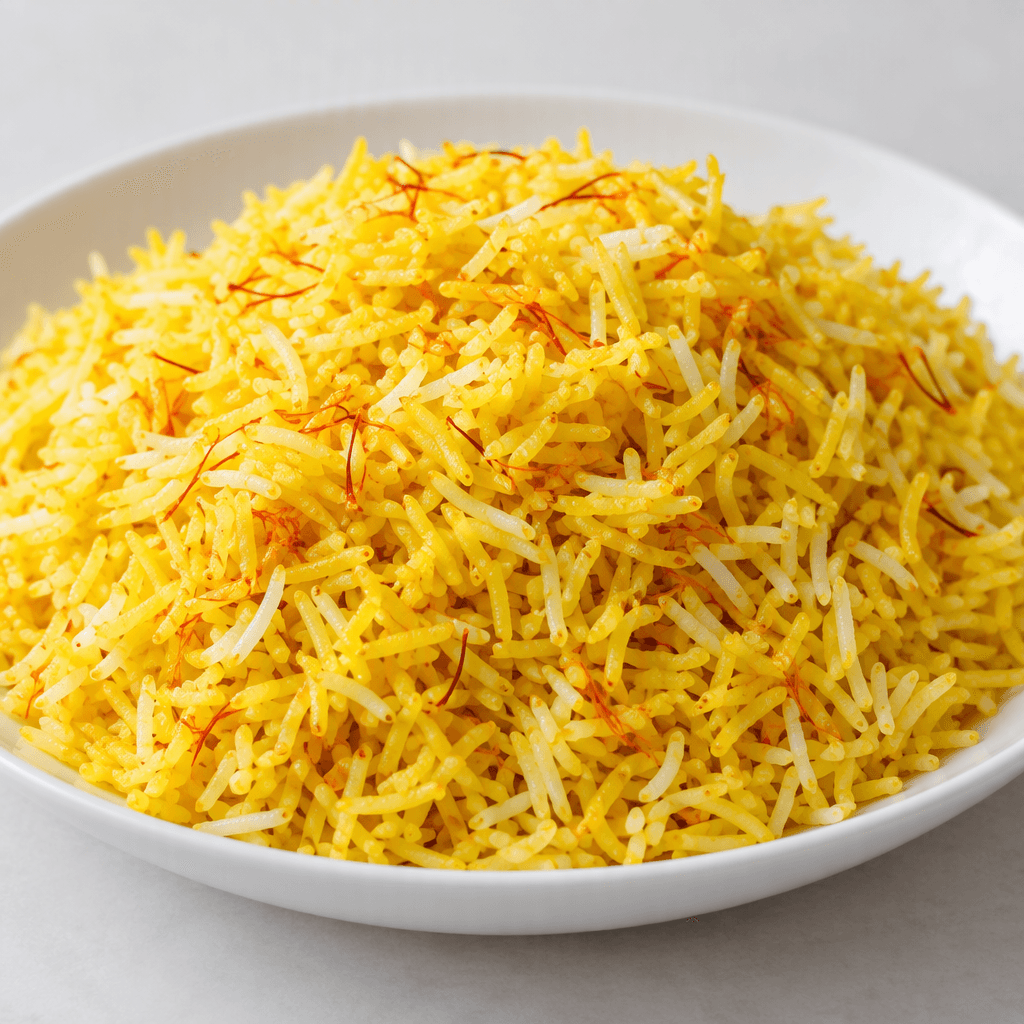
Saffron rice pilaf Calories
Rice pilaf flavored with saffron
CALORIES
GI
POTASSIUM
FIBER
Quick answer
1 cup (medium) of Saffron rice pilaf (180 g) has 284 calories. That works out to 158 calories per 100 g. It contains 52.9 g of carbs, 5.6 g of protein, 5.6 g of fat and 0.9 g of fiber. Its 0.6 mg of Manganese covers 25% of the Daily Value. Its glycemic index is 58 (medium), so it raises blood sugar at a moderate pace.
What is Saffron rice pilaf?
Saffron rice pilaf is rice cooked until the grains are separate, then scented and tinted golden with saffron. Versions of saffron rice appear across Persian, Middle Eastern and other cuisines; the exact cooking method and seasonings vary by region. It is often made as a fragrant accompaniment rather than a meal on its own.
The rice is tender and fluffy, with saffron’s delicate floral aroma and a gently savoury flavour. Serve it alongside grilled fish, chicken, vegetables or a stew; it also works well on a festive table. It is mainly a carbohydrate-rich side, with 29.4 g of carbohydrate per 100 g. For a lighter serving, keep added fat modest and pair it with plenty of vegetables or a lean protein.
Saffron rice pilaf Nutrition Facts
Selected: 100 g
158
KCAL / 100G
Carbs
29.4g
· 11% DV
Protein
3.1g
· 6% DV
Fat
3.1g
· 4% DV
Fiber
0.5g
· 2% DV
DV is the share of the daily value covered, on a 2,000 kcal reference diet.
Calories come from: Carbs 74% · Protein 8% · Fat 18%
Saffron rice pilaf Vitamins & Minerals
Vitamins
B3
0.6mg · 4% DV
B1
0.03mg · 3% DV
B6
0.05mg · 3% DV
Biotin
1µg · 3% DV
Minerals
Sodium
220mg · 10% DV
Zinc
1mg · 9% DV
Selenium
4.8µg · 9% DV
Phosphorus
38mg · 5% DV
How Nutritious Is Saffron rice pilaf?
Nutrient density
Low
How many vitamins, minerals and how much fiber this food carries per calorie. A high score means a lot of nutrition for few calories.
Satiety score
Low
An EatBetter score computed from fiber, protein and calorie density. A high score means staying full longer on the same calories.
Both scores are calculated per 100 g and do not change with the selected portion. The satiety score is EatBetter's own calculation, not a clinical measure.
Saffron rice pilaf Glycemic Index
GLYCEMIC INDEX
GLYCEMIC LOAD
Accounts for portion size — a more realistic measure than GI alone.
How to Burn Off Saffron rice pilaf
To burn the 158 calories in 100 g:
🚶
Walking (5 km/h)
🏃
Running (8 km/h)
🚴
Cycling
🏊
Swimming
Times are calculated with the MET equation for a 70 kg adult. Actual burn varies with your weight, age and pace.
Is Saffron rice pilaf Processed?
NOVA 2
Minimally Processed
1. Unprocessed
2. Minimally Processed
3. Processed
4. Ultra-Processed
NOVA classifies foods into 4 groups by industrial processing. NOVA 1 (unprocessed) is the healthiest.
Does Saffron rice pilaf Contain Allergens?
No known major allergens
Which Diets Is Saffron rice pilaf Good For?
Vegan
— Not suitable
Vegetarian
✓ Suitable
Gluten-Free
✓ Suitable
Dairy-Free
— Not suitable
Mediterranean
✓ Suitable
Paleo
— Not suitable
Whole30
— Not suitable
DASH
— Not suitable
Keto
— Not suitable
Low FODMAP
— Not suitable
Saffron rice pilaf Fat Profile
SATURATED
0.7g
MONOUNSATURATED
1.2g
POLYUNSATURATED
0.5g
Omega 6:3 ratio 21:1
Above the ideal 4:1 (21:1).
Compare Saffron rice pilaf
Foods Similar to Saffron rice pilaf
Frequently Asked Questions About Saffron rice pilaf
What is saffron rice pilaf?
Saffron rice pilaf is rice cooked so the grains stay separate, then flavored and tinted with saffron. Its aroma is gently floral and earthy, and recipes may use butter or oil. It can be served as a side dish or as part of a larger meal.
How do you make saffron rice pilaf?
To make saffron rice pilaf, rinse and drain the rice, briefly toast it in butter or oil, then cook it covered with hot water or broth. Bloom crushed saffron in a little warm liquid first and add it to the pot so its color spreads evenly.
Why is saffron rice pilaf yellow?
Saffron rice pilaf turns golden because saffron releases natural color compounds into the cooking liquid. For an even tint, steep the threads in warm water before adding them. Turmeric can make rice yellow too, but it has a different flavor and is not saffron.
What kind of rice is best for saffron rice pilaf?
Long-grain rice is a good choice for saffron rice pilaf because it tends to cook into distinct, fluffy grains. Basmati is especially popular in many versions; other rice varieties can work, but they may need different amounts of liquid and cooking time.
How do you bloom saffron for saffron rice pilaf?
For saffron rice pilaf, lightly crush the threads and soak them in a small amount of warm water or broth until the liquid takes on their color and aroma. Stir both the threads and liquid into the rice; boiling the saffron hard can dull its fragrance.
Is saffron rice pilaf the same as Persian tahdig?
No, saffron rice pilaf is not the same as Persian tahdig. Saffron rice pilaf describes rice flavored with saffron, while tahdig is the crisp, browned crust formed at the bottom of a pot; some Persian rice dishes combine saffron rice with tahdig.
What goes well with saffron rice pilaf?
Saffron rice pilaf pairs well with grilled chicken, lamb, fish, roasted vegetables, or a simple yogurt sauce. Its fragrant but relatively delicate flavor works best alongside dishes that complement it rather than heavily overpowering it.
Why does saffron rice pilaf turn mushy?
Saffron rice pilaf usually turns mushy when it contains too much liquid, is stirred repeatedly, or is cooked beyond the point when the grains are tender. Rinse and drain the rice, measure the liquid for its variety, and keep the lid on while it cooks.
Can you freeze saffron rice pilaf?
Yes, saffron rice pilaf can be frozen in an airtight container once it has cooled promptly. Thaw it in the refrigerator and reheat it until steaming hot, adding a splash of water to loosen the grains if they seem dry.
What can you use instead of saffron in saffron rice pilaf?
Turmeric can replace saffron in saffron rice pilaf if you mainly want a golden color, but the flavor will be different and more earthy. If you want the characteristic saffron aroma, there is no direct spice substitute; leaving the rice plain is another option.
Have another question about Saffron rice pilaf?
Ask the AI nutrition coach — calories, portions, alternatives and more, answered in seconds in the app.

Scan calories with your camera
Instant AI nutrition analysis

Nutrition data compiled from USDA FoodData Central and scientific sources.