

Ready & Packaged Foods
All →Vegetables & Legumes
All →Desserts & Confectionery
All →Meat & Protein
All →Grains & Bakery
All →Beverages
All →Milk & Dairy
All →

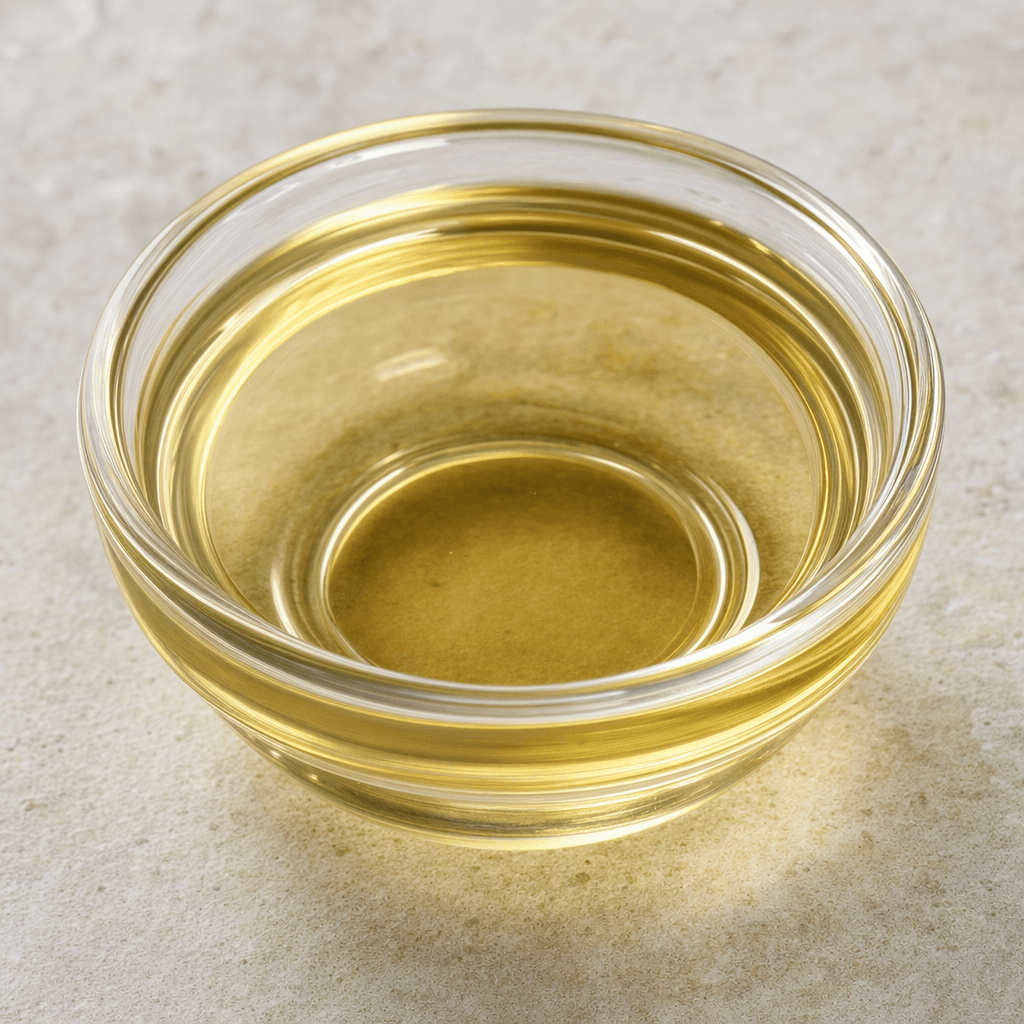
Safflower oil Calories
High in polyunsaturated fats, Vitamin E source, Cholesterol-free
CALORIES
GI
POTASSIUM
FIBER
Quick answer
1 tablespoon (medium) of Safflower oil (14 g) has 120 calories. That works out to 884 calories per 100 g. It contains 0 g of carbs, 0 g of protein, 13.6 g of fat and 0 g of fiber. Its 5.6 mg of Vitamin E covers 37% of the Daily Value. Its glycemic index is 0 (low), so it raises blood sugar slowly.
What is Safflower oil?
Safflower oil is made from the seeds of the safflower plant, a crop grown in regions including the Mediterranean and parts of Asia. Its pale colour and mild, neutral taste make it easy to use without masking other ingredients. Depending on the type, it can be used for sautéing and other everyday cooking, or whisked into salad dressings; it is also used in cooking across parts of Asia and the Middle East.
It is entirely fat, with a high proportion of polyunsaturated fats, and is a source of vitamin E. Use it sparingly if you want a lighter dish, and pair its gentle flavour with citrus, vinegar, herbs or spices.
Safflower oil Nutrition Facts
Selected: 100 g
884
KCAL / 100G
Carbs
0g
· 0% DV
Protein
0g
· 0% DV
Fat
100g
· 128% DV
Fiber
0g
· 0% DV
DV is the share of the daily value covered, on a 2,000 kcal reference diet.
Calories come from: Carbs 0% · Protein 0% · Fat 100%
Safflower oil Vitamins & Minerals
Vitamins
Vitamin E
41.1mg · 274% DV
Vitamin K
7.1µg · 6% DV
Vitamin A
0µg · 0% DV
B1
0mg · 0% DV
Minerals
Calcium
1mg · 0% DV
Iron
0mg · 0% DV
Magnesium
0mg · 0% DV
Zinc
0mg · 0% DV
How Nutritious Is Safflower oil?
Nutrient density
Low
How many vitamins, minerals and how much fiber this food carries per calorie. A high score means a lot of nutrition for few calories.
Satiety score
Low
An EatBetter score computed from fiber, protein and calorie density. A high score means staying full longer on the same calories.
Both scores are calculated per 100 g and do not change with the selected portion. The satiety score is EatBetter's own calculation, not a clinical measure.
Safflower oil Glycemic Index
GLYCEMIC INDEX
GLYCEMIC LOAD
Accounts for portion size — a more realistic measure than GI alone.
How to Burn Off Safflower oil
To burn the 884 calories in 100 g:
🚶
Walking (5 km/h)
🏃
Running (8 km/h)
🚴
Cycling
🏊
Swimming
Times are calculated with the MET equation for a 70 kg adult. Actual burn varies with your weight, age and pace.
Is Safflower oil Processed?
NOVA 2
Minimally Processed
1. Unprocessed
2. Minimally Processed
3. Processed
4. Ultra-Processed
NOVA classifies foods into 4 groups by industrial processing. NOVA 1 (unprocessed) is the healthiest.
Does Safflower oil Contain Allergens?
No known major allergens
Which Diets Is Safflower oil Good For?
Vegan
✓ Suitable
Vegetarian
✓ Suitable
Gluten-Free
✓ Suitable
Dairy-Free
— Not suitable
Mediterranean
✓ Suitable
Paleo
✓ Suitable
Whole30
— Not suitable
DASH
— Not suitable
Keto
✓ Suitable
Low FODMAP
— Not suitable
Safflower oil Fat Profile
SATURATED
6.2g
MONOUNSATURATED
13g
POLYUNSATURATED
75g
Omega 6:3 ratio 750:1
Above the ideal 4:1 (750:1).
Compare Safflower oil
Foods Similar to Safflower oil
Frequently Asked Questions About Safflower oil
What is safflower oil used for?
Safflower oil is used for cooking, baking, salad dressings and some personal-care products. Its mild flavor works well when you do not want the oil to dominate a dish, while the type of safflower oil determines how well it handles heat.
Can you cook with safflower oil at high heat?
Yes, refined safflower oil is generally suitable for high-heat cooking, including frying. Unrefined or cold-pressed safflower oil is less heat-stable and is better used in dressings or added to food after cooking. Check which type you have before heating it.
Is safflower oil the same as sunflower oil?
No. Safflower oil comes from safflower seeds, while sunflower oil comes from sunflower seeds. They can both have mild flavors, but their fatty-acid profiles and cooking properties vary by product, so one is not automatically interchangeable with the other in every recipe.
What is the difference between high-oleic and high-linoleic safflower oil?
High-oleic safflower oil contains more oleic acid, while high-linoleic safflower oil contains more linoleic acid. High-oleic versions are generally more stable for cooking; high-linoleic versions are often chosen for their particular fatty-acid profile. The label identifies which kind you are buying.
Can safflower oil be used for baking?
Yes, safflower oil can replace a neutral liquid oil in many cakes, muffins and quick breads. It contributes little flavor, but it cannot always replace butter one-for-one because butter also adds water and structure to baked goods.
Does safflower oil have a strong taste?
No, safflower oil usually has a mild, neutral flavor, making it useful when you want other ingredients to stand out. Cold-pressed versions may have a more noticeable seed-like taste, so sample a little before using it in a delicate dressing.
How should you store safflower oil after opening?
Keep safflower oil tightly sealed in a cool, dark cupboard, away from the stove and direct sunlight. Heat, light and air speed up rancidity. Follow the package directions for cold-pressed varieties, which may call for refrigeration after opening.
How can you tell if safflower oil has gone rancid?
Rancid safflower oil may smell stale, bitter, paint-like or like old nuts, and its flavor can turn unpleasant. Do not rely on color alone to judge freshness; discard the oil if its smell or taste has changed noticeably.
Can safflower oil replace olive oil in a recipe?
Yes, safflower oil can replace olive oil when a recipe needs a neutral cooking oil, but the finished dish will lose olive oil’s distinctive flavor. For dressings or dishes where that flavor is central, the swap will noticeably change the result.
Does safflower oil help lower cholesterol?
Safflower oil is not a treatment for high cholesterol. Replacing some saturated fats with unsaturated fats can support a heart-healthy eating pattern, but the oil alone does not guarantee lower cholesterol. Ask a clinician about changes to medication or an individual treatment plan.
Have another question about Safflower oil?
Ask the AI nutrition coach — calories, portions, alternatives and more, answered in seconds in the app.

Scan calories with your camera
Instant AI nutrition analysis

Nutrition data compiled from USDA FoodData Central and scientific sources.