

Ready & Packaged Foods
All →Vegetables & Legumes
All →Desserts & Confectionery
All →Meat & Protein
All →Grains & Bakery
All →Beverages
All →Milk & Dairy
All →

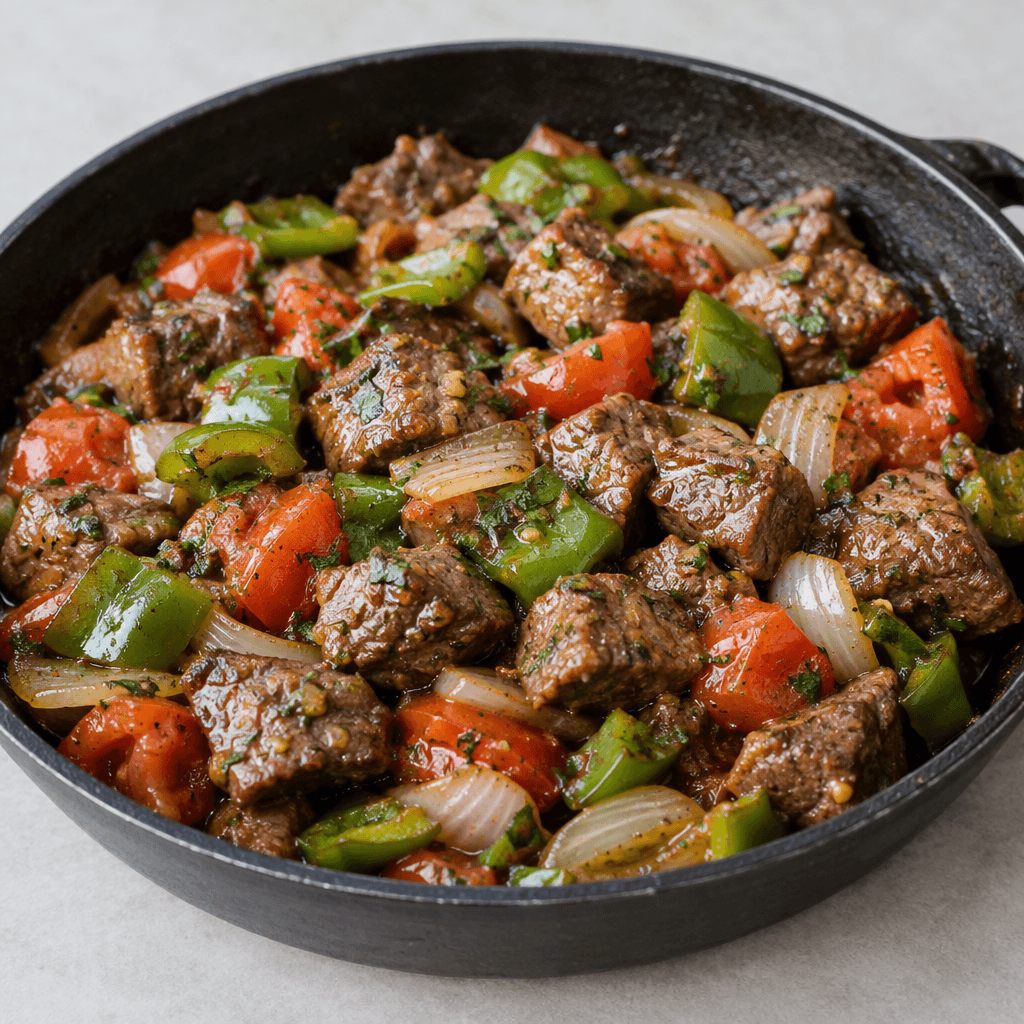
Sac tava Calories
Traditional Turkish pan-cooked meat dish
In season: Spring · Summer · Autumn · Winter
CALORIES
GI
POTASSIUM
FIBER
Quick answer
1 serving (medium) of Sac tava (200 g) has 360 calories. That works out to 180 calories per 100 g. It contains 12 g of carbs, 30 g of protein, 20 g of fat and 2.4 g of fiber. Its 2.2 µg of B12 covers 92% of the Daily Value. Its glycemic index is 45 (low), so it raises blood sugar slowly.
What is Sac tava?
Sac tava is a Turkish pan-cooked dish of bite-sized meat with peppers, tomatoes and onions, traditionally cooked on a shallow metal griddle. The meat is often lamb or beef, though the choice and the balance of vegetables vary between cooks and regions.
As it cooks, the meat browns while the vegetables soften and release their juices, making the dish savory and succulent. In Turkey it is served hot as a main course, often with rice or bread and a fresh salad. For cooks elsewhere, a heavy skillet can stand in for the traditional griddle. It is a filling, protein-rich meal; add extra vegetables and go easy on the cooking oil for a lighter serving.
Sac tava Nutrition Facts
Selected: 100 g
180
KCAL / 100G
Carbs
6g
· 2% DV
Protein
15g
· 30% DV
Fat
10g
· 13% DV
Fiber
1.2g
· 4% DV
DV is the share of the daily value covered, on a 2,000 kcal reference diet.
Calories come from: Carbs 14% · Protein 34% · Fat 52%
Sac tava Vitamins & Minerals
Vitamins
B12
1.1µg · 46% DV
B3
3.5mg · 22% DV
B5
0.7mg · 14% DV
B6
0.22mg · 13% DV
Minerals
Zinc
3mg · 27% DV
Phosphorus
160mg · 23% DV
Selenium
9µg · 16% DV
Sodium
320mg · 14% DV
How Nutritious Is Sac tava?
Nutrient density
Medium
How many vitamins, minerals and how much fiber this food carries per calorie. A high score means a lot of nutrition for few calories.
Satiety score
Medium
An EatBetter score computed from fiber, protein and calorie density. A high score means staying full longer on the same calories.
Both scores are calculated per 100 g and do not change with the selected portion. The satiety score is EatBetter's own calculation, not a clinical measure.
Sac tava Glycemic Index
GLYCEMIC INDEX
GLYCEMIC LOAD
Accounts for portion size — a more realistic measure than GI alone.
How to Burn Off Sac tava
To burn the 180 calories in 100 g:
🚶
Walking (5 km/h)
🏃
Running (8 km/h)
🚴
Cycling
🏊
Swimming
Times are calculated with the MET equation for a 70 kg adult. Actual burn varies with your weight, age and pace.
Is Sac tava Processed?
NOVA 2
Minimally Processed
1. Unprocessed
2. Minimally Processed
3. Processed
4. Ultra-Processed
NOVA classifies foods into 4 groups by industrial processing. NOVA 1 (unprocessed) is the healthiest.
Does Sac tava Contain Allergens?
No known major allergens
Which Diets Is Sac tava Good For?
Vegan
— Not suitable
Vegetarian
— Not suitable
Gluten-Free
✓ Suitable
Dairy-Free
— Not suitable
Mediterranean
✓ Suitable
Paleo
✓ Suitable
Whole30
— Not suitable
DASH
— Not suitable
Keto
— Not suitable
Low FODMAP
— Not suitable
Sac tava Fat Profile
SATURATED
3.2g
MONOUNSATURATED
4.1g
POLYUNSATURATED
1.1g
Omega 6:3 ratio 2.6:1
Below the ideal 4:1 — a good omega balance.
Compare Sac tava
Foods Similar to Sac tava
Frequently Asked Questions About Sac tava
What is Sac tava?
Sac tava is a traditional Turkish dish of bite-size meat cooked with vegetables on a shallow metal griddle. It is commonly made with peppers, tomatoes and onions, then served hot with bread or another side.
What meat is used in Sac tava?
Sac tava is commonly prepared with lamb or beef. Lamb gives it a richer, more distinctive flavor, while beef works well too; choose pieces suited to quick pan-cooking or allow tougher cuts more time to become tender.
How do you cook Sac tava?
To cook Sac tava, brown the meat in a very hot, wide pan, then add onion and peppers; add tomatoes toward the end. Cooking the meat in batches helps it brown instead of releasing liquid and steaming.
Why is Sac tava called Sac tava?
Sac tava takes its name from the sac, a shallow metal cooking plate traditionally used over a fire. The broad, hot surface lets the meat and vegetables cook quickly; a heavy skillet is a practical substitute at home.
What is the difference between Sac tava and sac kavurma?
The names can describe closely related Turkish meat dishes, and recipes vary by region. Sac tava often includes tomatoes and peppers, while sac kavurma may be drier or more focused on the browned meat, but the distinction is not fixed.
Where does Sac tava come from?
Sac tava is part of Turkish home and regional cooking, rather than a dish with one universally agreed place of origin. It is especially familiar in eastern and southeastern parts of Turkey, where local versions vary in meat and seasoning.
What vegetables go into Sac tava?
Onion, green peppers and tomatoes are the usual vegetables in Sac tava. Some cooks add red peppers for sweetness or extra color; adding the tomatoes after the meat has browned helps keep the pan from getting watery too soon.
What should you serve with Sac tava?
Sac tava pairs well with flatbread, rice, salad or yogurt-based sides. Bread is a particularly traditional choice because it can be used to scoop up the meat juices and softened vegetables.
Can you make Sac tava without a traditional sac?
Yes, you can make Sac tava in a wide, heavy skillet, and cast iron is a good option because it holds heat well. Avoid crowding the pan: brown the meat in batches for a better sear.
How should you store leftover Sac tava?
Refrigerate leftover Sac tava in a covered container once it has cooled, and use it within 3–4 days. Reheat it until steaming hot throughout; leaving cooked meat at room temperature for an extended time is not safe.
Have another question about Sac tava?
Ask the AI nutrition coach — calories, portions, alternatives and more, answered in seconds in the app.

Scan calories with your camera
Instant AI nutrition analysis

Nutrition data compiled from USDA FoodData Central and scientific sources.