

Ready & Packaged Foods
All →Vegetables & Legumes
All →Desserts & Confectionery
All →Meat & Protein
All →Grains & Bakery
All →Beverages
All →Milk & Dairy
All →

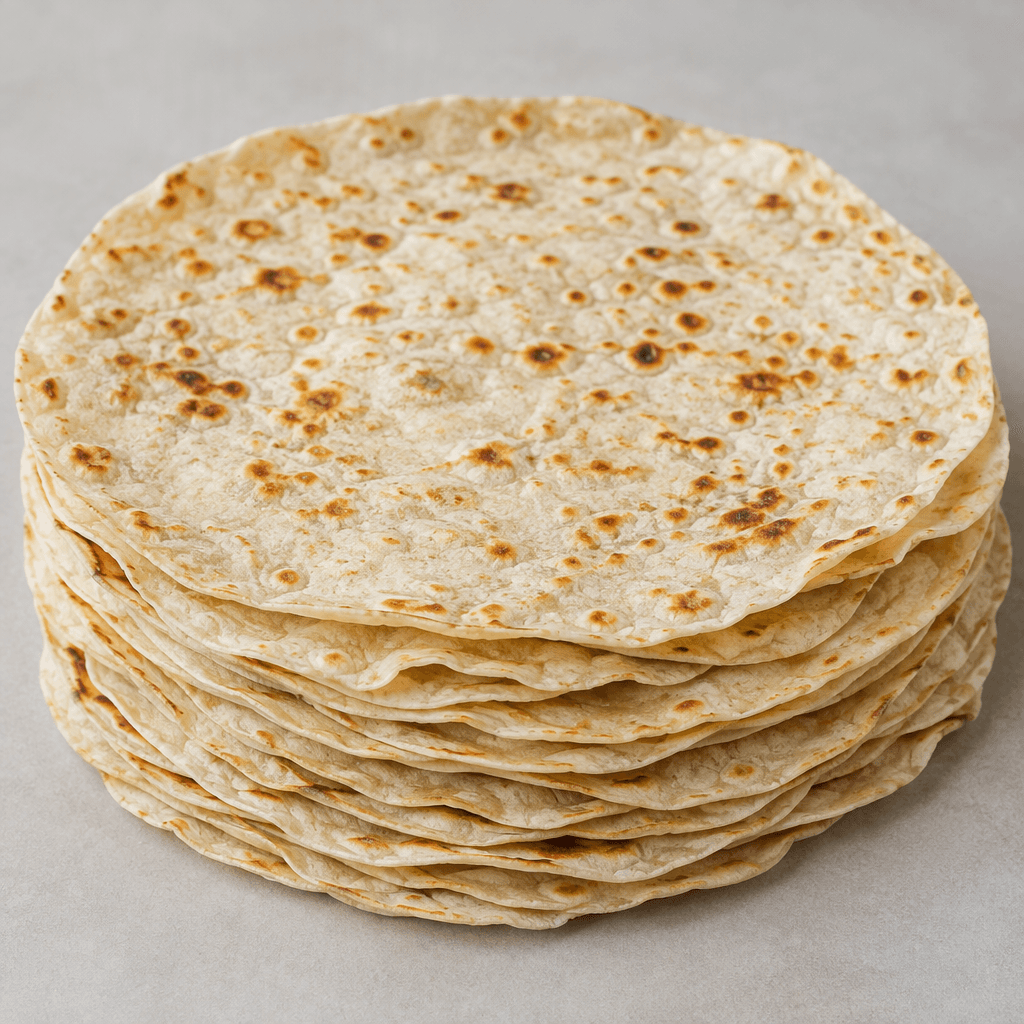
Yufka Bread Calories
Thin, round, traditional Turkish flatbread cooked on a griddle
In season: Spring · Summer · Autumn · Winter
CALORIES
GI
POTASSIUM
FIBER
Quick answer
1 piece (medium) of Yufka Bread (60 g) has 162 calories. That works out to 270 calories per 100 g. It contains 32.4 g of carbs, 5.1 g of protein, 0.7 g of fat and 1.5 g of fiber. Its 4.8 µg of Selenium covers 9% of the Daily Value. Its glycemic index is 70 (high), so it raises blood sugar quickly.
What is Yufka Bread?
Yufka Bread is a traditional Turkish flatbread made from a simple dough of flour, water and usually a little salt. The dough is rolled very thin and cooked briefly on a hot griddle, forming large, flexible rounds that may develop scattered toasted spots.
In Turkey, it is eaten with breakfast foods, folded around fillings as a wrap, or used to make dishes such as gözleme. Dried yufka can be lightly moistened to soften it before serving. Its nutrition comes mainly from carbohydrates, with some protein and little fat; it provides 54 g of carbohydrates per 100 g. Pair it with vegetables and a protein-rich filling for a more substantial meal, or keep the filling simple when you want a lighter wrap.
Yufka Bread Nutrition Facts
Selected: 100 g
270
KCAL / 100G
Carbs
54g
· 20% DV
Protein
8.5g
· 17% DV
Fat
1.2g
· 2% DV
Fiber
2.5g
· 9% DV
DV is the share of the daily value covered, on a 2,000 kcal reference diet.
Calories come from: Carbs 83% · Protein 13% · Fat 4%
Yufka Bread Vitamins & Minerals
Vitamins
B3
2.1mg · 13% DV
B1
0.13mg · 11% DV
B5
0.3mg · 6% DV
Folate
22µg · 6% DV
Minerals
Selenium
8µg · 15% DV
Sodium
320mg · 14% DV
Iron
2mg · 11% DV
Phosphorus
75mg · 11% DV
How Nutritious Is Yufka Bread?
Nutrient density
Medium
How many vitamins, minerals and how much fiber this food carries per calorie. A high score means a lot of nutrition for few calories.
Satiety score
Medium
An EatBetter score computed from fiber, protein and calorie density. A high score means staying full longer on the same calories.
Both scores are calculated per 100 g and do not change with the selected portion. The satiety score is EatBetter's own calculation, not a clinical measure.
Yufka Bread Glycemic Index
GLYCEMIC INDEX
GLYCEMIC LOAD
Accounts for portion size — a more realistic measure than GI alone.
How to Burn Off Yufka Bread
To burn the 270 calories in 100 g:
🚶
Walking (5 km/h)
🏃
Running (8 km/h)
🚴
Cycling
🏊
Swimming
Times are calculated with the MET equation for a 70 kg adult. Actual burn varies with your weight, age and pace.
Is Yufka Bread Processed?
NOVA 2
Minimally Processed
1. Unprocessed
2. Minimally Processed
3. Processed
4. Ultra-Processed
NOVA classifies foods into 4 groups by industrial processing. NOVA 1 (unprocessed) is the healthiest.
Does Yufka Bread Contain Allergens?
Contains these allergens:
Which Diets Is Yufka Bread Good For?
Vegan
✓ Suitable
Vegetarian
✓ Suitable
Gluten-Free
— Not suitable
Dairy-Free
— Not suitable
Mediterranean
✓ Suitable
Paleo
— Not suitable
Whole30
— Not suitable
DASH
— Not suitable
Keto
— Not suitable
Low FODMAP
— Not suitable
Yufka Bread Fat Profile
SATURATED
0.2g
MONOUNSATURATED
0.2g
POLYUNSATURATED
0.15g
Omega 6:3 ratio 13:1
Above the ideal 4:1 (13:1).
Compare Yufka Bread
Foods Similar to Yufka Bread
Frequently Asked Questions About Yufka Bread
What is yufka bread?
Yufka bread is a thin Turkish flatbread traditionally rolled out by hand and cooked on a hot griddle. It may be eaten soft or dried for storage, then moistened before serving so it can be folded without breaking.
How do you soften yufka bread?
Sprinkle yufka bread lightly with water, then leave it between clean, damp cloths until pliable. Add moisture gradually: soaking it can make the bread gummy and difficult to fill or fold.
How should you store yufka bread?
Store dry yufka bread in an airtight container in a cool, dry place, away from moisture that can cause mold. Wrap soft yufka bread to keep it from drying out and refrigerate it.
Can you freeze yufka bread?
Yes, yufka bread freezes well. Separate the pieces with baking paper, seal them in a freezer bag, and thaw only what you need. If it feels dry after thawing, dampen it lightly before warming.
Is yufka bread the same as phyllo dough?
No. Yufka bread is a flatbread that is cooked and eaten as bread or used for wraps. Phyllo is a pastry dough usually layered with fat for dishes such as baklava; the two are not interchangeable in every recipe.
How is yufka bread traditionally made?
Yufka bread is made by rolling a simple flour-and-water dough into very thin rounds and cooking them on a hot griddle, traditionally called a sac. The rounds may be stacked and dried for later use.
What can you make with yufka bread?
Yufka bread works well for wraps, gözleme-style filled flatbreads, and quick savory rolls. If it has dried, soften it first; then add your filling and heat it in a pan so the bread becomes flexible and warm.
Can you use yufka bread instead of tortillas?
Yes, yufka bread can stand in for tortillas in many wraps, but it is usually larger and thinner. Moisten it if it is dry, avoid overfilling, and fold gently to keep it from tearing.
Does yufka bread raise blood sugar?
Yes, yufka bread contains carbohydrates that can raise blood sugar. Pairing a moderate portion with foods such as eggs, beans, or vegetables can make a more balanced meal; people managing diabetes should follow their individual care plan.
Does yufka bread cause weight gain?
Yufka bread does not cause weight gain by itself, but large portions or frequent servings can add substantially to an overall diet. Rich fillings and sauces also increase a wrap’s energy content, so consider the whole meal, not just the bread.
Have another question about Yufka Bread?
Ask the AI nutrition coach — calories, portions, alternatives and more, answered in seconds in the app.

Scan calories with your camera
Instant AI nutrition analysis

Nutrition data compiled from USDA FoodData Central and scientific sources.