

Ready & Packaged Foods
All →Vegetables & Legumes
All →Desserts & Confectionery
All →Meat & Protein
All →Grains & Bakery
All →Beverages
All →Milk & Dairy
All →

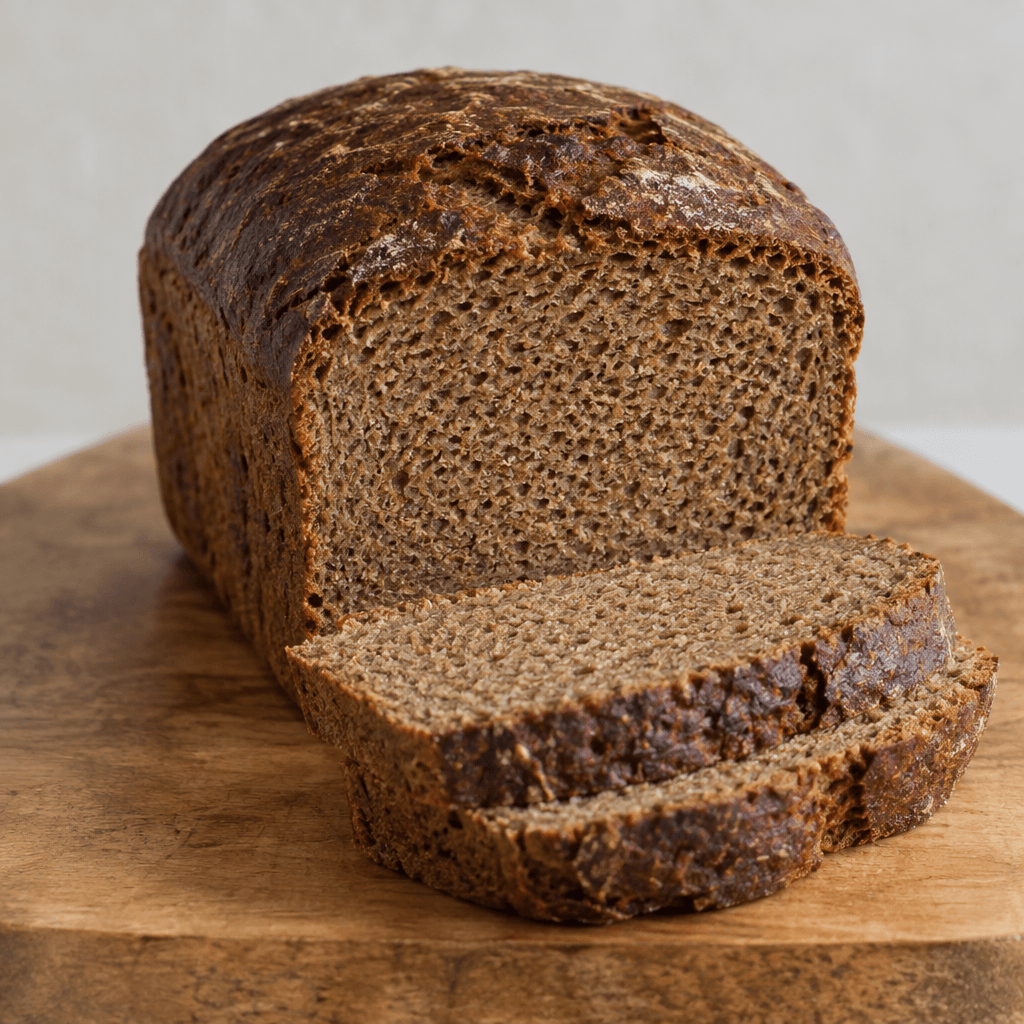
Rye bread Calories
High in fiber and B vitamins, lower glycemic index bread
In season: Spring · Summer · Autumn · Winter
CALORIES
GI
POTASSIUM
FIBER
Quick answer
1 slice (medium) of Rye bread (35 g) has 91 calories. That works out to 259 calories per 100 g. It contains 16.9 g of carbs, 3 g of protein, 1.2 g of fat and 2 g of fiber. Its 0.4 mg of Manganese covers 17% of the Daily Value. Its glycemic index is 50 (medium), so it raises blood sugar at a moderate pace.
What is Rye bread?
Rye bread is made with rye flour, often blended with wheat flour for a lighter crumb. It is especially associated with Northern and Central Europe, where loaves range from compact, tangy breads to softer everyday slices. In many places, including the UK and North America, it is sold sliced and used for sandwiches or toast.
Its deep flavour and dense texture pair well with cheese, eggs, smoked fish or hearty soups. Rye bread is a fibre-rich choice and generally has a lower glycaemic index than white bread, though recipes vary. For a lighter sandwich, try a thin slice with crisp vegetables and a modest spread.
Rye bread Nutrition Facts
Selected: 100 g
259
KCAL / 100G
Carbs
48.3g
· 18% DV
Protein
8.5g
· 17% DV
Fat
3.3g
· 4% DV
Fiber
5.8g
· 21% DV
DV is the share of the daily value covered, on a 2,000 kcal reference diet.
Calories come from: Carbs 75% · Protein 13% · Fat 12%
Rye bread Vitamins & Minerals
Vitamins
B1
0.29mg · 24% DV
B3
2.9mg · 18% DV
B6
0.19mg · 11% DV
B2
0.13mg · 10% DV
Minerals
Manganese
1mg · 43% DV
Selenium
16µg · 29% DV
Sodium
490mg · 21% DV
Iron
3mg · 17% DV
How Nutritious Is Rye bread?
Nutrient density
Medium
How many vitamins, minerals and how much fiber this food carries per calorie. A high score means a lot of nutrition for few calories.
Satiety score
Medium
An EatBetter score computed from fiber, protein and calorie density. A high score means staying full longer on the same calories.
Both scores are calculated per 100 g and do not change with the selected portion. The satiety score is EatBetter's own calculation, not a clinical measure.
Rye bread Glycemic Index
GLYCEMIC INDEX
GLYCEMIC LOAD
Accounts for portion size — a more realistic measure than GI alone.
How to Burn Off Rye bread
To burn the 259 calories in 100 g:
🚶
Walking (5 km/h)
🏃
Running (8 km/h)
🚴
Cycling
🏊
Swimming
Times are calculated with the MET equation for a 70 kg adult. Actual burn varies with your weight, age and pace.
Is Rye bread Processed?
NOVA 3
Processed
1. Unprocessed
2. Minimally Processed
3. Processed
4. Ultra-Processed
NOVA classifies foods into 4 groups by industrial processing. NOVA 1 (unprocessed) is the healthiest.
Does Rye bread Contain Allergens?
Contains these allergens:
Which Diets Is Rye bread Good For?
Vegan
✓ Suitable
Vegetarian
✓ Suitable
Gluten-Free
— Not suitable
Dairy-Free
— Not suitable
Mediterranean
✓ Suitable
Paleo
— Not suitable
Whole30
— Not suitable
DASH
— Not suitable
Keto
— Not suitable
Low FODMAP
— Not suitable
Rye bread Fat Profile
SATURATED
0.5g
MONOUNSATURATED
0.5g
POLYUNSATURATED
1.1g
Omega 6:3 ratio 13.6:1
Above the ideal 4:1 (13.6:1).
Compare Rye bread
Foods Similar to Rye bread
Frequently Asked Questions About Rye bread
Is rye bread healthier than whole-wheat bread?
Neither is automatically healthier; both can be filling whole-grain choices. Rye bread often has a denser texture and distinctive flavor, while the ingredients and amount of whole grain vary by loaf. Compare the actual breads rather than relying on the name alone.
Is rye bread good for blood sugar?
Rye bread may raise blood sugar more gradually than many refined white breads, especially when it is made with whole rye flour. The response still varies by loaf and portion, so people managing diabetes should fit it into their individual meal plan.
Does rye bread cause bloating?
It can cause bloating in some people. Rye contains fermentable carbohydrates and fiber, which may trigger gas or discomfort, particularly if you eat a large amount or are sensitive to them. Try a smaller portion and notice how you feel.
What is pumpernickel, and is it rye bread?
Yes, pumpernickel is a type of rye bread. Traditional versions use coarsely ground rye and are baked slowly, giving them a very dark color and dense texture; recipes and the proportion of rye can differ between bakeries.
Why does rye bread taste sour?
Rye bread can taste sour because many recipes use sourdough fermentation, which produces tangy flavors. Not every rye loaf is sourdough, though, and the strength of the sour taste depends on the recipe and fermentation.
Can you use rye bread for sandwiches?
Yes, rye bread works well for sandwiches, especially with assertive fillings such as smoked fish, pastrami, mustard, or sharp cheese. Its firm crumb can hold moist fillings, while the earthy flavor pairs particularly well with savory ingredients.
Does rye bread contain wheat flour?
Sometimes. Many rye loaves combine rye flour with wheat flour to help the dough rise and give it a lighter texture, while others use mostly or entirely rye. The word “rye” on the front of a loaf does not guarantee it contains no wheat.
Can rye bread be eaten before a workout?
Yes, rye bread can be part of a pre-workout meal, particularly when eaten with an easy-to-digest topping such as banana or a little nut butter. Its dense, fiber-rich texture may feel heavy close to exercise, so allow time to digest it.
How can you tell whether rye bread is mostly rye?
Look at the ingredient list: a loaf made mostly from rye should list rye flour before other flours. Some breads marketed as rye use substantial wheat flour for a lighter crumb, so the bread’s dark color alone is not proof.
Can stale rye bread be used in cooking?
Yes, stale rye bread is useful in cooking rather than needing to be thrown away. Toast or cube it for croutons, or use it in stuffing; discard it if you see mold or notice an unusual smell.
Have another question about Rye bread?
Ask the AI nutrition coach — calories, portions, alternatives and more, answered in seconds in the app.

Scan calories with your camera
Instant AI nutrition analysis

Nutrition data compiled from USDA FoodData Central and scientific sources.