

Ready & Packaged Foods
All →Vegetables & Legumes
All →Desserts & Confectionery
All →Meat & Protein
All →Grains & Bakery
All →Beverages
All →Milk & Dairy
All →

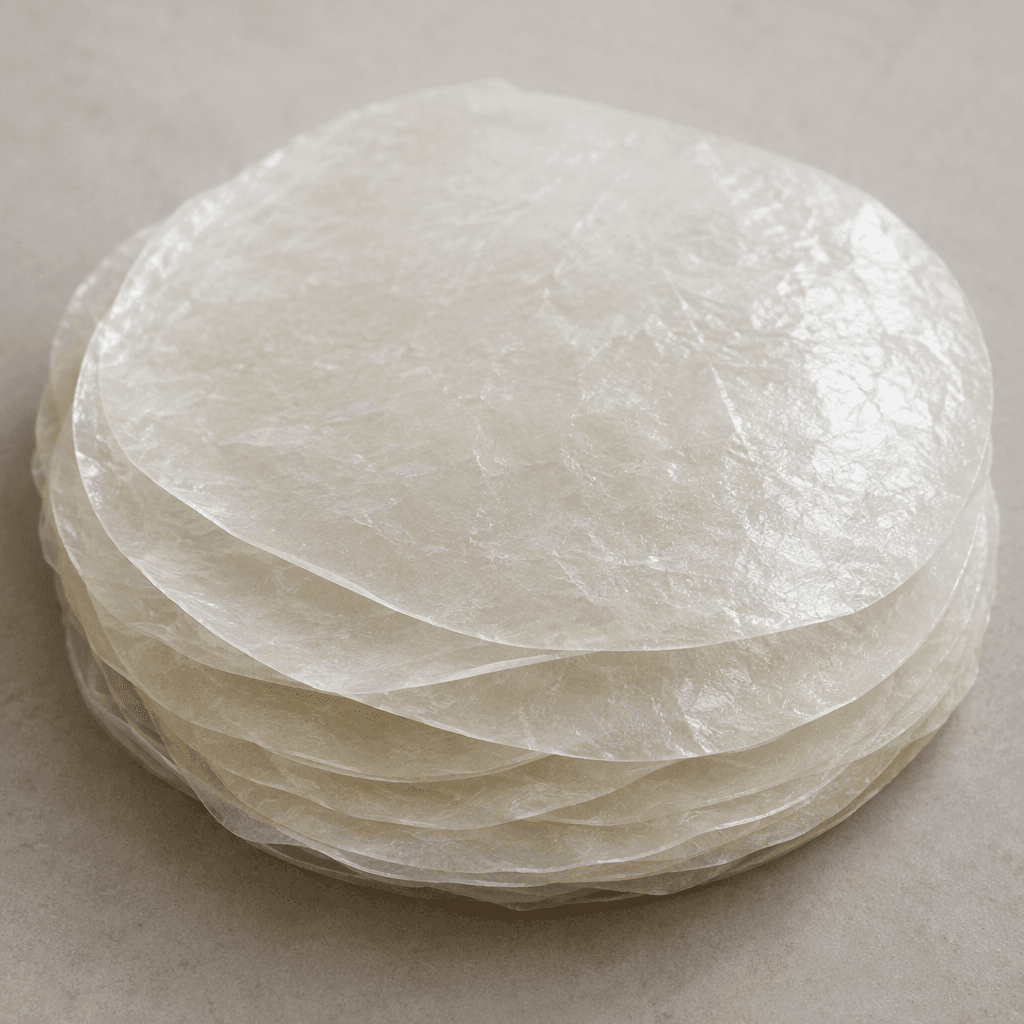
Rice Paper Calories
Low calorie, gluten-free, vegan
In season: Spring · Summer · Autumn · Winter
CALORIES
GI
POTASSIUM
FIBER
Quick answer
1 piece (medium) of Rice Paper (9 g) has 32 calories. That works out to 350 calories per 100 g. It contains 7.2 g of carbs, 0.6 g of protein, 0 g of fat and 0.1 g of fiber. Its glycemic index is 85 (high), so it raises blood sugar quickly.
What is Rice Paper?
Rice paper is a thin, dried wrapper associated especially with Vietnamese cooking. It is usually made from rice flour and water, sometimes with tapioca starch, and sold as brittle, translucent rounds or sheets. A quick dip in water makes it pliable enough to wrap fillings. It is best known for fresh Vietnamese rolls, often called gỏi cuốn, and for wrappers used in fried rolls.
Its mild taste lets herbs, crunchy vegetables and fillings such as tofu, shrimp or pork stand out. Serve fresh rolls with a dipping sauce, or fry the wrapped rolls until crisp. Rice paper is mostly carbohydrate and very low in fat, so the filling and cooking method shape how substantial the meal is. For a lighter option, use plenty of vegetables and serve the wrappers fresh; soften them only briefly to avoid sticking or tearing.
Rice Paper Nutrition Facts
Selected: 100 g
350
KCAL / 100G
Carbs
80g
· 29% DV
Protein
6.5g
· 13% DV
Fat
0.5g
· 1% DV
Fiber
1.5g
· 5% DV
DV is the share of the daily value covered, on a 2,000 kcal reference diet.
Calories come from: Carbs 91% · Protein 7% · Fat 2%
Rice Paper Vitamins & Minerals
Vitamins
B6
0.05mg · 3% DV
B1
0.02mg · 2% DV
B3
0.3mg · 2% DV
B5
0.1mg · 2% DV
Minerals
Zinc
1mg · 9% DV
Phosphorus
30mg · 4% DV
Magnesium
7mg · 2% DV
Calcium
10mg · 1% DV
How Nutritious Is Rice Paper?
Nutrient density
Low
How many vitamins, minerals and how much fiber this food carries per calorie. A high score means a lot of nutrition for few calories.
Satiety score
Low
An EatBetter score computed from fiber, protein and calorie density. A high score means staying full longer on the same calories.
Both scores are calculated per 100 g and do not change with the selected portion. The satiety score is EatBetter's own calculation, not a clinical measure.
Rice Paper Glycemic Index
GLYCEMIC INDEX
GLYCEMIC LOAD
Accounts for portion size — a more realistic measure than GI alone.
How to Burn Off Rice Paper
To burn the 350 calories in 100 g:
🚶
Walking (5 km/h)
🏃
Running (8 km/h)
🚴
Cycling
🏊
Swimming
Times are calculated with the MET equation for a 70 kg adult. Actual burn varies with your weight, age and pace.
Is Rice Paper Processed?
NOVA 2
Minimally Processed
1. Unprocessed
2. Minimally Processed
3. Processed
4. Ultra-Processed
NOVA classifies foods into 4 groups by industrial processing. NOVA 1 (unprocessed) is the healthiest.
Does Rice Paper Contain Allergens?
No known major allergens
Which Diets Is Rice Paper Good For?
Vegan
✓ Suitable
Vegetarian
✓ Suitable
Gluten-Free
✓ Suitable
Dairy-Free
— Not suitable
Mediterranean
✓ Suitable
Paleo
✓ Suitable
Whole30
— Not suitable
DASH
— Not suitable
Keto
— Not suitable
Low FODMAP
— Not suitable
Rice Paper Fat Profile
SATURATED
0.1g
MONOUNSATURATED
0.1g
POLYUNSATURATED
0.2g
Compare Rice Paper
Foods Similar to Rice Paper
Frequently Asked Questions About Rice Paper
How do you use rice paper?
Dip one rice paper sheet briefly in water, then lay it flat and add filling near the center. Fold the sides over the filling and roll it firmly, as you would a burrito, to make fresh rolls.
What is rice paper made of?
Rice paper is usually made from rice flour, water, and often tapioca starch and salt. The thin batter is steamed into sheets and dried, which is why the wrappers feel brittle until moistened.
Do you have to cook rice paper?
No, rice paper does not need cooking for fresh rolls. Briefly moisten the dry sheet first, then fill and roll it; you can also fry filled rice-paper rolls if you want a crisp exterior.
How long should you soak rice paper?
Soak rice paper only briefly, just until it starts to soften. It continues absorbing moisture after you lift it from the water, so leaving it submerged too long can make it sticky and difficult to handle.
Why does rice paper tear when rolling?
Rice paper often tears because it was soaked too long, overfilled, or rolled before it had softened evenly. Use a modest amount of filling, leave room at the edges, and handle the sheet gently.
Can you fry rice paper?
Yes, you can fry rice paper rolls for a crisp shell. Keep the filling fairly dry, seal the rolls well, and lower them carefully into the oil; wet filling can cause splattering and make the wrapper less crisp.
Why does rice paper stick to everything?
Rice paper becomes tacky once wet, so it sticks to dry plates, work surfaces, and other sheets. Assemble rolls on a damp, clean surface and keep finished rolls separated rather than stacking them.
How do you store rice paper after opening?
Keep unused rice paper dry in its original packaging or an airtight container. Store it at room temperature away from steam and humidity; moisture can make the brittle sheets stick together before you use them.
What is the difference between rice paper and spring roll wrappers?
Rice paper is a thin, dried sheet that you soften with water, commonly used for fresh rolls and some fried rolls. Spring roll wrappers can also refer to wheat-based pastry sheets, which have a different texture and are usually cooked.
Can you make rice paper in an air fryer?
Yes, rice paper can crisp in an air fryer, but it may curl or blow around if used by itself. Brush or lightly coat it with oil, secure it with filling, and watch closely because thin sheets crisp quickly.
Have another question about Rice Paper?
Ask the AI nutrition coach — calories, portions, alternatives and more, answered in seconds in the app.

Scan calories with your camera
Instant AI nutrition analysis

Nutrition data compiled from USDA FoodData Central and scientific sources.