

Ready & Packaged Foods
All →Vegetables & Legumes
All →Desserts & Confectionery
All →Meat & Protein
All →Grains & Bakery
All →Beverages
All →Milk & Dairy
All →

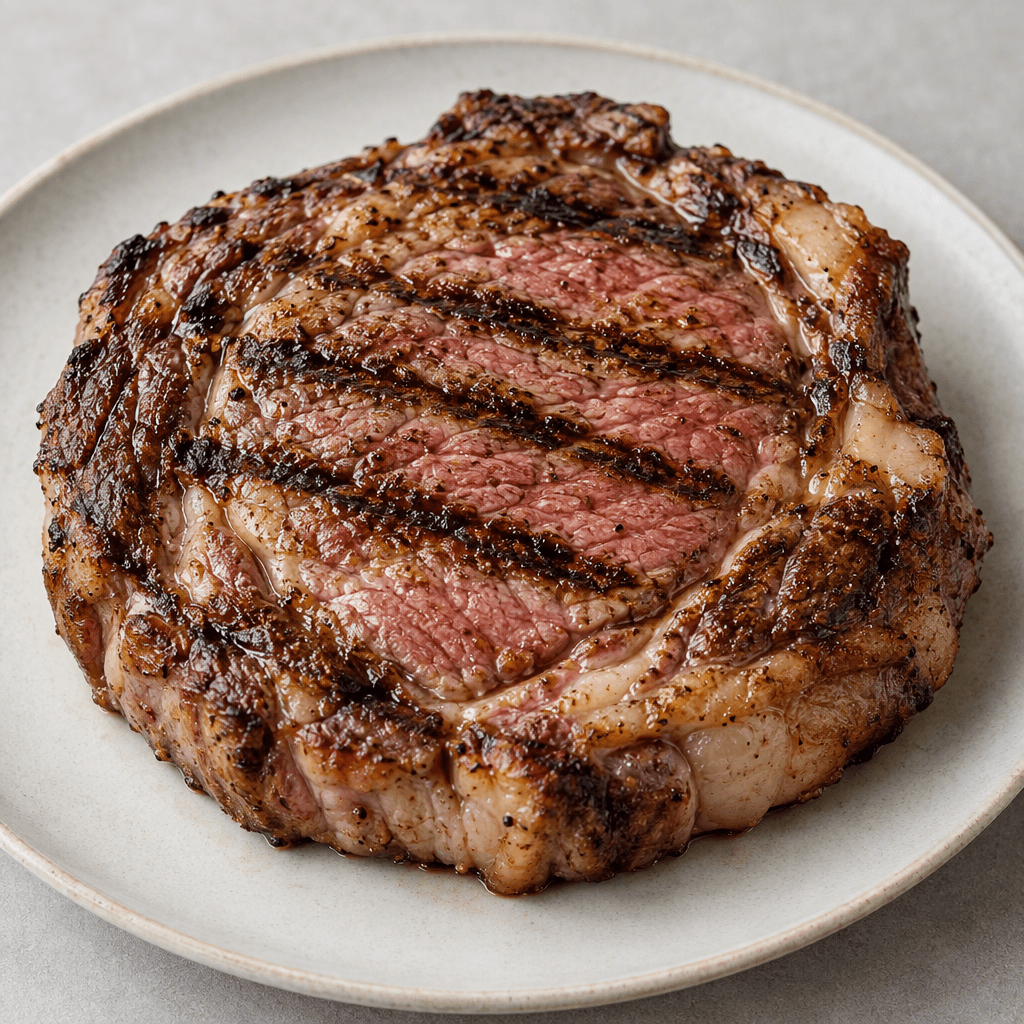
Grilled ribeye steak Calories
High protein and iron, rich in B vitamins, flavorful fat content
In season: Spring · Summer · Autumn · Winter
CALORIES
GI
POTASSIUM
FIBER
Quick answer
1 piece (medium) of Grilled ribeye steak (180 g) has 522 calories. That works out to 290 calories per 100 g. It contains 0 g of carbs, 44.1 g of protein, 38.7 g of fat and 0 g of fiber. Its 3.8 µg of B12 covers 158% of the Daily Value. Its glycemic index is 0 (low), so it raises blood sugar slowly.
What is Grilled ribeye steak?
Grilled ribeye steak is cut from the rib section of beef, where fine streaks of fat run through the meat. A hot grill browns the outside and adds a smoky, lightly charred flavour, while the centre can stay tender and juicy when cooked to your preferred doneness. The marbling contributes much of its richness.
In steakhouse meals and home barbecues, it is often served with potatoes, salad or grilled vegetables; a simple sauce or a squeeze of lemon can complement it without masking the beef. It is protein-rich and provides iron, but its fat content makes it a richer choice than leaner cuts. Pair it with vegetables for a balanced plate.
Grilled ribeye steak Nutrition Facts
Selected: 100 g
290
KCAL / 100G
Carbs
0g
· 0% DV
Protein
24.5g
· 49% DV
Fat
21.5g
· 28% DV
Fiber
0g
· 0% DV
DV is the share of the daily value covered, on a 2,000 kcal reference diet.
Calories come from: Carbs 0% · Protein 34% · Fat 66%
Grilled ribeye steak Vitamins & Minerals
Vitamins
B12
2.1µg · 88% DV
B3
4.7mg · 29% DV
B6
0.45mg · 26% DV
B2
0.22mg · 17% DV
Minerals
Zinc
4mg · 36% DV
Selenium
18µg · 33% DV
Phosphorus
210mg · 30% DV
Iron
2mg · 11% DV
How Nutritious Is Grilled ribeye steak?
Nutrient density
High
How many vitamins, minerals and how much fiber this food carries per calorie. A high score means a lot of nutrition for few calories.
Satiety score
Medium
An EatBetter score computed from fiber, protein and calorie density. A high score means staying full longer on the same calories.
Both scores are calculated per 100 g and do not change with the selected portion. The satiety score is EatBetter's own calculation, not a clinical measure.
Grilled ribeye steak Glycemic Index
GLYCEMIC INDEX
GLYCEMIC LOAD
Accounts for portion size — a more realistic measure than GI alone.
How to Burn Off Grilled ribeye steak
To burn the 290 calories in 100 g:
🚶
Walking (5 km/h)
🏃
Running (8 km/h)
🚴
Cycling
🏊
Swimming
Times are calculated with the MET equation for a 70 kg adult. Actual burn varies with your weight, age and pace.
Is Grilled ribeye steak Processed?
NOVA 2
Minimally Processed
1. Unprocessed
2. Minimally Processed
3. Processed
4. Ultra-Processed
NOVA classifies foods into 4 groups by industrial processing. NOVA 1 (unprocessed) is the healthiest.
Does Grilled ribeye steak Contain Allergens?
No known major allergens
Which Diets Is Grilled ribeye steak Good For?
Vegan
— Not suitable
Vegetarian
— Not suitable
Gluten-Free
✓ Suitable
Dairy-Free
— Not suitable
Mediterranean
✓ Suitable
Paleo
✓ Suitable
Whole30
— Not suitable
DASH
— Not suitable
Keto
✓ Suitable
Low FODMAP
— Not suitable
Grilled ribeye steak Fat Profile
SATURATED
9.2g
MONOUNSATURATED
8.7g
POLYUNSATURATED
0.6g
Omega 6:3 ratio 1.6:1
Below the ideal 4:1 — a good omega balance.
Compare Grilled ribeye steak
Foods Similar to Grilled ribeye steak
Frequently Asked Questions About Grilled ribeye steak
How do you grill a ribeye steak?
Pat the ribeye steak dry and place it on a well-heated grill so it can develop a browned crust. Turn it once the first side is well seared, then finish cooking to your preferred doneness without pressing down on the meat.
How long should you grill a ribeye steak?
Grilling time for a ribeye steak depends mainly on its thickness, grill heat, and desired doneness. A thin steak cooks faster than a thick one, so use an instant-read thermometer rather than relying on time alone.
What temperature should a grilled ribeye steak reach?
For whole-cut beef, food-safety guidance recommends an internal temperature of 145°F (63°C), followed by a three-minute rest. Insert the thermometer into the thickest part of the grilled ribeye steak, away from the bone or large pockets of fat.
What is the best seasoning for grilled ribeye steak?
Salt and freshly ground black pepper are enough to season grilled ribeye steak and let its rich beef flavor stand out. Add the salt before grilling, and avoid sugary rubs over very high heat because they can burn.
Should you marinate ribeye steak before grilling?
No, ribeye steak does not need a marinade before grilling; its marbling already contributes plenty of flavor and moisture. If you use one, keep it brief and wipe excess liquid from the steak so it browns instead of steaming.
Why does grilled ribeye steak cause flare-ups?
The fat marbling in ribeye steak can drip onto the flames and cause flare-ups while grilling. Move the steak temporarily to a cooler part of the grill rather than letting the flames scorch its surface.
Should grilled ribeye steak rest before serving?
Yes, let grilled ribeye steak rest briefly before slicing. Resting gives the heat time to even out through the meat and helps limit juice loss when you cut it, especially in a thick steak.
How do you cut grilled ribeye steak so it is tender?
Cut grilled ribeye steak across the direction of its muscle fibers, not parallel to them. Shorter fibers are easier to chew; look for the grain before slicing, since its direction can vary across the irregular-shaped cut.
How should you store leftover grilled ribeye steak?
Refrigerate leftover grilled ribeye steak in a covered container within two hours of cooking and eat it within three to four days. Reheat slices gently, or serve them cold in a salad or sandwich to avoid drying them out.
What cut of beef is used for grilled ribeye steak?
Grilled ribeye steak comes from the rib section of the cow, between the shoulder and loin. Its characteristic marbling and central eye of meat distinguish it from leaner steak cuts, though exact trimming varies by butcher.
Have another question about Grilled ribeye steak?
Ask the AI nutrition coach — calories, portions, alternatives and more, answered in seconds in the app.

Scan calories with your camera
Instant AI nutrition analysis

Nutrition data compiled from USDA FoodData Central and scientific sources.