

Ready & Packaged Foods
All →Vegetables & Legumes
All →Desserts & Confectionery
All →Meat & Protein
All →Grains & Bakery
All →Beverages
All →Milk & Dairy
All →

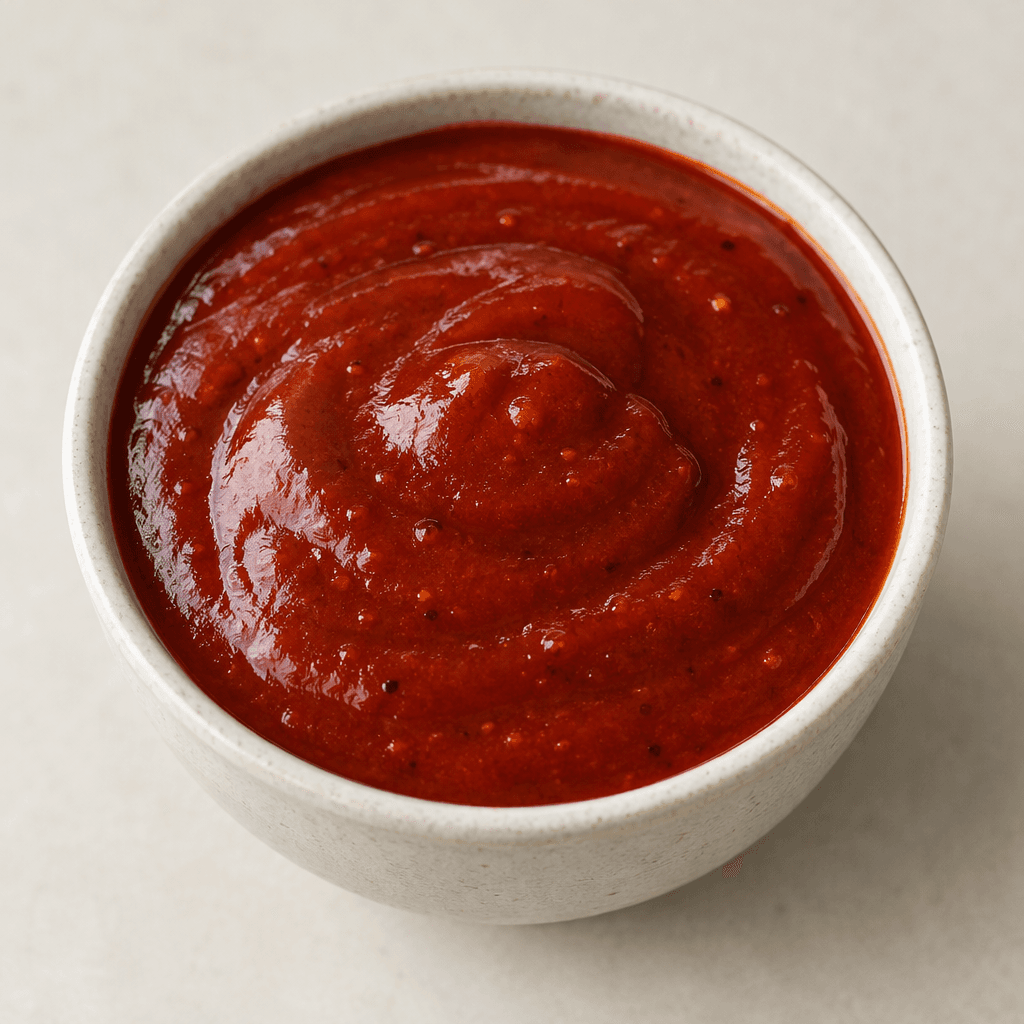
Red Sauce Calories
Tomato-based, low fat, source of vitamin C
In season: Summer · Autumn
CALORIES
GI
POTASSIUM
FIBER
Quick answer
2 tablespoon (medium) of Red Sauce (30 g) has 11 calories. That works out to 35 calories per 100 g. It contains 2.2 g of carbs, 0.4 g of protein, 0.1 g of fat and 0.5 g of fiber. Its glycemic index is 55 (low), so it raises blood sugar slowly.
What is Red Sauce?
Red Sauce is a thick, tomato-based sauce, often seasoned with spices; recipes vary, and the name does not point to one specific regional tradition. Its smooth, spoonable texture and gently sweet, tangy flavour make it an easy match for pasta, eggs, meat or vegetables. It can be cooked at home or bought ready-made.
Across many English-speaking kitchens, it is spooned over pasta, served alongside grilled foods, or used as a simple dip. It is low in fat and provides vitamin C; at 35 calories per 100 g, it can add tomato flavour without making a dish especially rich. Pair it with plain grilled vegetables or lean protein, and adjust the seasoning to suit the meal.
Red Sauce Nutrition Facts
Selected: 100 g
35
KCAL / 100G
Carbs
7.2g
· 3% DV
Protein
1.3g
· 3% DV
Fat
0.3g
· 0% DV
Fiber
1.7g
· 6% DV
DV is the share of the daily value covered, on a 2,000 kcal reference diet.
Calories come from: Carbs 78% · Protein 14% · Fat 8%

Log this food in EatBetter
100,000+ people use it
- Get your daily calorie target
- Snap your meal, log it in seconds
- See every vitamin and mineral

📸 Scan the code to get the app free.

Red Sauce Vitamins & Minerals
Vitamins
Vitamin C
13mg · 14% DV
B6
0.09mg · 5% DV
Biotin
1.5µg · 5% DV
Vitamin A
42µg · 5% DV
Minerals
Sodium
220mg · 10% DV
Potassium ⭐
260mg · 8% DV
Copper
0mg · 0% DV
Manganese
0mg · 0% DV
How Nutritious Is Red Sauce?
Nutrient density
Medium
How many vitamins, minerals and how much fiber this food carries per calorie. A high score means a lot of nutrition for few calories.
Satiety score
Medium
An EatBetter score computed from fiber, protein and calorie density. A high score means staying full longer on the same calories.
Both scores are calculated per 100 g and do not change with the selected portion. The satiety score is EatBetter's own calculation, not a clinical measure.
Red Sauce Glycemic Index
GLYCEMIC INDEX
GLYCEMIC LOAD
Accounts for portion size — a more realistic measure than GI alone.
How to Burn Off Red Sauce
To burn the 35 calories in 100 g:
🚶
Walking (5 km/h)
🏃
Running (8 km/h)
🚴
Cycling
🏊
Swimming
Times are calculated with the MET equation for a 70 kg adult. Actual burn varies with your weight, age and pace.
Is Red Sauce Processed?
NOVA 3
Processed
1. Unprocessed
2. Minimally Processed
3. Processed
4. Ultra-Processed
NOVA classifies foods into 4 groups by industrial processing. NOVA 1 (unprocessed) is the healthiest.
Does Red Sauce Contain Allergens?
No known major allergens
Which Diets Is Red Sauce Good For?
Vegan
✓ Suitable
Vegetarian
✓ Suitable
Gluten-Free
✓ Suitable
Dairy-Free
— Not suitable
Mediterranean
✓ Suitable
Paleo
— Not suitable
Whole30
— Not suitable
DASH
— Not suitable
Keto
— Not suitable
Low FODMAP
— Not suitable
Red Sauce Fat Profile
SATURATED
0.05g
MONOUNSATURATED
0.07g
POLYUNSATURATED
0.09g
Omega 6:3 ratio 2:1
Below the ideal 4:1 — a good omega balance.
Compare Red Sauce
Foods Similar to Red Sauce
Frequently Asked Questions About Red Sauce
What is red sauce?
Red sauce is a broad name for a tomato-based sauce, not one fixed recipe. It may be smooth or chunky and can include ingredients such as garlic, onion, herbs, oil, or spices.
What is red sauce made of?
Red sauce is usually made with tomatoes, while seasonings and other ingredients vary by recipe. Garlic, onion, herbs, spices, and oil are common additions, but the exact ingredients depend on the style or product.
How do you make red sauce for pasta?
To make red sauce for pasta, cook tomatoes with garlic and onion until soft, then season with herbs and blend if you prefer a smooth texture. Toss it with hot pasta so the sauce coats the noodles.
Is red sauce the same as marinara sauce?
Not always. Marinara is a particular Italian-style tomato sauce, commonly made with ingredients such as garlic and herbs, while “red sauce” can describe many tomato-based sauces with different seasonings and textures.
Why does red sauce taste bitter?
Red sauce can taste bitter if garlic or other ingredients scorch during cooking, or if the tomatoes themselves have a bitter flavor. Cook aromatics gently and stir the sauce regularly to prevent burning.
How can you make red sauce less acidic?
Cooking red sauce gently can mellow its sharp tomato taste. If it is still too tart, stir in a little grated carrot and cook until tender; it adds mild sweetness without changing the sauce into a dessert-like flavor.
Can you freeze red sauce?
Yes, red sauce freezes well in an airtight, freezer-safe container. Leave room for expansion, thaw it in the refrigerator, then reheat and stir; the texture may change slightly after freezing.
How should you store red sauce after opening?
Keep opened red sauce covered in the refrigerator and use a clean spoon each time. Discard it if you see mold or notice an unusual smell, bubbling, or other signs of spoilage.
Does red sauce need to be cooked before serving?
No, not every red sauce needs cooking: some prepared sauces are ready to eat, while homemade tomato sauce is usually cooked for flavor and texture. Follow the product’s preparation directions when using a packaged sauce.
What can you serve with red sauce besides pasta?
Red sauce also works with pizza, meatballs, roasted vegetables, sandwiches, and baked dishes. Choose pairings based on its seasoning: a spicy sauce can overpower delicate foods, while a mild one is more versatile.
Have another question about Red Sauce?
Ask the AI nutrition coach — calories, portions, alternatives and more, answered in seconds in the app.

Scan calories with your camera
Instant AI nutrition analysis

Nutrition data compiled from USDA FoodData Central and scientific sources.