

Ready & Packaged Foods
All →Vegetables & Legumes
All →Desserts & Confectionery
All →Meat & Protein
All →Grains & Bakery
All →Beverages
All →Milk & Dairy
All →

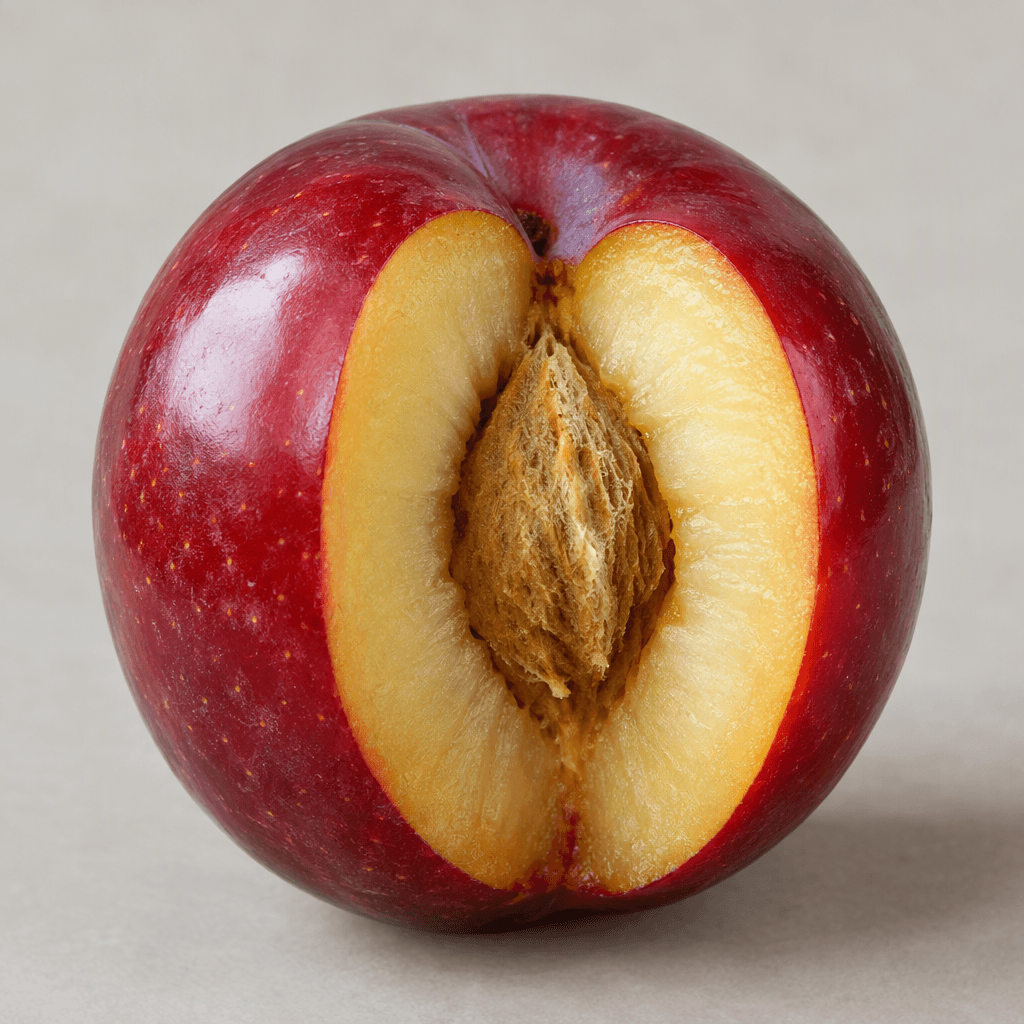
Red plum Calories
Vitamin C, fiber, antioxidants
In season: Summer
CALORIES
GI
POTASSIUM
FIBER
Quick answer
1 piece (medium) of Red plum (65 g) has 30 calories. That works out to 46 calories per 100 g. It contains 7.4 g of carbs, 0.5 g of protein, 0.2 g of fat and 0.9 g of fiber. Its 6.2 mg of Vitamin C covers 7% of the Daily Value. Its glycemic index is 35 (low), so it raises blood sugar slowly.
What is Red plum?
Red plum is a stone fruit with smooth red skin, juicy flesh and a single hard pit. Its varieties range from crisp and tart to soft, sweet-tart and fragrant as they ripen. It is widely eaten fresh as a snack, while surplus fruit can be cooked into jam, compote or baked desserts. In season, it also works well sliced into breakfast bowls or tossed through a simple fruit salad.
With plenty of water and some fibre, red plum is a light, refreshing choice; it also contributes vitamin C. Pair it with plain yoghurt or oats for a more filling snack, or choose ripe fruit when you prefer a sweeter taste.
Red plum Nutrition Facts
Selected: 100 g
46
KCAL / 100G
Carbs
11.4g
· 4% DV
Protein
0.7g
· 1% DV
Fat
0.3g
· 0% DV
Fiber
1.4g
· 5% DV
DV is the share of the daily value covered, on a 2,000 kcal reference diet.
Calories come from: Carbs 89% · Protein 5% · Fat 6%
Red plum Vitamins & Minerals
Vitamins
Vitamin C
9.5mg · 11% DV
Vitamin K
6.4µg · 5% DV
B1
0.03mg · 3% DV
B3
0.42mg · 3% DV
Minerals
Potassium ⭐
157mg · 5% DV
Magnesium
7mg · 2% DV
Phosphorus
16mg · 2% DV
Calcium
6mg · 1% DV
How Nutritious Is Red plum?
Nutrient density
Medium
How many vitamins, minerals and how much fiber this food carries per calorie. A high score means a lot of nutrition for few calories.
Satiety score
Medium
An EatBetter score computed from fiber, protein and calorie density. A high score means staying full longer on the same calories.
Both scores are calculated per 100 g and do not change with the selected portion. The satiety score is EatBetter's own calculation, not a clinical measure.
Red plum Glycemic Index
GLYCEMIC INDEX
GLYCEMIC LOAD
Accounts for portion size — a more realistic measure than GI alone.
How to Burn Off Red plum
To burn the 46 calories in 100 g:
🚶
Walking (5 km/h)
🏃
Running (8 km/h)
🚴
Cycling
🏊
Swimming
Times are calculated with the MET equation for a 70 kg adult. Actual burn varies with your weight, age and pace.
Is Red plum Processed?
NOVA 1
Unprocessed
1. Unprocessed
2. Minimally Processed
3. Processed
4. Ultra-Processed
NOVA classifies foods into 4 groups by industrial processing. NOVA 1 (unprocessed) is the healthiest.
Does Red plum Contain Allergens?
No known major allergens
Which Diets Is Red plum Good For?
Vegan
✓ Suitable
Vegetarian
✓ Suitable
Gluten-Free
✓ Suitable
Dairy-Free
— Not suitable
Mediterranean
✓ Suitable
Paleo
✓ Suitable
Whole30
— Not suitable
DASH
— Not suitable
Keto
— Not suitable
Low FODMAP
— Not suitable
Red plum Fat Profile
SATURATED
0.02g
MONOUNSATURATED
0.05g
POLYUNSATURATED
0.07g
Omega 6:3 ratio 3:1
Below the ideal 4:1 — a good omega balance.
Compare Red plum
Foods Similar to Red plum
Frequently Asked Questions About Red plum
How can you tell when a red plum is ripe?
A ripe red plum gives slightly when gently pressed and smells lightly fruity. Its skin should be smooth and unbroken; color alone is not a reliable ripeness test because red plum varieties differ.
Do red plums ripen after picking?
Yes, red plums can continue to ripen after picking. Leave firm fruit at room temperature and check it regularly; once it softens slightly, refrigerate it to slow further ripening.
How should you store red plums?
Store ripe red plums in the refrigerator and keep firm ones at room temperature until they soften. Leave them unwashed while storing, since extra moisture can encourage spoilage, and rinse them before eating.
Can you eat the skin of a red plum?
Yes, red plum skin is edible, so peeling is optional. The skin contributes fiber and antioxidants; wash the fruit under running water before eating it, especially if you plan to eat it whole.
Can you freeze red plums?
Yes, red plums freeze well for later cooking. Wash and dry them, remove the pits, and freeze the halves in an airtight container; thawed plums may be softer, making them best for sauces or baking.
Are red plums sweet or sour?
Red plums can taste sweet, tart, or a little of both. The variety and ripeness matter: fruit that is still firm is often more sour, while ripe fruit tends to be softer and sweeter.
What is the difference between red plums and black plums?
Red and black plums are different plum varieties, mainly distinguished by skin color and often by flavor and flesh. The exact taste and texture vary by cultivar, so color alone does not tell you how sweet a plum will be.
Can dogs eat red plums?
Dogs may eat a small piece of red plum flesh, but never give them the pit. The pit can cause choking or an intestinal blockage and contains compounds that can release cyanide; avoid offering the stem and leaves too.
Do red plums help with constipation?
Red plums provide fiber, which can support regular bowel movements, but fresh plums are not as well known for this effect as prunes. Eating them with the skin and drinking enough water can help increase fiber intake.
Can you cook red plums?
Yes, red plums can be cooked into sauces, compotes, and baked desserts. Remove the pit first; cooking softens the fruit and brings out its juice, while a tart variety can add a pleasant contrast to sweet dishes.
Have another question about Red plum?
Ask the AI nutrition coach — calories, portions, alternatives and more, answered in seconds in the app.

Scan calories with your camera
Instant AI nutrition analysis

Nutrition data compiled from USDA FoodData Central and scientific sources.