

Ready & Packaged Foods
All →Vegetables & Legumes
All →Desserts & Confectionery
All →Meat & Protein
All →Grains & Bakery
All →Beverages
All →Milk & Dairy
All →

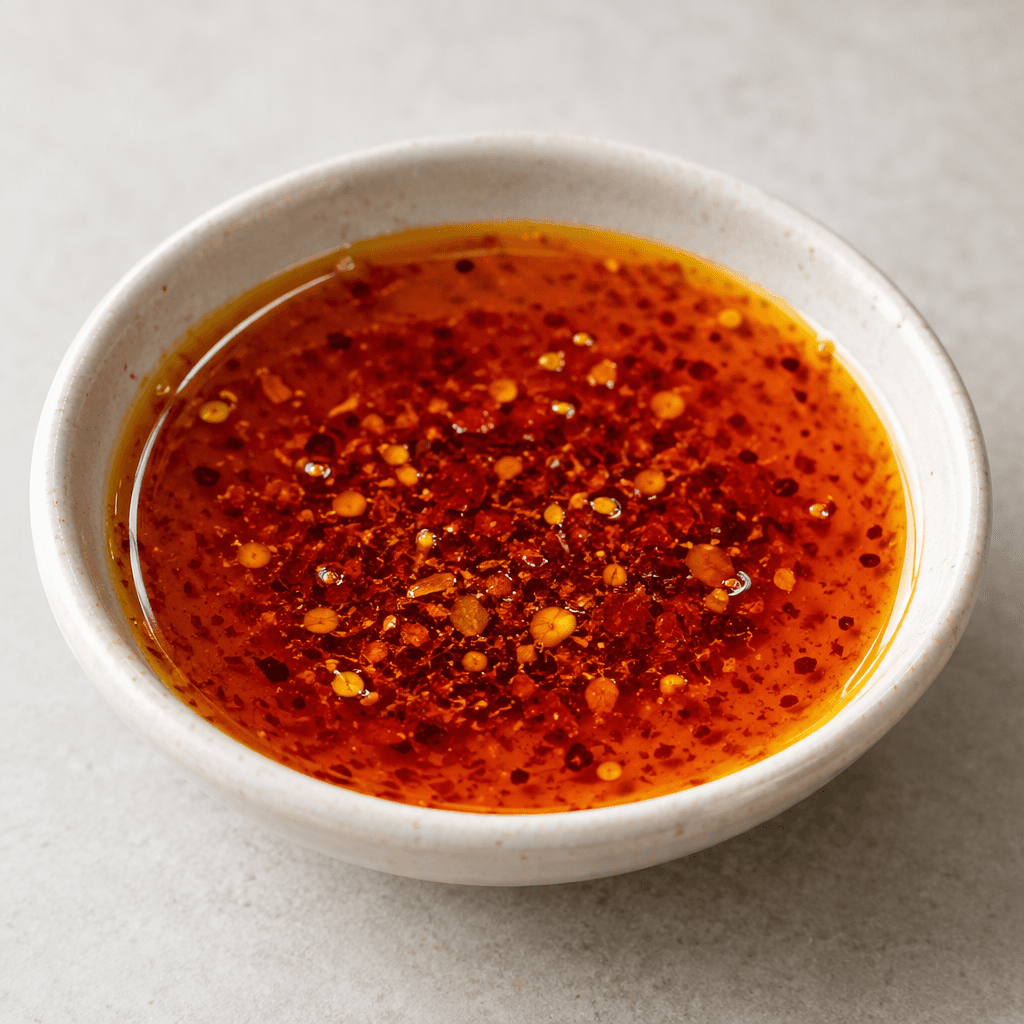
Red pepper oil (with a little olive oil) Calories
Detailed nutrition analysis with calories, glycemic index, vitamins and minerals.
CALORIES
GI
POTASSIUM
FIBER
Quick answer
1 tablespoon (medium) of Red pepper oil (with a little olive oil) (13 g) has 105 calories. That works out to 810 calories per 100 g. It contains 0.3 g of carbs, 0.1 g of protein, 11.6 g of fat and 0.2 g of fiber. Its 143 µg of Vitamin A covers 16% of the Daily Value. Its glycemic index is 0 (low), so it raises blood sugar slowly.
What is Red pepper oil (with a little olive oil)?
Red pepper oil (with a little olive oil) is a glossy, pepper-flecked condiment made by letting red pepper flavour oil; the olive oil adds a faint fruity note. Its heat depends on the pepper used, so it may be gently savoury or distinctly spicy. Across many cuisines, it is drizzled over soups, eggs, roasted vegetables, beans or dips, or served at the table for people to add to taste.
It is mostly fat and therefore energy-dense, while a small spoonful can bring plenty of colour and pepper flavour. Start with a little if you are unsure about the heat, and try it over yogurt-based dips or a simple soup for contrast.
Red pepper oil (with a little olive oil) Nutrition Facts
Selected: 100 g
810
KCAL / 100G
Carbs
2.5g
· 1% DV
Protein
0.7g
· 1% DV
Fat
89.5g
· 115% DV
Fiber
1.2g
· 4% DV
DV is the share of the daily value covered, on a 2,000 kcal reference diet.
Calories come from: Carbs 1% · Protein 0% · Fat 99%
Red pepper oil (with a little olive oil) Vitamins & Minerals
Vitamins
Vitamin A
1100µg · 122% DV
Vitamin E
14mg · 93% DV
Vitamin K
60µg · 50% DV
B6
0.18mg · 11% DV
Minerals
Iron
1mg · 6% DV
Phosphorus
18mg · 3% DV
Potassium ⭐
110mg · 3% DV
Magnesium
10mg · 2% DV
How Nutritious Is Red pepper oil (with a little olive oil)?
Nutrient density
Low
How many vitamins, minerals and how much fiber this food carries per calorie. A high score means a lot of nutrition for few calories.
Satiety score
Low
An EatBetter score computed from fiber, protein and calorie density. A high score means staying full longer on the same calories.
Both scores are calculated per 100 g and do not change with the selected portion. The satiety score is EatBetter's own calculation, not a clinical measure.
Red pepper oil (with a little olive oil) Glycemic Index
GLYCEMIC INDEX
GLYCEMIC LOAD
Accounts for portion size — a more realistic measure than GI alone.
How to Burn Off Red pepper oil (with a little olive oil)
To burn the 810 calories in 100 g:
🚶
Walking (5 km/h)
🏃
Running (8 km/h)
🚴
Cycling
🏊
Swimming
Times are calculated with the MET equation for a 70 kg adult. Actual burn varies with your weight, age and pace.
Is Red pepper oil (with a little olive oil) Processed?
NOVA 3
Processed
1. Unprocessed
2. Minimally Processed
3. Processed
4. Ultra-Processed
NOVA classifies foods into 4 groups by industrial processing. NOVA 1 (unprocessed) is the healthiest.
Does Red pepper oil (with a little olive oil) Contain Allergens?
No known major allergens
Which Diets Is Red pepper oil (with a little olive oil) Good For?
Vegan
✓ Suitable
Vegetarian
✓ Suitable
Gluten-Free
✓ Suitable
Dairy-Free
— Not suitable
Mediterranean
✓ Suitable
Paleo
✓ Suitable
Whole30
— Not suitable
DASH
— Not suitable
Keto
✓ Suitable
Low FODMAP
— Not suitable
Red pepper oil (with a little olive oil) Fat Profile
SATURATED
13.5g
MONOUNSATURATED
65g
POLYUNSATURATED
10.7g
Omega 6:3 ratio 15:1
Above the ideal 4:1 (15:1).
Compare Red pepper oil (with a little olive oil)
Foods Similar to Red pepper oil (with a little olive oil)
Frequently Asked Questions About Red pepper oil (with a little olive oil)
How do you make red pepper oil with a little olive oil?
Make red pepper oil with a little olive oil by pouring warm—not smoking hot—oil over dried red pepper flakes and letting them infuse. Avoid overheating the flakes, which can burn and taste bitter. Cool the mixture before transferring it to a clean, dry container.
How do you use red pepper oil with a little olive oil?
Use red pepper oil with a little olive oil as a finishing condiment for soup, eggs, pasta, roasted vegetables, or dips. Drizzle it on after cooking so the pepper flecks keep their aroma and do not scorch.
Is red pepper oil with a little olive oil spicy?
Red pepper oil with a little olive oil can range from mildly warm to very hot, depending on the pepper used. Start with a small drizzle and taste; oil made with sweet paprika is much milder than one made with hot chili flakes.
How should you store red pepper oil with a little olive oil?
Store red pepper oil with a little olive oil in a clean, dry, tightly closed container in the refrigerator. Keep water and used utensils out of it. If it was made with fresh peppers, do not leave it at room temperature and use it promptly.
How long does red pepper oil with a little olive oil last?
There is no single reliable shelf life for red pepper oil with a little olive oil, because the ingredients and preparation matter. Refrigerate homemade batches, and discard them if you notice mold, an off smell, or an unusual change in appearance.
Is red pepper oil with a little olive oil the same as chili oil?
Red pepper oil with a little olive oil is a type of pepper-infused oil, but it is not always the same as chili oil. Chili oil may use hotter peppers and additional seasonings, while this version gets its character from red pepper and a small amount of olive oil.
Can you cook with red pepper oil with a little olive oil?
Yes, but red pepper oil with a little olive oil is best added near the end of cooking or used as a topping. The pepper flecks can burn over high heat, leaving a bitter flavor, so it is not ideal as a deep-frying oil.
What does red pepper oil with a little olive oil taste like?
Red pepper oil with a little olive oil tastes savory and peppery, with an oily texture and a gentle olive note. Its heat varies with the pepper; the flakes also add a stronger, more concentrated flavor than the oil alone.
Can red pepper oil with a little olive oil replace olive oil in a recipe?
Red pepper oil with a little olive oil can replace plain oil when you want a peppery flavor and color. It is not a neutral substitute for baking or delicate dishes, because the pepper can change both the taste and appearance.
Is red pepper oil with a little olive oil healthy?
Red pepper oil with a little olive oil can add flavor to a meal, but it is still an oil-based condiment, so a small drizzle is usually enough. Hot peppers may aggravate reflux symptoms in some people; use less if you notice that effect.
Have another question about Red pepper oil (with a little olive oil)?
Ask the AI nutrition coach — calories, portions, alternatives and more, answered in seconds in the app.

Scan calories with your camera
Instant AI nutrition analysis

Nutrition data compiled from USDA FoodData Central and scientific sources.