

Ready & Packaged Foods
All →Vegetables & Legumes
All →Desserts & Confectionery
All →Meat & Protein
All →Grains & Bakery
All →Beverages
All →Milk & Dairy
All →

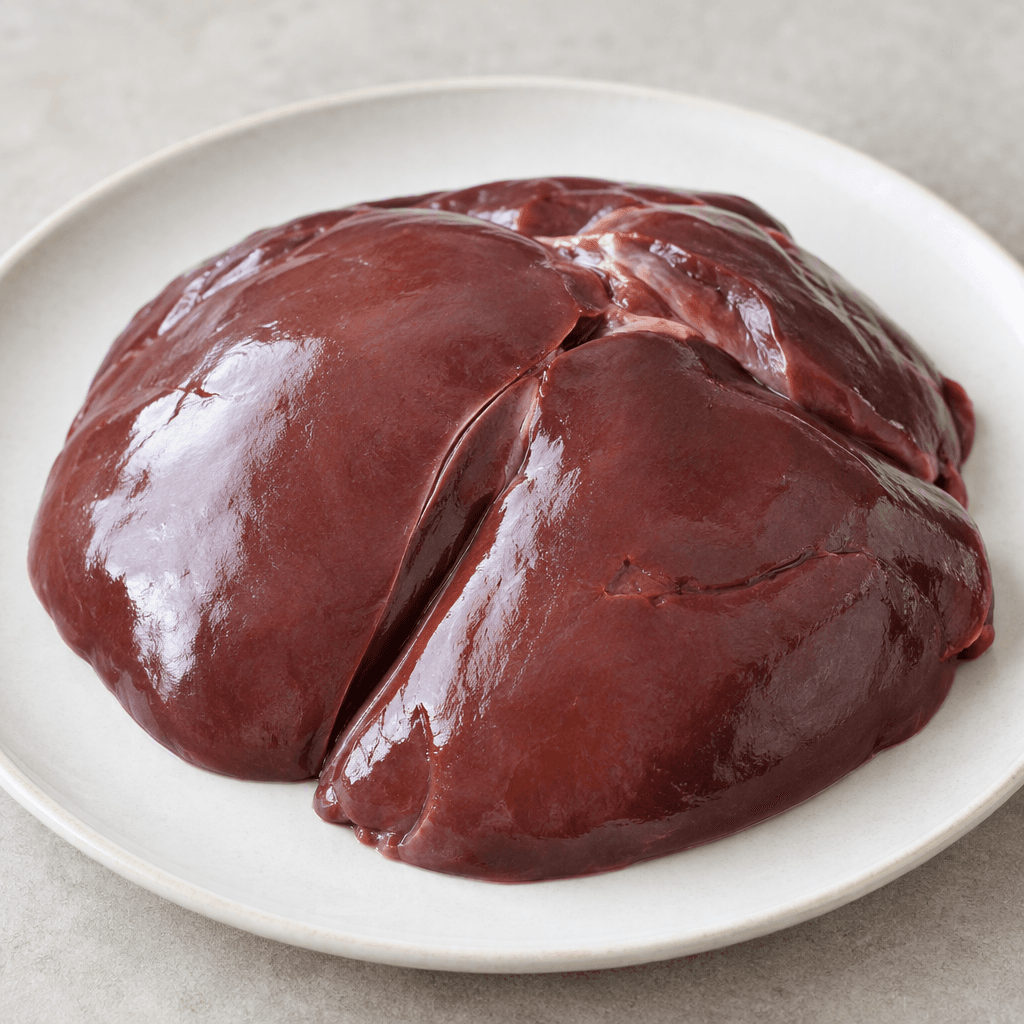
Raw lamb liver Calories
Extremely high in vitamin A, iron, and B12
In season: Spring · Summer · Autumn · Winter
CALORIES
GI
POTASSIUM
FIBER
Quick answer
1 slice (medium) of Raw lamb liver (50 g) has 70 calories. That works out to 139 calories per 100 g. It contains 1.4 g of carbs, 10.2 g of protein, 2.3 g of fat and 0 g of fiber. Its 45 µg of B12 covers 1875% of the Daily Value. Its glycemic index is 50 (low), so it raises blood sugar slowly.
What is Raw lamb liver?
Raw lamb liver is the uncooked liver of a lamb, sold whole or in pieces and used as an ingredient in cooked dishes. It is rarely eaten raw; cooks usually fry it, grill it on skewers or add it to dishes such as liver pâté. Its flavour is rich and distinct, with a tender, slightly firm texture when cooked. It pairs well with onions, herbs and bright, acidic accompaniments, or can be served with bread or potatoes.
Liver is notably rich in protein, iron and vitamin B12, and contains very high levels of vitamin A. If its strong taste is new to you, try a small portion alongside milder sides. Handle it like other raw meat: prevent contact with ready-to-eat foods, clean utensils and surfaces thoroughly, and cook it fully before serving.
Raw lamb liver Nutrition Facts
Selected: 100 g
139
KCAL / 100G
Carbs
2.8g
· 1% DV
Protein
20.4g
· 41% DV
Fat
4.5g
· 6% DV
Fiber
0g
· 0% DV
DV is the share of the daily value covered, on a 2,000 kcal reference diet.
Calories come from: Carbs 8% · Protein 61% · Fat 31%
Raw lamb liver Vitamins & Minerals
Vitamins
B12
90µg · 3750% DV
Vitamin A
21200µg · 2356% DV
Biotin
96µg · 320% DV
B2
3.6mg · 277% DV
Minerals
Copper
7mg · 778% DV
Selenium
45µg · 82% DV
Phosphorus
350mg · 50% DV
Zinc
4mg · 36% DV
How Nutritious Is Raw lamb liver?
Nutrient density
Very high
How many vitamins, minerals and how much fiber this food carries per calorie. A high score means a lot of nutrition for few calories.
Satiety score
Medium
An EatBetter score computed from fiber, protein and calorie density. A high score means staying full longer on the same calories.
Both scores are calculated per 100 g and do not change with the selected portion. The satiety score is EatBetter's own calculation, not a clinical measure.
Raw lamb liver Glycemic Index
GLYCEMIC INDEX
GLYCEMIC LOAD
Accounts for portion size — a more realistic measure than GI alone.
How to Burn Off Raw lamb liver
To burn the 139 calories in 100 g:
🚶
Walking (5 km/h)
🏃
Running (8 km/h)
🚴
Cycling
🏊
Swimming
Times are calculated with the MET equation for a 70 kg adult. Actual burn varies with your weight, age and pace.
Is Raw lamb liver Processed?
NOVA 1
Unprocessed
1. Unprocessed
2. Minimally Processed
3. Processed
4. Ultra-Processed
NOVA classifies foods into 4 groups by industrial processing. NOVA 1 (unprocessed) is the healthiest.
Does Raw lamb liver Contain Allergens?
No known major allergens
Which Diets Is Raw lamb liver Good For?
Vegan
— Not suitable
Vegetarian
— Not suitable
Gluten-Free
✓ Suitable
Dairy-Free
— Not suitable
Mediterranean
✓ Suitable
Paleo
✓ Suitable
Whole30
— Not suitable
DASH
— Not suitable
Keto
✓ Suitable
Low FODMAP
— Not suitable
Raw lamb liver Fat Profile
SATURATED
1.5g
MONOUNSATURATED
1.2g
POLYUNSATURATED
0.7g
Omega 6:3 ratio 1.8:1
Below the ideal 4:1 — a good omega balance.
Compare Raw lamb liver
Foods Similar to Raw lamb liver
Frequently Asked Questions About Raw lamb liver
Is raw lamb liver safe to eat?
No, raw lamb liver is not safe to eat. Raw organ meat can carry harmful bacteria or parasites, so cook it thoroughly and keep its juices away from ready-to-eat foods and clean surfaces.
How do you cook raw lamb liver without making it tough?
Slice raw lamb liver evenly and cook it in a hot pan without crowding the pieces. Cook it thoroughly for safety, but avoid leaving it on the heat longer than needed, as overcooking makes liver firm and dry.
Should you wash raw lamb liver before cooking it?
No, do not rinse raw lamb liver under the tap. Splashing can spread bacteria around the sink and nearby surfaces; pat it dry with paper towel and remove any tough membrane or visible vessels.
How long does raw lamb liver last in the fridge?
Use raw lamb liver within 1–2 days of buying it. Keep it covered in a leak-proof container on a cold refrigerator shelf, separate from foods that will be eaten without cooking.
Can you freeze raw lamb liver?
Yes, raw lamb liver can be frozen. Divide it into meal-sized portions, seal them well, and thaw them in the refrigerator when needed; do not refreeze liver after it has thawed.
What does lamb liver taste like, and how can you make it milder?
Lamb liver has a rich, earthy, slightly mineral taste. A brief soak in milk in the refrigerator can mellow its flavor, but it does not make the liver safer; cook it thoroughly afterward.
Is lamb liver healthy to eat?
Lamb liver is nutrient-dense, but it is also exceptionally high in preformed vitamin A. Eating it occasionally in modest portions is more prudent than making it a daily food, since excess vitamin A can be harmful.
Can you eat lamb liver during pregnancy?
No, avoid raw lamb liver during pregnancy because of foodborne infection risk. Cooked liver is also commonly discouraged because its high preformed vitamin A content can harm fetal development; ask your clinician for advice specific to you.
How often can you eat lamb liver?
Eat cooked lamb liver occasionally rather than every day, because repeated large servings can provide excessive preformed vitamin A. There is no need to eat liver to meet your nutritional needs; other foods provide iron and B12.
How can you tell if raw lamb liver has gone bad?
A sour or unpleasant odor, slimy surface, or unusual discoloration can mean raw lamb liver has spoiled. Discard it if you notice these signs, and do not taste it to check; normal appearance alone cannot guarantee safety.
Have another question about Raw lamb liver?
Ask the AI nutrition coach — calories, portions, alternatives and more, answered in seconds in the app.

Scan calories with your camera
Instant AI nutrition analysis

Nutrition data compiled from USDA FoodData Central and scientific sources.