

Ready & Packaged Foods
All →Vegetables & Legumes
All →Desserts & Confectionery
All →Meat & Protein
All →Grains & Bakery
All →Beverages
All →Milk & Dairy
All →

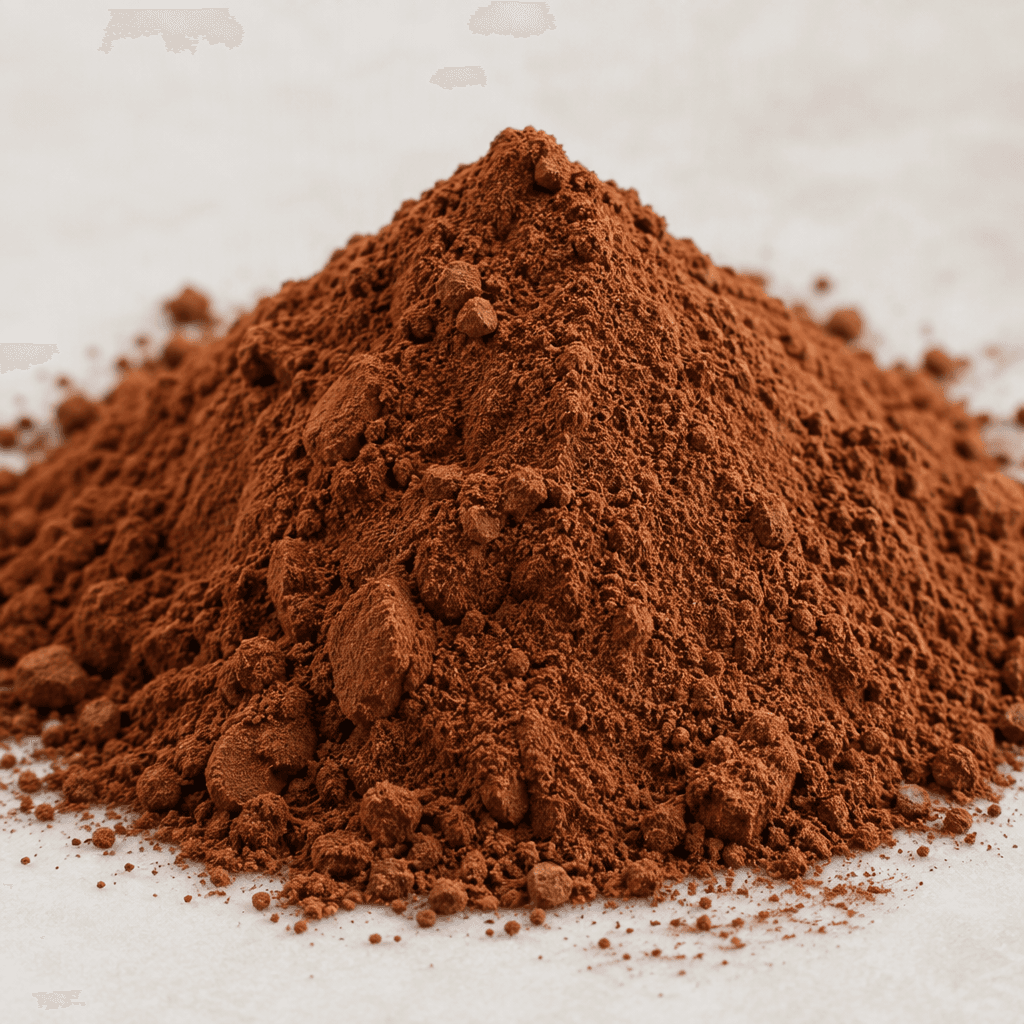
Raw cocoa powder Calories
Rich in antioxidants, magnesium and iron
In season: Spring · Summer · Autumn · Winter
CALORIES
GI
POTASSIUM
FIBER
Quick answer
1 tablespoon (medium) of Raw cocoa powder (7 g) has 16 calories. That works out to 228 calories per 100 g. It contains 4.1 g of carbs, 1.4 g of protein, 1 g of fat and 2.3 g of fiber. Its 0.3 mg of Copper covers 30% of the Daily Value. Its glycemic index is 20 (low), so it raises blood sugar slowly.
What is Raw cocoa powder?
Raw cocoa powder is made by grinding cocoa beans that have not been roasted, or have been exposed to little heat. Unlike sweetened drinking chocolate, it contains no added sugar and has a deep cocoa aroma with a distinctly bitter, earthy taste. It is a pantry ingredient rather than a ready-to-eat snack.
Use it in smoothies, porridge, yoghurt, baking, or a mug of hot cocoa; in many cocoa-growing regions, it also appears in traditional drinks and sauces. It stands out for its fibre and plant protein, though its bitterness is often balanced with fruit, milk, or a sweetener. For a less sweet result, add it to banana or nut-butter smoothies and adjust the sweetness to taste.
Raw cocoa powder Nutrition Facts
Selected: 100 g
228
KCAL / 100G
Carbs
57.9g
· 21% DV
Protein
19.6g
· 39% DV
Fat
13.7g
· 18% DV
Fiber
33.2g
· 119% DV
DV is the share of the daily value covered, on a 2,000 kcal reference diet.
Calories come from: Carbs 53% · Protein 18% · Fat 29%
Raw cocoa powder Vitamins & Minerals
Vitamins
Biotin
8µg · 27% DV
B2
0.2mg · 15% DV
B3
2.2mg · 14% DV
B1
0.1mg · 8% DV
Minerals
Copper
4mg · 444% DV
Manganese
4mg · 174% DV
Magnesium
499mg · 119% DV
Phosphorus
734mg · 105% DV
How Nutritious Is Raw cocoa powder?
Nutrient density
Very high
How many vitamins, minerals and how much fiber this food carries per calorie. A high score means a lot of nutrition for few calories.
Satiety score
High
An EatBetter score computed from fiber, protein and calorie density. A high score means staying full longer on the same calories.
Both scores are calculated per 100 g and do not change with the selected portion. The satiety score is EatBetter's own calculation, not a clinical measure.
Raw cocoa powder Glycemic Index
GLYCEMIC INDEX
GLYCEMIC LOAD
Accounts for portion size — a more realistic measure than GI alone.
How to Burn Off Raw cocoa powder
To burn the 228 calories in 100 g:
🚶
Walking (5 km/h)
🏃
Running (8 km/h)
🚴
Cycling
🏊
Swimming
Times are calculated with the MET equation for a 70 kg adult. Actual burn varies with your weight, age and pace.
Is Raw cocoa powder Processed?
NOVA 2
Minimally Processed
1. Unprocessed
2. Minimally Processed
3. Processed
4. Ultra-Processed
NOVA classifies foods into 4 groups by industrial processing. NOVA 1 (unprocessed) is the healthiest.
Does Raw cocoa powder Contain Allergens?
No known major allergens
Which Diets Is Raw cocoa powder Good For?
Vegan
✓ Suitable
Vegetarian
✓ Suitable
Gluten-Free
✓ Suitable
Dairy-Free
— Not suitable
Mediterranean
✓ Suitable
Paleo
✓ Suitable
Whole30
— Not suitable
DASH
— Not suitable
Keto
✓ Suitable
Low FODMAP
— Not suitable
Raw cocoa powder Fat Profile
SATURATED
8.1g
MONOUNSATURATED
3.7g
POLYUNSATURATED
3.2g
Omega 6:3 ratio 28.2:1
Above the ideal 4:1 (28.2:1).
Compare Raw cocoa powder
Foods Similar to Raw cocoa powder
Frequently Asked Questions About Raw cocoa powder
Is raw cocoa powder the same as raw cacao powder?
Usually, yes: the terms are often used for powder made from cacao beans with less heat processing than conventional cocoa powder. The words “raw” and “cacao” are not applied consistently, so products can differ in how they are made.
Can you use raw cocoa powder in baking?
Yes, raw cocoa powder works in brownies, cakes, and cookies. Its flavor can be more intense and bitter than conventional cocoa powder, so a recipe may taste different even when you use the same amount.
How do you use raw cocoa powder in smoothies?
Blend raw cocoa powder with banana, milk or a milk alternative, and your usual smoothie ingredients. Mixing the powder with a little liquid first helps prevent dry clumps, especially if you are making a thick smoothie.
Does raw cocoa powder contain caffeine?
Yes, raw cocoa powder contains some caffeine, as well as the stimulant theobromine. The amount varies by product and serving, so people who are sensitive to stimulants may prefer not to have it close to bedtime.
How is raw cocoa powder made?
Raw cocoa powder is made by fermenting and drying cacao beans, pressing out much of their cocoa butter, and grinding the remaining solids. “Raw” generally signals limited heat processing, but it does not always mean the beans were never heated.
Can raw cocoa powder replace Dutch-process cocoa in a recipe?
Not always. Raw cocoa powder is typically more acidic than Dutch-process cocoa, which has been alkalized, so the two can react differently with baking soda and affect a recipe’s rise. They are easier to swap in recipes without a chemical leavener.
Does raw cocoa powder dissolve in water?
No, raw cocoa powder does not dissolve completely in water; its fine particles disperse and can settle. Whisk it thoroughly into a small amount of warm liquid first, then add more liquid to make a smoother drink.
How should raw cocoa powder be stored after opening?
Keep raw cocoa powder in a tightly sealed container in a cool, dry cupboard, away from steam and direct sunlight. Moisture can make it clump and dull its flavor, so use a dry spoon each time.
Can raw cocoa powder be used to make chocolate?
Yes, raw cocoa powder can be combined with cocoa butter and a sweetener to make a simple chocolate mixture. Cocoa powder alone will not set into a chocolate bar because much of the cocoa butter has been pressed out.
Is raw cocoa powder naturally sweet?
No, raw cocoa powder is naturally bitter and is not sweetened like instant cocoa drink mixes. Pair it with sweet ingredients such as dates, ripe banana, or a sweetener if you want a less bitter drink or dessert.
Have another question about Raw cocoa powder?
Ask the AI nutrition coach — calories, portions, alternatives and more, answered in seconds in the app.

Scan calories with your camera
Instant AI nutrition analysis

Nutrition data compiled from USDA FoodData Central and scientific sources.