

Ready & Packaged Foods
All →Vegetables & Legumes
All →Desserts & Confectionery
All →Meat & Protein
All →Grains & Bakery
All →Beverages
All →Milk & Dairy
All →

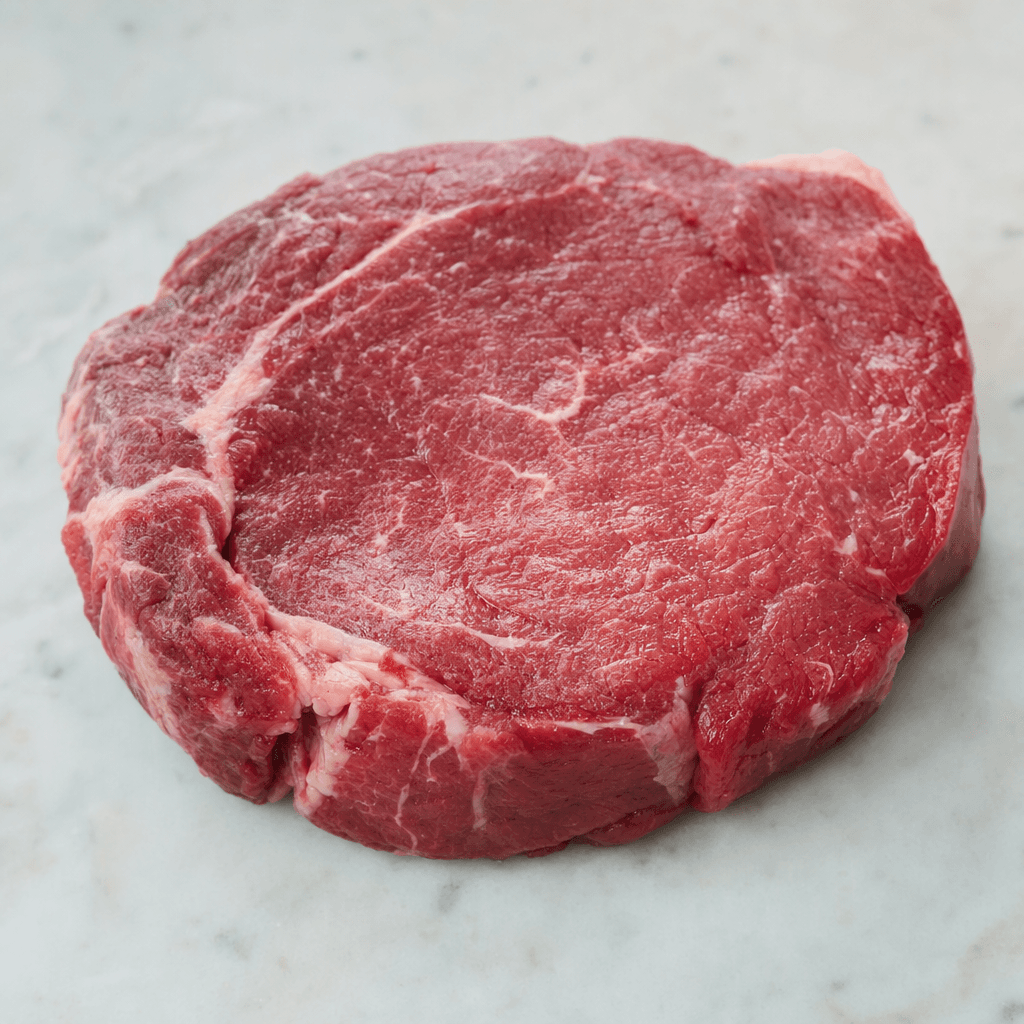
Raw beef steak Calories
High in protein, iron, and vitamin B12
In season: Spring · Summer · Autumn · Winter
CALORIES · 100 G
GI
POTASSIUM · 100 G
FIBER · 100 G
Quick answer
1 piece (medium) of Raw beef steak (150 g) has 200 calories. That works out to 133 calories per 100 g. It contains 0 g of carbs, 30.9 g of protein, 7.8 g of fat and 0 g of fiber. Its 3.8 µg of B12 covers 156% of the Daily Value. Its glycemic index is 0 (low), so it raises blood sugar slowly.
Raw beef steak Nutrition Facts
Selected: 1 piece (medium) · 150 g
200
KCAL / 150G
Carbs
0g
· 0% DV
Protein
30.9g
· 62% DV
Fat
7.8g
· 10% DV
Fiber
0g
· 0% DV
DV is the share of the daily value covered, on a 2,000 kcal reference diet.
Calories come from: Carbs 0% · Protein 64% · Fat 36%
Raw beef steak nutrition facts table · 1 piece (medium) (150 g)
| Nutrient | Amount | % DV |
|---|---|---|
| Calories | 200 kcal | |
| Total fat | 7.8 g | 10% |
| Saturated fat | 3.15 g | 16% |
| Trans fat | 0.09 g | |
| Sodium | 83 mg | 4% |
| Total carbohydrate | 0 g | 0% |
| Fiber | 0 g | 0% |
| Protein | 30.9 g | 62% |
Calories: Calories measure energy. Average daily need is 2,000 kcal. Excess calories are stored as fat, too few cause weight loss.
Carbs: Your body's primary energy source. The brain runs exclusively on carbs. Daily need: 275g.
Protein: Essential for muscle repair and cell growth. Daily need: 50g. Keeps you full and boosts metabolism.
Fat: Needed for hormone production and vitamin absorption. Daily need: 78g. Limit saturated fats, choose unsaturated.
Fiber: Critical for digestive health and satiety. Daily need: 28g. Stabilizes blood sugar, lowers cholesterol.

Log this food in EatBetter
100,000+ people use it
- Get your daily calorie target
- Snap your meal, log it in seconds
- See every vitamin and mineral

📸 Scan the code to get the app free.

How Many Calories in 1 Medium Raw beef steak?
| Serving | Amount | Calories |
|---|---|---|
| 1 piece (medium) | 150 g | 200 kcal |
| 1 slice (thin) | 80 g | 106 kcal |
| 100 g | 100 g | 133 kcal |
| 1 piece (small) | 100 g | 133 kcal |
| 1 slice (thick) | 120 g | 160 kcal |
| 1 serving (medium) | 180 g | 239 kcal |
| 1 piece (large) | 200 g | 266 kcal |
| 1 serving (large) | 250 g | 333 kcal |
| 1 piece (extra large) | 300 g | 399 kcal |
Calculated from 133 calories per 100 g.
Frequently Asked Questions About Raw beef steak
Can you eat raw beef steak?
You can eat raw beef steak, but it can carry harmful bacteria and is riskier than cooked steak. Cooking it thoroughly is the safer choice. Raw preparations such as steak tartare require carefully handled, fresh meat, clean equipment, and prompt serving.
How long does raw beef steak last in the fridge?
Raw beef steak generally keeps for 3–5 days in a refrigerator at 40°F (4°C) or colder. Store it sealed on the bottom shelf so its juices cannot drip onto other foods; freeze it sooner if you will not cook it in time.
How can you tell if raw beef steak has gone bad?
A sour or unpleasant odor and a sticky or slimy surface are warning signs; discard the steak if you notice them. A change in color alone does not prove it has spoiled, but never taste meat to check its safety.
Can you freeze raw beef steak?
Yes, raw beef steak freezes well when wrapped tightly to limit air exposure and freezer burn. For best quality, use it within several months. Label the package with the date, and thaw the steak in the refrigerator rather than on the counter.
Should you wash raw beef steak before cooking?
No, rinsing raw beef steak does not remove bacteria reliably and can spread them through splashes around the sink. If the surface is wet, pat it dry with a paper towel, then wash your hands and clean any surfaces the raw meat touched.
Why is raw beef steak brown on the outside?
Raw beef steak can turn brown where it has had limited contact with oxygen, such as inside tightly stacked or vacuum-packed meat. That color change alone does not mean it is spoiled; check for an off smell or slimy texture too.
How do you thaw raw beef steak safely?
Thaw raw beef steak in the refrigerator, ideally in a dish that catches any drips. For a quicker option, seal it in a leak-proof bag and submerge it in cold water, changing the water regularly; cook it promptly after thawing.
Can you make steak tartare with raw beef steak?
Yes, steak tartare is made with raw beef, but it carries a foodborne illness risk. Use a fresh, intact cut from a trusted source, prepare it with clean utensils, and serve it immediately. Avoid raw beef if you are at higher risk from foodborne illness.
Should raw beef steak sit out before cooking?
No, raw beef steak does not need to sit out for a long time before cooking. Leaving it at room temperature gives bacteria more opportunity to multiply; keep it chilled while you prepare the pan and other ingredients.
Can you cook raw beef steak straight from frozen?
Yes, you can cook raw beef steak from frozen, though it will take longer and may brown less evenly. Use a thermometer to confirm it has reached a safe internal temperature, and avoid cooking frozen steak in a slow cooker.
Raw beef steak Vitamins & Minerals
Vitamins
B12
3.75µg · 156% DV
B3
7.2mg · 45% DV
B6
0.6mg · 35% DV
B2
0.26mg · 20% DV
Minerals
Zinc
6.15mg · 56% DV
Phosphorus
270mg · 39% DV
Selenium
12µg · 22% DV
Iron
3.9mg · 22% DV
Potassium ⭐
480mg · 14% DV
Sodium
83mg · 4% DV
Raw beef steak Glycemic Index
GLYCEMIC INDEX
GLYCEMIC LOAD
Accounts for portion size — a more realistic measure than GI alone.
How to Burn Off Raw beef steak
To burn the 200 calories in 1 piece (medium) (150 g):
🚶
Walking (5 km/h)
🏃
Running (8 km/h)
🚴
Cycling
🏊
Swimming
Times are calculated with the MET equation for a 70 kg adult. Actual burn varies with your weight, age and pace.
What is Raw beef steak?
Raw beef steak is an uncooked cut of beef; its shape, tenderness and amount of marbling vary with the cut. In many places, beef is more commonly served cooked, while raw preparations include steak tartare, made from finely chopped or minced beef, and carpaccio, sliced very thinly. A thick steak is not usually eaten whole while raw.
Its flavour is mild and its texture can be tender or chewy, depending on the cut. It provides protein, iron and vitamin B12, with no carbohydrates. If serving it raw, use beef intended for that preparation, keep it chilled and prepare it just before eating. Cooking the steak thoroughly is a more cautious choice, especially for people at greater risk from foodborne illness.
How Nutritious Is Raw beef steak?
Nutrient density
High
How many vitamins, minerals and how much fiber this food carries per calorie. A high score means a lot of nutrition for few calories.
Satiety score
Medium
An EatBetter score computed from fiber, protein and calorie density. A high score means staying full longer on the same calories.
Both scores are calculated per 100 g and do not change with the selected portion. The satiety score is EatBetter's own calculation, not a clinical measure.
Is Raw beef steak Processed?
NOVA 1
Unprocessed
1. Unprocessed
2. Minimally Processed
3. Processed
4. Ultra-Processed
NOVA classifies foods into 4 groups by industrial processing. NOVA 1 (unprocessed) is the healthiest.
Does Raw beef steak Contain Allergens?
No known major allergens
Which Diets Is Raw beef steak Good For?
Vegan
— Not suitable
Vegetarian
— Not suitable
Gluten-Free
✓ Suitable
Dairy-Free
— Not suitable
Mediterranean
✓ Suitable
Paleo
✓ Suitable
Whole30
— Not suitable
DASH
— Not suitable
Keto
✓ Suitable
Low FODMAP
— Not suitable
Raw beef steak Fat Profile
SATURATED
3.15g
MONOUNSATURATED
3.3g
POLYUNSATURATED
0.3g
Omega 6:3 ratio 1.8:1
Below the ideal 4:1 — a good omega balance.
Compare Raw beef steak
Foods Similar to Raw beef steak
Have another question about Raw beef steak?
Ask the AI nutrition coach — calories, portions, alternatives and more, answered in seconds in the app.

Scan calories with your camera
Instant AI nutrition analysis

Nutrition data compiled from USDA FoodData Central and scientific sources.