

Ready & Packaged Foods
All →Vegetables & Legumes
All →Desserts & Confectionery
All →Meat & Protein
All →Grains & Bakery
All →Beverages
All →Milk & Dairy
All →

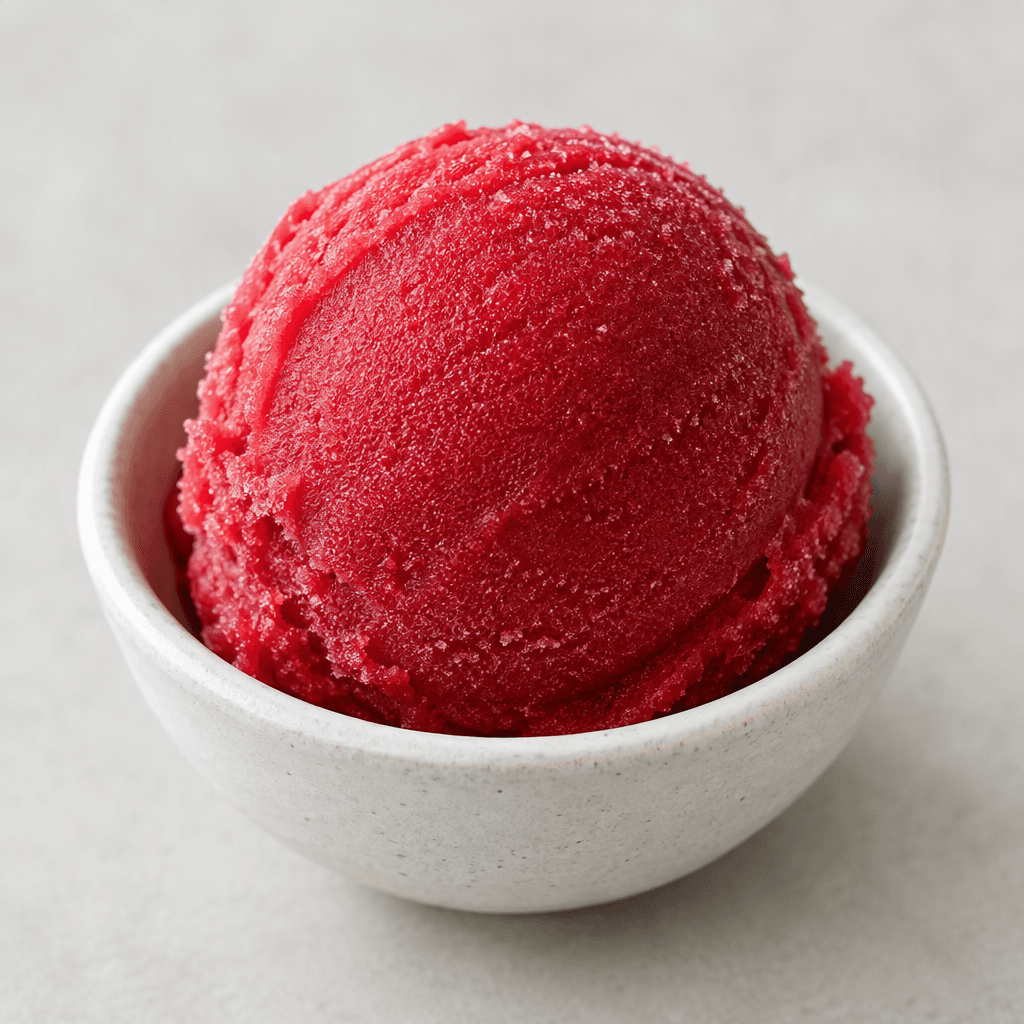
Raspberry sorbet Calories
Fruit-based frozen dessert, typically dairy-free
In season: Summer
CALORIES
GI
POTASSIUM
FIBER
Quick answer
100 g of Raspberry sorbet has 130 calories. It contains 31 g of carbs, 0.6 g of protein, 0.3 g of fat and 1.8 g of fiber. Its 0.3 mg of Manganese covers 11% of the Daily Value. Its glycemic index is 55 (medium), so it raises blood sugar at a moderate pace.
What is Raspberry sorbet?
Raspberry sorbet is a frozen dessert made by blending raspberries or raspberry purée with water and sugar, then freezing the mixture while stirring it. Unlike ice cream, it is generally made without dairy, though recipes vary. Sorbet has roots in chilled fruit-and-syrup traditions and became a familiar frozen dessert in European cooking.
Its vivid berry flavour balances sweetness with a pleasant tartness, while the texture is smooth with a slight icy chill. It is often served after a meal or as a refreshing treat on a warm day; fresh berries make a simple topping. Raspberry sorbet is low in fat and gets most of its energy from carbohydrates. For a lighter serving, keep the portion modest and pair it with unsweetened fruit rather than extra sauce.
Raspberry sorbet Nutrition Facts
Selected: 100 g
130
KCAL / 100G
Carbs
31g
· 11% DV
Protein
0.6g
· 1% DV
Fat
0.3g
· 0% DV
Fiber
1.8g
· 6% DV
DV is the share of the daily value covered, on a 2,000 kcal reference diet.
Calories come from: Carbs 96% · Protein 2% · Fat 2%
Raspberry sorbet Vitamins & Minerals
Vitamins
Vitamin C
8mg · 9% DV
B3
0.4mg · 3% DV
Vitamin E
0.5mg · 3% DV
Vitamin K
4µg · 3% DV
Minerals
Potassium ⭐
85mg · 3% DV
Magnesium
9mg · 2% DV
Phosphorus
12mg · 2% DV
Calcium
8mg · 1% DV
How Nutritious Is Raspberry sorbet?
Nutrient density
Low
How many vitamins, minerals and how much fiber this food carries per calorie. A high score means a lot of nutrition for few calories.
Satiety score
Medium
An EatBetter score computed from fiber, protein and calorie density. A high score means staying full longer on the same calories.
Both scores are calculated per 100 g and do not change with the selected portion. The satiety score is EatBetter's own calculation, not a clinical measure.
Raspberry sorbet Glycemic Index
GLYCEMIC INDEX
GLYCEMIC LOAD
Accounts for portion size — a more realistic measure than GI alone.
How to Burn Off Raspberry sorbet
To burn the 130 calories in 100 g:
🚶
Walking (5 km/h)
🏃
Running (8 km/h)
🚴
Cycling
🏊
Swimming
Times are calculated with the MET equation for a 70 kg adult. Actual burn varies with your weight, age and pace.
Is Raspberry sorbet Processed?
NOVA 3
Processed
1. Unprocessed
2. Minimally Processed
3. Processed
4. Ultra-Processed
NOVA classifies foods into 4 groups by industrial processing. NOVA 1 (unprocessed) is the healthiest.
Does Raspberry sorbet Contain Allergens?
No known major allergens
Which Diets Is Raspberry sorbet Good For?
Vegan
✓ Suitable
Vegetarian
✓ Suitable
Gluten-Free
✓ Suitable
Dairy-Free
— Not suitable
Mediterranean
✓ Suitable
Paleo
— Not suitable
Whole30
— Not suitable
DASH
— Not suitable
Keto
— Not suitable
Low FODMAP
— Not suitable
Raspberry sorbet Fat Profile
SATURATED
0.02g
MONOUNSATURATED
0.03g
POLYUNSATURATED
0.1g
Omega 6:3 ratio 4:1
Below the ideal 4:1 — a good omega balance.
Compare Raspberry sorbet
Foods Similar to Raspberry sorbet
Frequently Asked Questions About Raspberry sorbet
What is Raspberry sorbet made of?
Raspberry sorbet is a frozen dessert made mainly from raspberries, sugar and water. Some recipes add lemon juice for brightness. Unlike traditional ice cream, it is usually made without milk or cream.
Is Raspberry sorbet dairy-free?
Yes, traditional Raspberry sorbet is dairy-free because it is made with fruit, water and sugar rather than milk or cream. Some commercial or modified recipes may differ, so check the ingredients if you need to avoid dairy.
Can you make Raspberry sorbet without an ice cream maker?
Yes, you can make Raspberry sorbet without an ice cream maker. Freeze the raspberry mixture in a shallow container and stir or scrape it regularly as it sets; this helps break up ice crystals and improves the texture.
Why does Raspberry sorbet turn icy?
Raspberry sorbet can turn icy when the mixture freezes slowly or is not stirred as it freezes. Too much water in the fruit mixture can also contribute. A covered container and regular mixing help produce a smoother scoop.
What is the difference between Raspberry sorbet and raspberry sherbet?
Raspberry sorbet is typically made without dairy, while raspberry sherbet usually contains some milk or another dairy ingredient. The exact recipes vary, but sherbet tends to taste creamier and sorbet more fruit-forward.
Can you make Raspberry sorbet with frozen raspberries?
Yes, frozen raspberries work well for Raspberry sorbet. Thaw them first and drain excess liquid before puréeing so the mixture does not become too watery. Frozen fruit is especially useful when fresh raspberries are out of season.
What goes well with Raspberry sorbet?
Raspberry sorbet pairs well with fresh berries, mint, lemon, or crisp cookies. Its tart, fruity taste also makes it a refreshing finish after a rich meal or a bright contrast alongside a chocolate dessert.
How should you store Raspberry sorbet in the freezer?
Store Raspberry sorbet in a tightly sealed, freezer-safe container. Pressing a piece of parchment or plastic wrap against the surface can help limit ice formation; return the container to the freezer promptly after serving.
Can you refreeze Raspberry sorbet after it melts?
It is best not to refreeze fully melted Raspberry sorbet. Refreezing can make it grainy and icy, and sorbet left at room temperature for an extended period should be discarded rather than saved.
Is Raspberry sorbet healthier than ice cream?
Raspberry sorbet is not automatically healthier than ice cream. It is usually lower in fat because it contains no cream, but it can still contain substantial added sugar; the better choice depends on the ingredients and portion you prefer.
Have another question about Raspberry sorbet?
Ask the AI nutrition coach — calories, portions, alternatives and more, answered in seconds in the app.

Scan calories with your camera
Instant AI nutrition analysis

Nutrition data compiled from USDA FoodData Central and scientific sources.