

Ready & Packaged Foods
All →Vegetables & Legumes
All →Desserts & Confectionery
All →Meat & Protein
All →Grains & Bakery
All →Beverages
All →Milk & Dairy
All →

Raspberry Calories
Rich in vitamin C and fiber, low calorie, high in antioxidants
In season: Summer
CALORIES
GI
POTASSIUM
FIBER
Quick answer
1 cup (medium) of Raspberry (123 g) has 64 calories. That works out to 52 calories per 100 g. It contains 14.6 g of carbs, 1.5 g of protein, 0.9 g of fat and 8 g of fiber. Its 32.2 mg of Vitamin C covers 36% of the Daily Value. Its glycemic index is 25 (low), so it raises blood sugar slowly.
What is Raspberry?
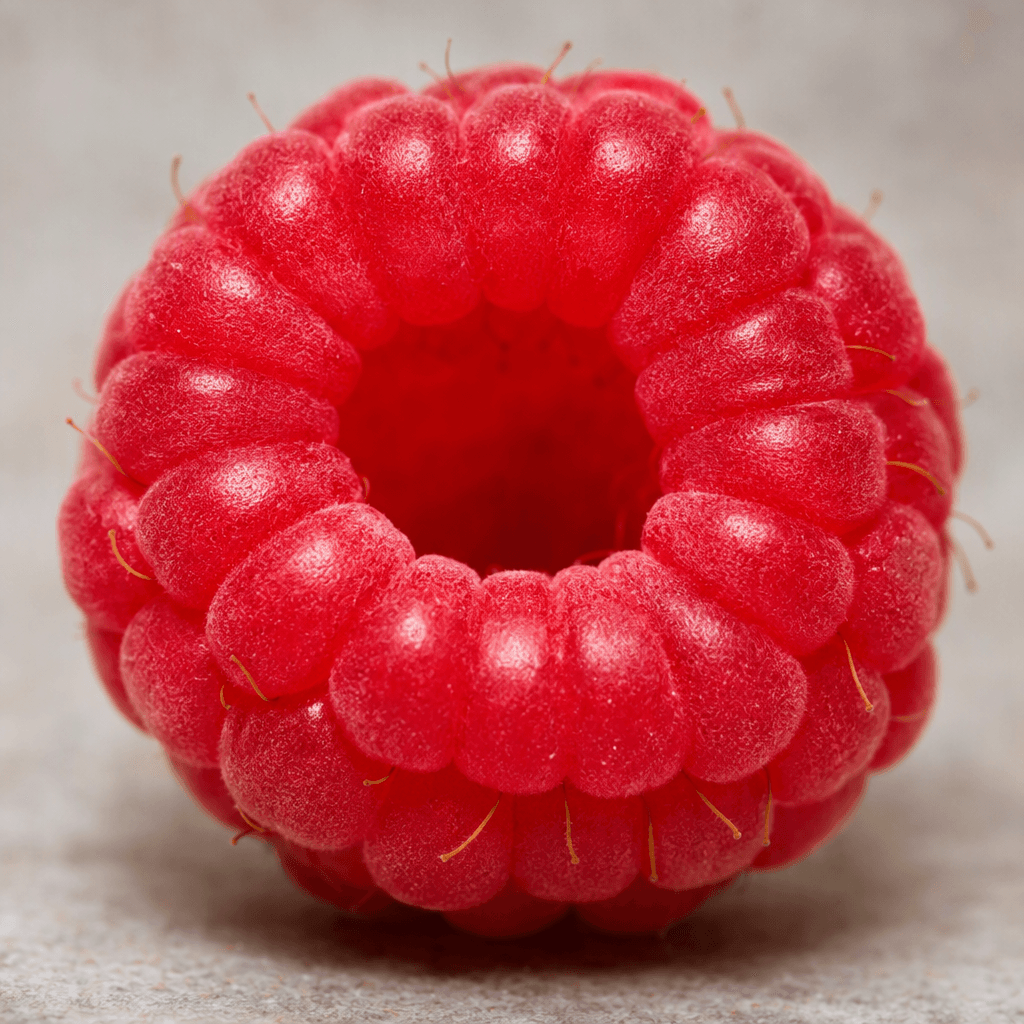
Raspberry is a soft, fragrant berry formed from many tiny drupelets, growing on a bramble. Red raspberries are native to Europe and northern Asia and are now cultivated in temperate regions around the world. Their delicate texture and sweet-tart flavour make them easy to enjoy fresh, folded into yoghurt or porridge, or baked into pies and cakes. They also work well in jams and sauces, though cooking quickly softens their shape.
Raspberry is mostly water, with a notable amount of fibre and vitamin C; 100 g provides 6.5 g of fibre. It makes a light snack on its own or alongside yoghurt, and pairs especially well with oats or other fruit. Choose firm, dry berries and eat them soon after buying, as they bruise and spoil easily.
Raspberry Nutrition Facts
Selected: 100 g
52
KCAL / 100G
Carbs
11.9g
· 4% DV
Protein
1.2g
· 2% DV
Fat
0.7g
· 1% DV
Fiber
6.5g
· 23% DV
DV is the share of the daily value covered, on a 2,000 kcal reference diet.
Calories come from: Carbs 81% · Protein 8% · Fat 11%
Raspberry Vitamins & Minerals
Vitamins
Vitamin C
26.2mg · 29% DV
B5
0.33mg · 7% DV
Vitamin K
7.8µg · 7% DV
Vitamin E
0.87mg · 6% DV
Minerals
Manganese
1mg · 43% DV
Iron
1mg · 6% DV
Magnesium
22mg · 5% DV
Phosphorus
29mg · 4% DV
How Nutritious Is Raspberry?
Nutrient density
Very high
How many vitamins, minerals and how much fiber this food carries per calorie. A high score means a lot of nutrition for few calories.
Satiety score
High
An EatBetter score computed from fiber, protein and calorie density. A high score means staying full longer on the same calories.
Both scores are calculated per 100 g and do not change with the selected portion. The satiety score is EatBetter's own calculation, not a clinical measure.
Raspberry Glycemic Index
GLYCEMIC INDEX
GLYCEMIC LOAD
Accounts for portion size — a more realistic measure than GI alone.
How to Burn Off Raspberry
To burn the 52 calories in 100 g:
🚶
Walking (5 km/h)
🏃
Running (8 km/h)
🚴
Cycling
🏊
Swimming
Times are calculated with the MET equation for a 70 kg adult. Actual burn varies with your weight, age and pace.
Is Raspberry Processed?
NOVA 1
Unprocessed
1. Unprocessed
2. Minimally Processed
3. Processed
4. Ultra-Processed
NOVA classifies foods into 4 groups by industrial processing. NOVA 1 (unprocessed) is the healthiest.
Does Raspberry Contain Allergens?
No known major allergens
Which Diets Is Raspberry Good For?
Vegan
✓ Suitable
Vegetarian
✓ Suitable
Gluten-Free
✓ Suitable
Dairy-Free
— Not suitable
Mediterranean
✓ Suitable
Paleo
✓ Suitable
Whole30
— Not suitable
DASH
— Not suitable
Keto
— Not suitable
Low FODMAP
— Not suitable
Raspberry Fat Profile
SATURATED
0.02g
MONOUNSATURATED
0.06g
POLYUNSATURATED
0.39g
Omega 6:3 ratio 5.3:1
Above the ideal 4:1 (5.3:1).
Compare Raspberry
Foods Similar to Raspberry
Frequently Asked Questions About Raspberry
Are raspberries good for you?
Yes, raspberries provide fiber and vitamin C, along with plant compounds that give them their color and have antioxidant activity. Add fresh or frozen raspberries to oatmeal, yogurt, or a snack for a flavorful way to include fruit.
How should you wash raspberries?
Rinse raspberries gently under cool running water just before eating them. Don’t soak them, since the delicate berries absorb moisture and can become mushy; pat them dry carefully. Washing raspberries ahead of time can make them spoil faster.
How do you store raspberries, and how long do they last?
Refrigerate unwashed raspberries in a breathable container and remove any crushed or moldy berries. They usually keep for only a few days, so use them promptly. Extra moisture and one spoiled berry can cause mold to spread quickly through the container.
Can you freeze raspberries?
Yes, raspberries freeze well. Rinse them gently, dry them completely, and freeze them in a single layer on a tray before transferring them to a sealed container. This helps keep the berries from clumping and makes it easier to use only what you need.
How can you tell when raspberries are ripe?
Ripe raspberries are plump, richly colored, fragrant, and tender enough to come away easily from the plant. Pale or firm berries may be underripe, while leaking, collapsed, or moldy ones are past their best. Raspberries do not continue ripening much after picking.
Can you eat raspberry seeds?
Yes, raspberry seeds are edible and contribute to the fruit’s fiber. If you dislike their texture, press raspberries through a fine sieve to make a smoother purée or sauce; straining also removes the seeds and some of the fruit’s fiber.
Why are raspberries hollow in the middle?
A raspberry separates from its small central core as it ripens, leaving the familiar hollow center. That is normal and is not a sign of spoilage. Discard raspberries if they have visible mold, an unpleasant smell, or a wet, collapsing texture.
What is the difference between raspberries and blackberries?
Raspberries usually come away from their central core when picked, so they are hollow inside; blackberries keep the core and are solid in the middle. Both grow as clusters of small drupelets, but their shape, flavor, and color differ.
Can dogs eat raspberries?
Dogs can eat a few plain raspberries as an occasional treat, but they should not have large amounts. Wash the berries, offer them whole only if your dog can safely chew them, and avoid raspberry products sweetened with sugar or other ingredients.
Can you cook with frozen raspberries without thawing them first?
Yes, you can add frozen raspberries straight to many baked goods, oatmeal, or smoothies. In baking, they may release extra juice and tint the batter, so fold them in gently while still frozen. Thaw and drain them first when a recipe needs a less-watery sauce.
Have another question about Raspberry?
Ask the AI nutrition coach — calories, portions, alternatives and more, answered in seconds in the app.

Scan calories with your camera
Instant AI nutrition analysis

Nutrition data compiled from USDA FoodData Central and scientific sources.