

Ready & Packaged Foods
All →Vegetables & Legumes
All →Desserts & Confectionery
All →Meat & Protein
All →Grains & Bakery
All →Beverages
All →Milk & Dairy
All →

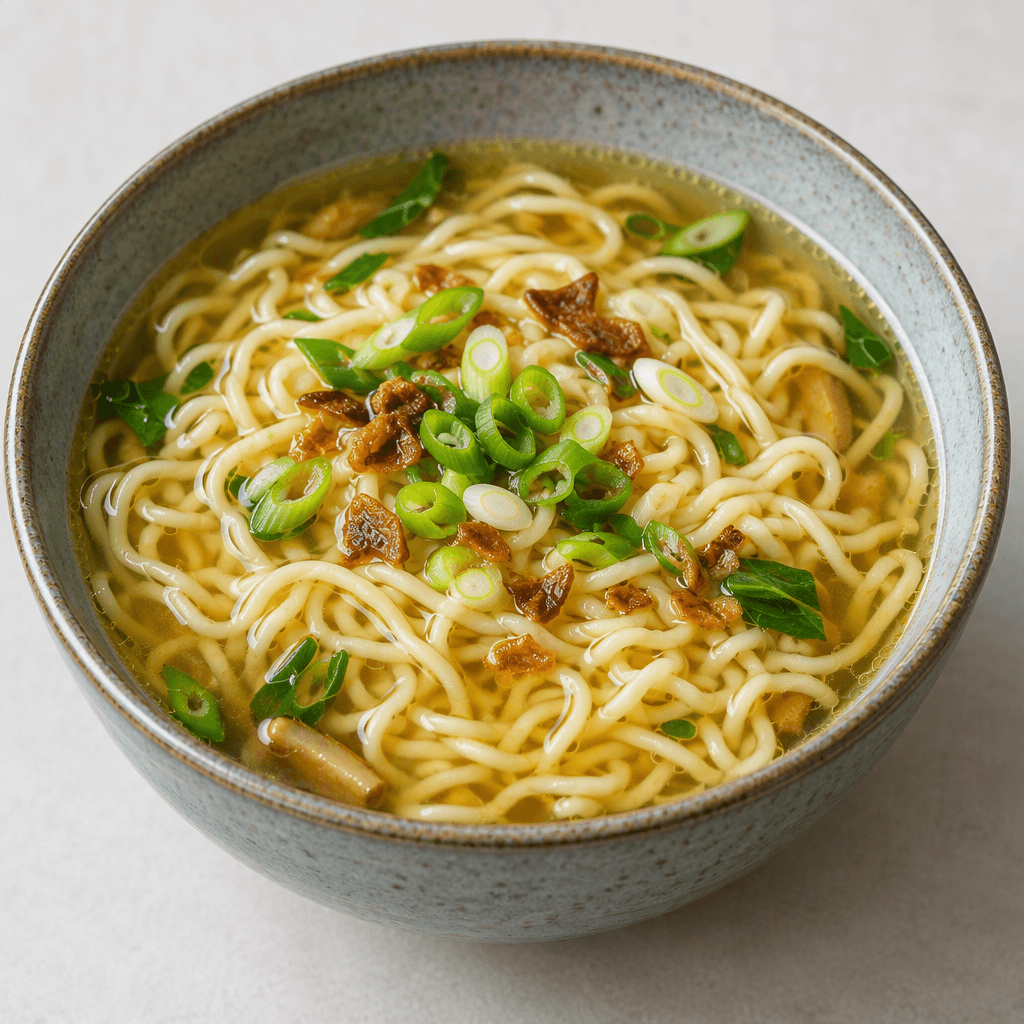
Ramen Calories
Japanese noodle soup, rich broth, often with egg and vegetables
In season: Winter · Autumn
CALORIES
GI
POTASSIUM
FIBER
Quick answer
1 bottle (large) of Ramen (400 g) has 480 calories. That works out to 120 calories per 100 g. It contains 74 g of carbs, 16.8 g of protein, 12.4 g of fat and 4.4 g of fiber. Its 1680 mg of Sodium covers 73% of the Daily Value. Its glycemic index is 55 (medium), so it raises blood sugar at a moderate pace.
What is Ramen?
Ramen is a Japanese noodle soup built around wheat noodles and a seasoned broth, often topped with ingredients such as sliced spring onion, egg, vegetables or meat. Its broths range from clear, soy-seasoned styles to richer miso or pork-based versions, with regional and shop-specific variations across Japan.
The noodles are usually springy, while the broth may be light and delicate or deeply savoury and filling. Ramen is commonly served as a hot main meal in Japan and is now enjoyed in restaurants and at home around the world. It is mainly a carbohydrate-based meal; toppings such as egg, meat or tofu add protein, while vegetables bring freshness. For a lighter bowl, add plenty of vegetables and choose a less rich broth.
Ramen Nutrition Facts
Selected: 100 g
120
KCAL / 100G
Carbs
18.5g
· 7% DV
Protein
4.2g
· 8% DV
Fat
3.1g
· 4% DV
Fiber
1.1g
· 4% DV
DV is the share of the daily value covered, on a 2,000 kcal reference diet.
Calories come from: Carbs 62% · Protein 14% · Fat 24%
Ramen Vitamins & Minerals
Vitamins
B1
0.04mg · 3% DV
B5
0.13mg · 3% DV
B2
0.03mg · 2% DV
B3
0.3mg · 2% DV
Minerals
Sodium
420mg · 18% DV
Iron
1mg · 6% DV
Selenium
2.5µg · 5% DV
Phosphorus
38mg · 5% DV
How Nutritious Is Ramen?
Nutrient density
Low
How many vitamins, minerals and how much fiber this food carries per calorie. A high score means a lot of nutrition for few calories.
Satiety score
Medium
An EatBetter score computed from fiber, protein and calorie density. A high score means staying full longer on the same calories.
Both scores are calculated per 100 g and do not change with the selected portion. The satiety score is EatBetter's own calculation, not a clinical measure.
Ramen Glycemic Index
GLYCEMIC INDEX
GLYCEMIC LOAD
Accounts for portion size — a more realistic measure than GI alone.
How to Burn Off Ramen
To burn the 120 calories in 100 g:
🚶
Walking (5 km/h)
🏃
Running (8 km/h)
🚴
Cycling
🏊
Swimming
Times are calculated with the MET equation for a 70 kg adult. Actual burn varies with your weight, age and pace.
Is Ramen Processed?
NOVA 3
Processed
1. Unprocessed
2. Minimally Processed
3. Processed
4. Ultra-Processed
NOVA classifies foods into 4 groups by industrial processing. NOVA 1 (unprocessed) is the healthiest.
Does Ramen Contain Allergens?
Contains these allergens:
Which Diets Is Ramen Good For?
Vegan
— Not suitable
Vegetarian
— Not suitable
Gluten-Free
— Not suitable
Dairy-Free
— Not suitable
Mediterranean
— Not suitable
Paleo
— Not suitable
Whole30
— Not suitable
DASH
— Not suitable
Keto
— Not suitable
Low FODMAP
— Not suitable
Ramen Fat Profile
SATURATED
0.7g
MONOUNSATURATED
1g
POLYUNSATURATED
0.3g
Omega 6:3 ratio 8.3:1
Above the ideal 4:1 (8.3:1).
Compare Ramen
Foods Similar to Ramen
Frequently Asked Questions About Ramen
What is ramen?
Ramen is a Japanese noodle soup made with wheat noodles, seasoned broth and toppings such as egg, sliced meat, seaweed or vegetables. The broth and toppings vary widely, so ramen can taste quite different from one bowl to another.
Is ramen Japanese or Chinese?
Ramen is a Japanese dish that developed with influence from Chinese wheat-noodle soups. It became distinct in Japan through local noodle styles, broths and seasonings, and today it has many regional variations.
What is ramen broth made of?
Ramen broth can be made from pork, chicken, seafood or vegetables, often simmered to build flavor. Seasonings such as soy sauce, miso or salt give the broth its characteristic style; tonkotsu broth gets its richness from pork bones.
What is the difference between ramen and pho?
Ramen is Japanese and usually uses springy wheat noodles in a seasoned broth; pho is Vietnamese and is typically made with flat rice noodles and a fragrant broth flavored with spices and herbs. Their toppings and serving traditions differ too.
How do you make ramen at home?
To make ramen at home, cook wheat noodles and add them to a bowl of hot, seasoned broth. Top with ingredients such as a soft-boiled egg, scallions, mushrooms or cooked meat, and serve before the noodles soften.
What are the main types of ramen?
The best-known ramen styles are shoyu, seasoned with soy sauce; miso, flavored with fermented soybean paste; shio, seasoned with salt; and tonkotsu, made with pork-bone broth. Regional recipes and toppings create many more variations.
What are ramen noodles made of?
Ramen noodles are usually made from wheat flour, water, salt and kansui, an alkaline ingredient that gives them their springy texture and yellowish color. Fresh and dried varieties are available, and their texture can differ.
Is ramen healthy?
Ramen can be part of a balanced meal, especially when served with vegetables and a protein-rich topping. Restaurant and instant versions may be high in sodium, so adding fresh ingredients and using less seasoning can make a more balanced bowl.
How do you make a ramen egg?
A ramen egg is a soft-boiled egg peeled and marinated in a savory mixture, often containing soy sauce. Leave it in the marinade to absorb flavor, then halve it and place it on the ramen just before serving.
How can you make instant ramen taste better?
Add an egg, scallions, mushrooms, leafy greens or leftover cooked meat to instant ramen for more flavor and texture. Taste the broth before adding the full seasoning packet, since it can already be quite salty.
Have another question about Ramen?
Ask the AI nutrition coach — calories, portions, alternatives and more, answered in seconds in the app.

Scan calories with your camera
Instant AI nutrition analysis

Nutrition data compiled from USDA FoodData Central and scientific sources.