

Ready & Packaged Foods
All →Vegetables & Legumes
All →Desserts & Confectionery
All →Meat & Protein
All →Grains & Bakery
All →Beverages
All →Milk & Dairy
All →

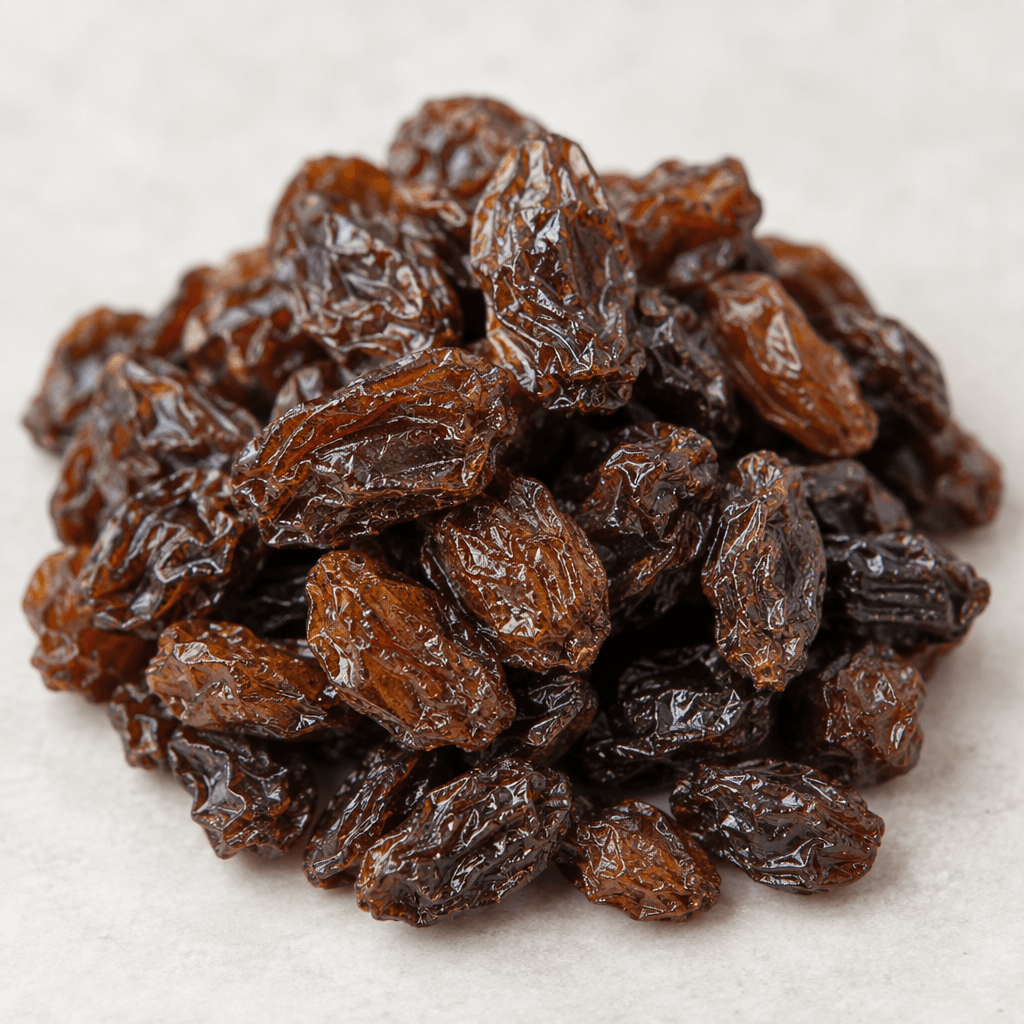
Seedless raisin Calories
Natural energy source, rich in fiber and iron
In season: Autumn · Winter
CALORIES
GI
POTASSIUM
FIBER
Quick answer
1 tablespoon (medium) of Seedless raisin (15 g) has 45 calories. That works out to 299 calories per 100 g. It contains 11.9 g of carbs, 0.5 g of protein, 0.1 g of fat and 0.6 g of fiber. Its 0 mg of Copper covers 5% of the Daily Value. Its glycemic index is 65 (high), so it raises blood sugar quickly.
What is Seedless raisin?
A seedless raisin is a grape that has been dried, commonly from seedless varieties such as Thompson Seedless. The drying process concentrates the grape’s sweetness, leaving small, wrinkled, chewy pieces. Raisins are eaten as a snack around the world and stirred into porridge, cereal, baked goods, salads and savoury dishes; in parts of the Mediterranean and Middle East, they also appear in rice dishes and pilafs.
They are rich in natural sugars and carbohydrates, with some fibre. A small handful adds sweetness to a meal, while pairing them with plain yoghurt or nuts makes a more substantial snack. Their concentrated sweetness means a little can go a long way.
Seedless raisin Nutrition Facts
Selected: 100 g
299
KCAL / 100G
Carbs
79.2g
· 29% DV
Protein
3.1g
· 6% DV
Fat
0.5g
· 1% DV
Fiber
3.7g
· 13% DV
DV is the share of the daily value covered, on a 2,000 kcal reference diet.
Calories come from: Carbs 95% · Protein 4% · Fat 1%
Seedless raisin Vitamins & Minerals
Vitamins
Biotin
7µg · 23% DV
B6
0.32mg · 19% DV
B2
0.19mg · 15% DV
B1
0.11mg · 9% DV
Minerals
Potassium ⭐
749mg · 22% DV
Phosphorus
101mg · 14% DV
Iron
2mg · 11% DV
Magnesium
32mg · 8% DV
How Nutritious Is Seedless raisin?
Nutrient density
High
How many vitamins, minerals and how much fiber this food carries per calorie. A high score means a lot of nutrition for few calories.
Satiety score
Low
An EatBetter score computed from fiber, protein and calorie density. A high score means staying full longer on the same calories.
Both scores are calculated per 100 g and do not change with the selected portion. The satiety score is EatBetter's own calculation, not a clinical measure.
Seedless raisin Glycemic Index
GLYCEMIC INDEX
GLYCEMIC LOAD
Accounts for portion size — a more realistic measure than GI alone.
How to Burn Off Seedless raisin
To burn the 299 calories in 100 g:
🚶
Walking (5 km/h)
🏃
Running (8 km/h)
🚴
Cycling
🏊
Swimming
Times are calculated with the MET equation for a 70 kg adult. Actual burn varies with your weight, age and pace.
Is Seedless raisin Processed?
NOVA 2
Minimally Processed
1. Unprocessed
2. Minimally Processed
3. Processed
4. Ultra-Processed
NOVA classifies foods into 4 groups by industrial processing. NOVA 1 (unprocessed) is the healthiest.
Does Seedless raisin Contain Allergens?
No known major allergens
Which Diets Is Seedless raisin Good For?
Vegan
✓ Suitable
Vegetarian
✓ Suitable
Gluten-Free
✓ Suitable
Dairy-Free
— Not suitable
Mediterranean
✓ Suitable
Paleo
✓ Suitable
Whole30
— Not suitable
DASH
— Not suitable
Keto
— Not suitable
Low FODMAP
— Not suitable
Seedless raisin Fat Profile
SATURATED
0.16g
MONOUNSATURATED
0.06g
POLYUNSATURATED
0.14g
Omega 6:3 ratio 6.5:1
Above the ideal 4:1 (6.5:1).
Compare Seedless raisin
Foods Similar to Seedless raisin
Frequently Asked Questions About Seedless raisin
Are seedless raisins good for you?
Seedless raisins can be a useful snack because they provide fiber and iron, and their natural sugars supply quick energy. They are concentrated dried fruit, so pair a modest portion with a more filling food.
Can dogs eat seedless raisins?
No, dogs must not eat seedless raisins. Raisins can cause sudden kidney failure in dogs, and even a small amount may be dangerous; contact a veterinarian promptly if your dog eats any.
How are seedless raisins made?
Seedless raisins are made by drying seedless grapes until most of their water is removed. The grapes may be sun-dried or dried with warm air; the dried fruit becomes smaller, darker, and sweeter-tasting.
What is the difference between seedless raisins and sultanas?
Sultanas are a type of seedless raisin, traditionally made from light-colored grapes; the word is used differently across countries. In many shops, “raisin” and “sultana” describe products that differ mainly in grape variety, color, or processing.
Should you wash seedless raisins before eating them?
Rinsing seedless raisins under cool running water can remove dust from their surface. Drain them well and dry them before storing, since leftover moisture can encourage mold and make the raisins clump together.
How should you store seedless raisins?
Keep seedless raisins in a tightly sealed container in a cool, dry, dark cupboard. Refrigeration can help in a warm or humid kitchen; discard them if you see mold or notice an unusual sour smell.
Can you freeze seedless raisins?
Yes, seedless raisins can be frozen in an airtight freezer-safe container. They do not need thawing before being added to oatmeal or baking, and sealing them well helps prevent them from picking up freezer odors.
How do you plump seedless raisins for baking?
To plump seedless raisins, soak them in warm water until they soften, then drain and pat them dry before adding them to batter. For extra flavor, soak them in juice or tea instead.
Do seedless raisins raise blood sugar?
Yes, seedless raisins can raise blood sugar because drying concentrates their natural sugars. People with diabetes can include them in a measured portion, but should account for them in their meal plan and monitor their own response.
Do seedless raisins need added sugar?
No, seedless raisins are naturally sweet and generally do not need added sugar. Check the ingredient list if you want to avoid sweetened products, especially when buying flavored or coated dried fruit.
Have another question about Seedless raisin?
Ask the AI nutrition coach — calories, portions, alternatives and more, answered in seconds in the app.

Scan calories with your camera
Instant AI nutrition analysis

Nutrition data compiled from USDA FoodData Central and scientific sources.